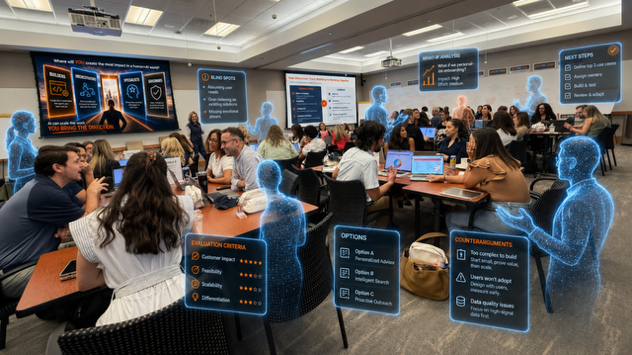
I spent a full day in Atlanta with 60 marketers, and the whole morning went by before anyone used an AI tool. That was the plan.
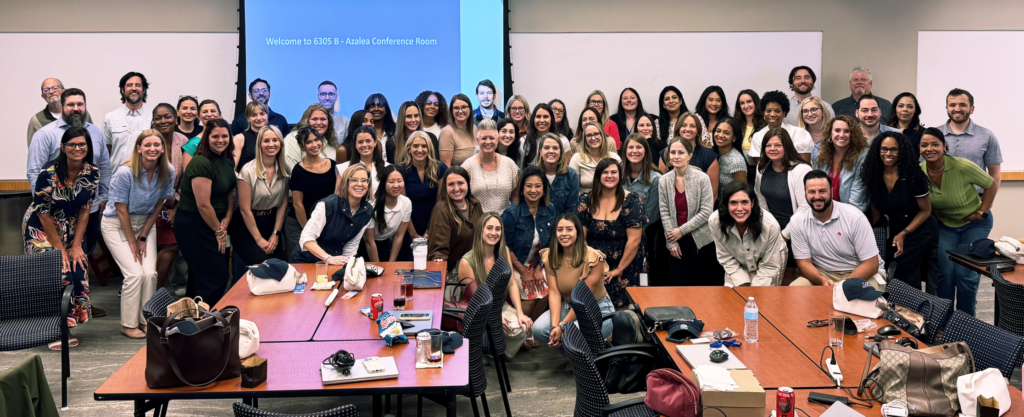
The Cox Automotive Inc. marketing and comms team across Inventory Solutions, NextGear Capital, EV Battery Solutions, and Cox Automotive Europe focused that morning on themselves, being honest about how each person thinks and where they fall short. Many AI workshops start with the tool. This started with the people.
(Cox Automotive is a 29,000-person B2B company serving 40,000+ auto dealers and most major automakers, with brands like Manheim, Kelley Blue Book, and Autotrader.)
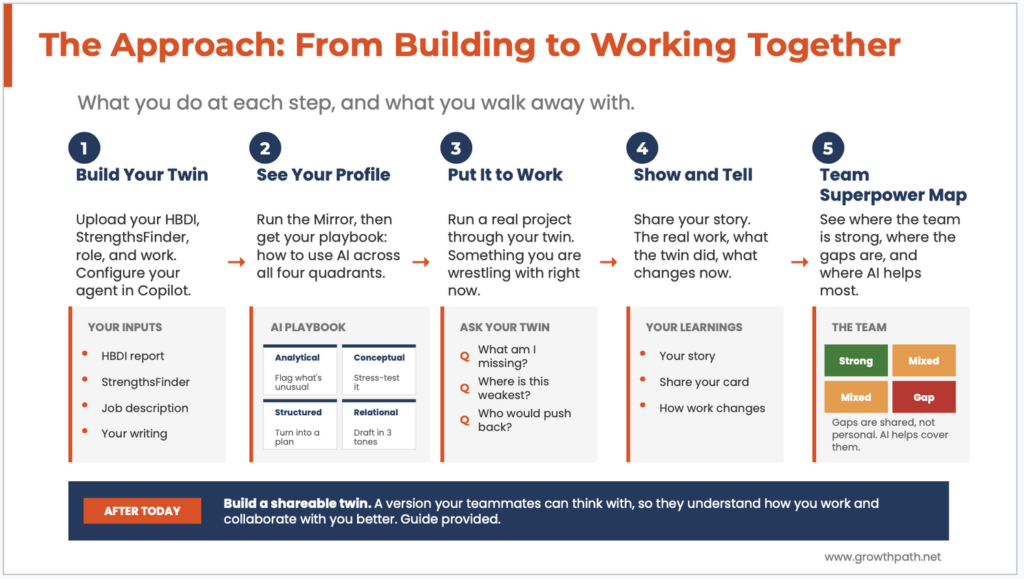
They used AI after lunch, once they knew what they were working with. Each person built a digital twin, a custom AI partner made from their own profile, thinking style, and writing. A twin doesn’t do your work. It challenges it, asking where your thinking is weak and who would push back.
Starting with the people before the tools is rare. It’s also why the AI work landed. When you know your own blind spots first, you build AI that covers that. Otherwise, you build AI that just agrees with you.
Quick Take
AI training usually starts with the tool. This team started with the human. They learned their own thinking styles and gaps first, then built AI partners to find blind spots and push their thinking.
- Your strongest thinking style is usually your AI blind spot.
- AI is a people pleaser. Used only to confirm what you already believe, it leaves you worse off than AI working alone.
- Faster is just the floor. The big benefits come from reimagined work that wasn’t impossible before.
- A twin has memory, so it knows more the longer you use it. This is not a one-day build.
- Reimagined work leads to reimagined roles, but only when a leader reorganizes around the new work.
Watch Or Listen Instead
To cater to different learning styles and time constraints, this newsletter is also available as a 5-min cinematic AI video explainer and a 20-min AI podcast with two AI hosts. Both were made with Google’s NotebookLM and personally reviewed for accuracy and responsible AI use.
Started With No AI
Jessica Lanier, VP of Marketing and Communications across several Cox Automotive divisions, including its Europe business, opened by being honest about her own gaps.
This started with Jessica. Her work got better once she used AI for the things she doesn’t naturally do, and she quickly saw how that could raise the whole team’s value. So she asked her team to do the same: be honest about how they think and where they fall short.
“When I started using AI for the parts of the work I usually avoid, the analysis and the second opinions, my thinking got better, not just faster. I saw new possibilities, became aware of different perspectives, found angles I wouldn’t think to check, and better aligned with others.
That shift in thinking changed my behavior in using AI. My work changed. It’s more strategic, efficient, and impactful. I wanted that for the whole team.”
Then Kevin Waits, Chief Facilitator and Coach at Talent Won’t Wait, LLC, took them through two self-assessments: HBDI maps how a person prefers to think across four styles: analytical, structured, relational, and experimental. CliftonStrengths ranks your natural strengths from a list of 34.

Kevin ran practical exercises with warmth and a light, funny touch. One line was a mic drop:
“Do not give your power to an assessment.”
A low score points to a default. It doesn’t mean you can’t grow there. Kevin even suggested having a teddy bear in the color of your weakest quadrant as a reminder to lean into the mode you don’t naturally use.
Your Strength is Your AI Blind Spot
How you think tends to decide how you use AI, often without your noticing. It’s just a habit, and once you see yours, you can overcome it.
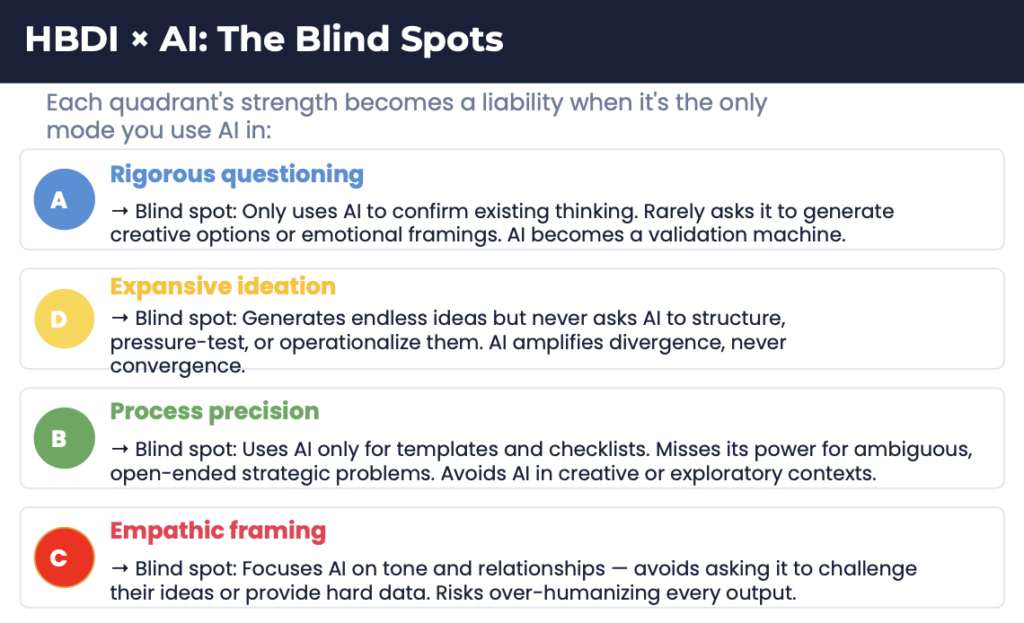
Each style has its own gotcha. The analytical thinker uses AI to confirm what they already believe, and it becomes a validation machine. The big-picture thinker cranks out endless ideas and never asks AI to narrow them. The process- minded keep it as a checklist tool. The relationship-driven focus on tone and rarely push for hard data. Whatever you’re best at is usually where your AI use is weakest.
Try This Today (8 Minutes)
The team audited their own AI use. It works on anyone, and it’s worth a try before reading on.
Look back at your last five AI prompts. Which thinking style did most of them come from? Which style is almost missing?
Pick one project this week and try a prompt from that missing mode. A few to start:
- Analytical – “Give me five data points that challenge this plan.”
- Experimental – “What if we approached this completely differently?”
- Relational – “Help me see this from the other person’s point of view before a hard conversation.”
- Structured – “Turn this plan into a step-by-step checklist with owners and deadlines.”
Make AI Disagree With You
Finding your blind spot is the first problem. Getting AI to push back, instead of agreeing with you, is the second, because AI is trained to be agreeable.
Vivienne Ming, a neuroscientist writing in the Wall Street Journal, found that only 5 to 10% of people use AI to challenge their thinking. Most use it to confirm what they already believe. In a Business Insider interview, she shared her instruction to AI: don’t tell me why I’m right, tell me why I’m wrong.
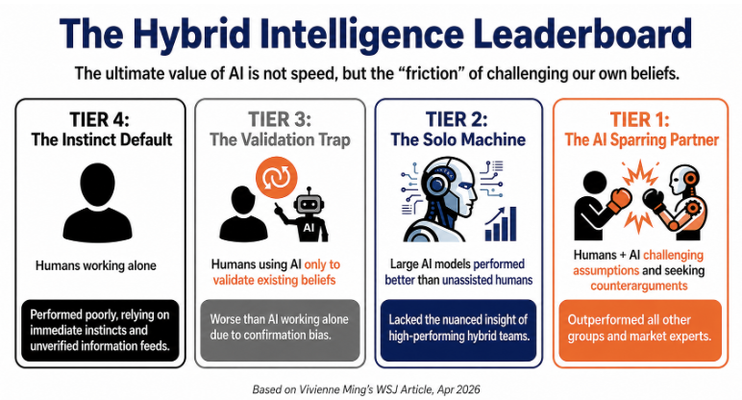
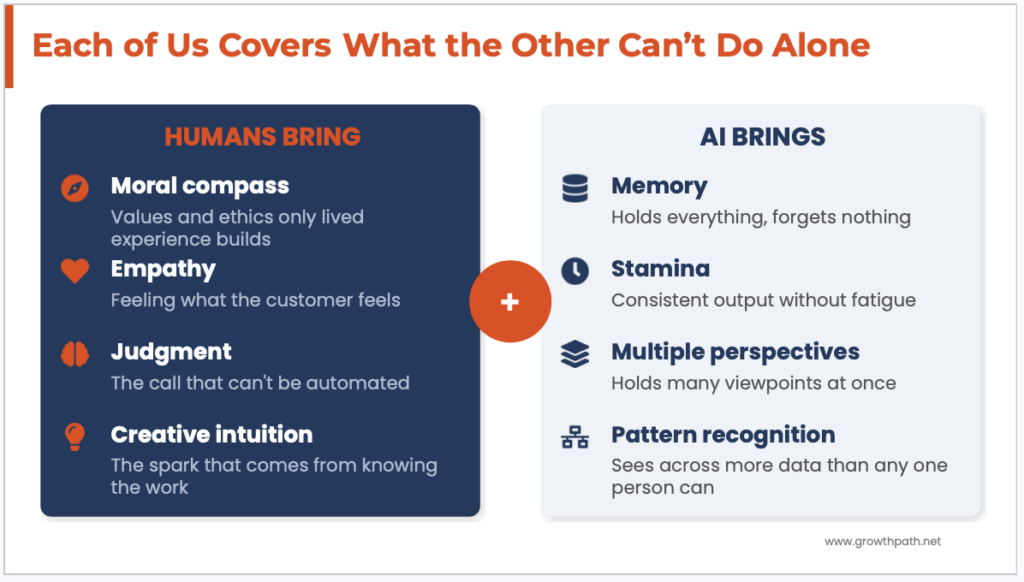
It works because people and AI are good at different things. AI brings scale, speed, and memory no person can match. It’s unaffected by what’s happening around it, while you can’t be at your best every single day. You bring judgment, gut feel, and lived experience. Put them together and you come out more open- minded, quicker to see how others think, and more confident going into tough conversations. I wrote about that in AI Made Me More Human.
The Cox Automotive team built their twins to push. They asked them things like:
- Where is this weakest?
- Who would push back, and why?
- What am I missing?
More on building that habit and sample sparring questions and questions in How to Think Critically with AI.
How They Built It
After lunch, all 60 people built their twin, each one made from their own profile, so no two were alike. Everyone came with pre-work: their HBDI and CliftonStrengths results, plus a deep-research AI report on themselves, their role, frameworks, processes, and writing samples.
The core of any twin is the deep-research report and the instructions that make it challenge you. I walked through both, with a demo, in The Smartest AI Teammate You’ll Ever Build.
The build instructions told each twin to:
- challenge assumptions
- provide assessments with rationale
- show what-if scenarios with the drawbacks,
- offer counterarguments, and
- test ideas against different situations and personas.
They battle-tested their twin using a real project and refined them as needed.
The real value was visibility. Each person could see their own thinking style, where it’s strong, and where it falls short. That made the work actionable because you can’t fix a gap you can’t see.
Jessica shared her digital twin with her team so anyone could pressure-test their work against her thinking any time. Two people have already used it. Brittany Curl, AVP of Marketing, ran her plan past it.

“I ran my plan past Jessica’s twin and the feedback was spot on. It told me the things I could hear Jessica saying, so I got her perspective without taking her time. I can get access to Jessica’s expertise whenever I need it.”
Another team member used it on a leadership deck and the twin pushed back, flagging that marketing shouldn’t walk into a review with “engagement is strong” and no business-tied success criteria.
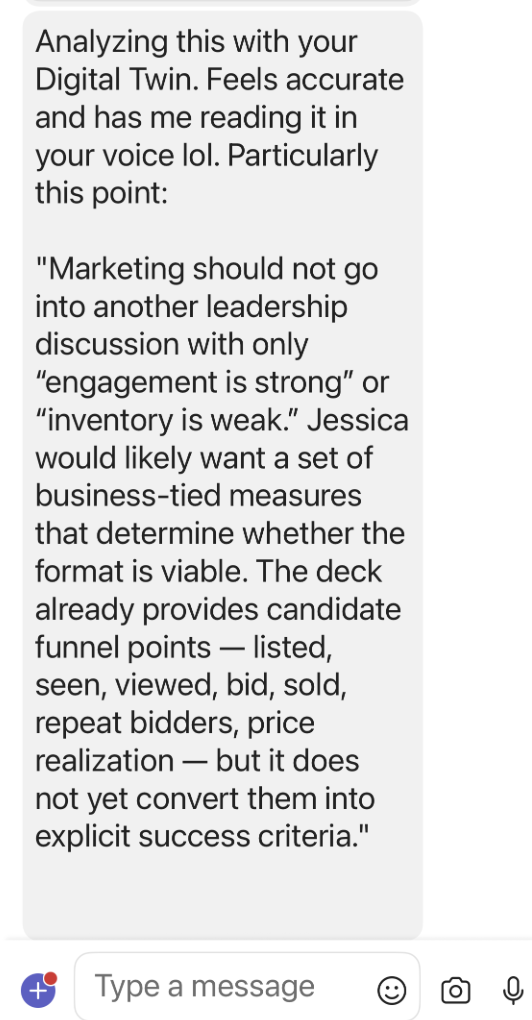
Jessica confirmed the AI’s response. She agreed with what her twin said, the same feedback she’d have given in person.
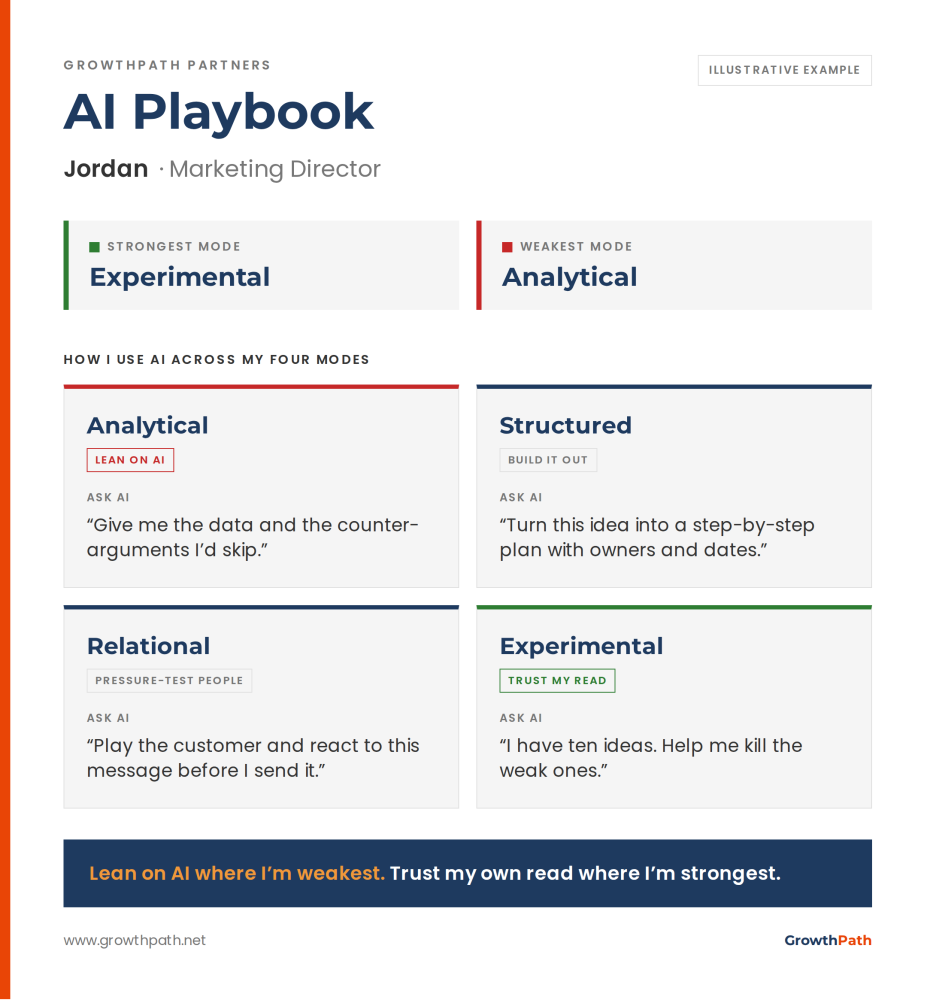
Each person also built a one-page AI Playbook card: their strongest and weakest thinking mode, and a go-to prompt for each of the four. It turns the blind-spot insight into something you can use: ask AI to help with what you don’t do naturally, and have it challenge you where you’re strong. (A sample is below.)
Where AI Changes What’s Possible
Reimagining the work starts with the differences between people and AI. New work happens when AI does something a person can’t match in speed, scale, and consistency. The team started rethinking workflows around those capabilities, and they’ll find more. (A few examples are below.)
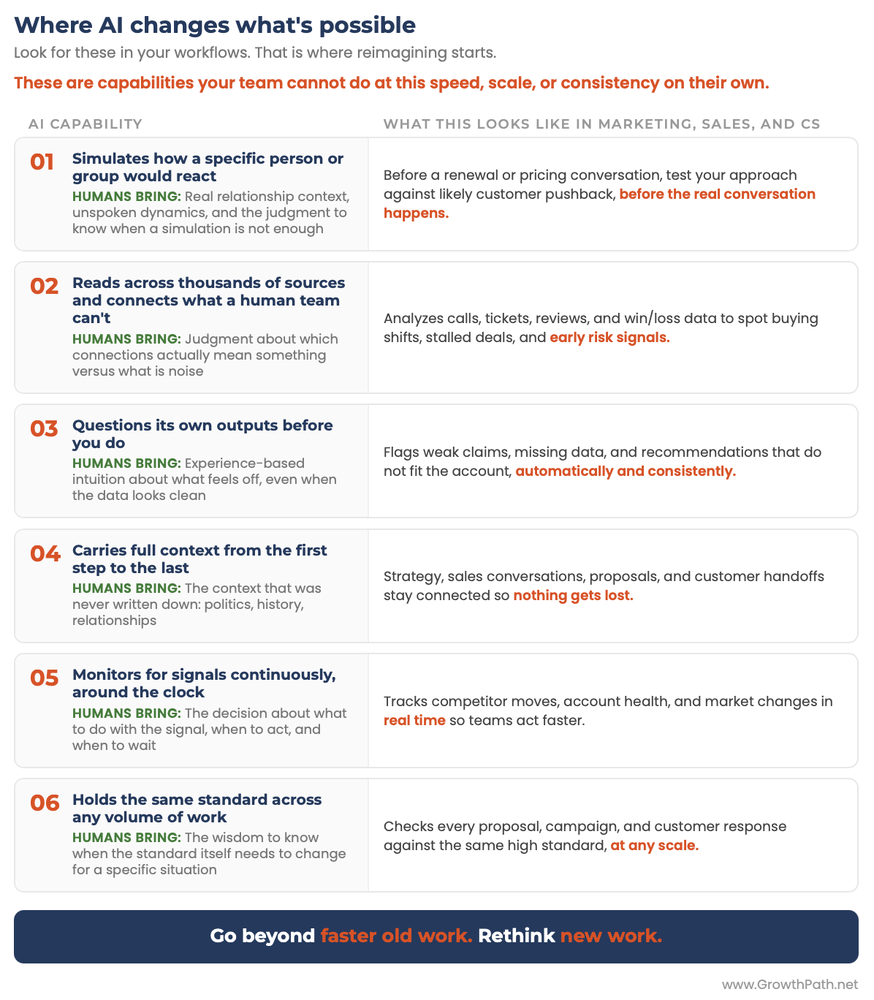
There’s a bigger payoff here. Once you know your own blind spots and how to make AI challenge you, you can design where human judgment belongs as AI runs more of the work. The same instructions they built into their twins, challenge my assumptions, show the tradeoffs, give me the rationale, become the checkpoints in a workflow. That’s the skill that lets a team guide AI as it speeds up and scales the work, instead of handing off the thinking.
More on reimagining workflows in Think Before You Build.
A CMO’s Conviction
Ken Kraft, Cox Automotive’s Chief Marketing and Sales Officer, spoke about transforming the workforce, starting with how work and roles change.
He pointed to Jessica’s seat at the leadership table as both a marketing and business leader, and how that spread across her organization. Five years ago the function was seen as transactional. Today it’s strategic, bringing insight across customers and the business.
AI didn’t make this team strategic. Ken and Jessica built that over years. AI gives them on-ramps to do more of it. (More on the four kinds of work this creates, as well as how GTM roles and orgs are changing in Neither Jobpocalypse Nor Jobapalooza.)
The Team Map
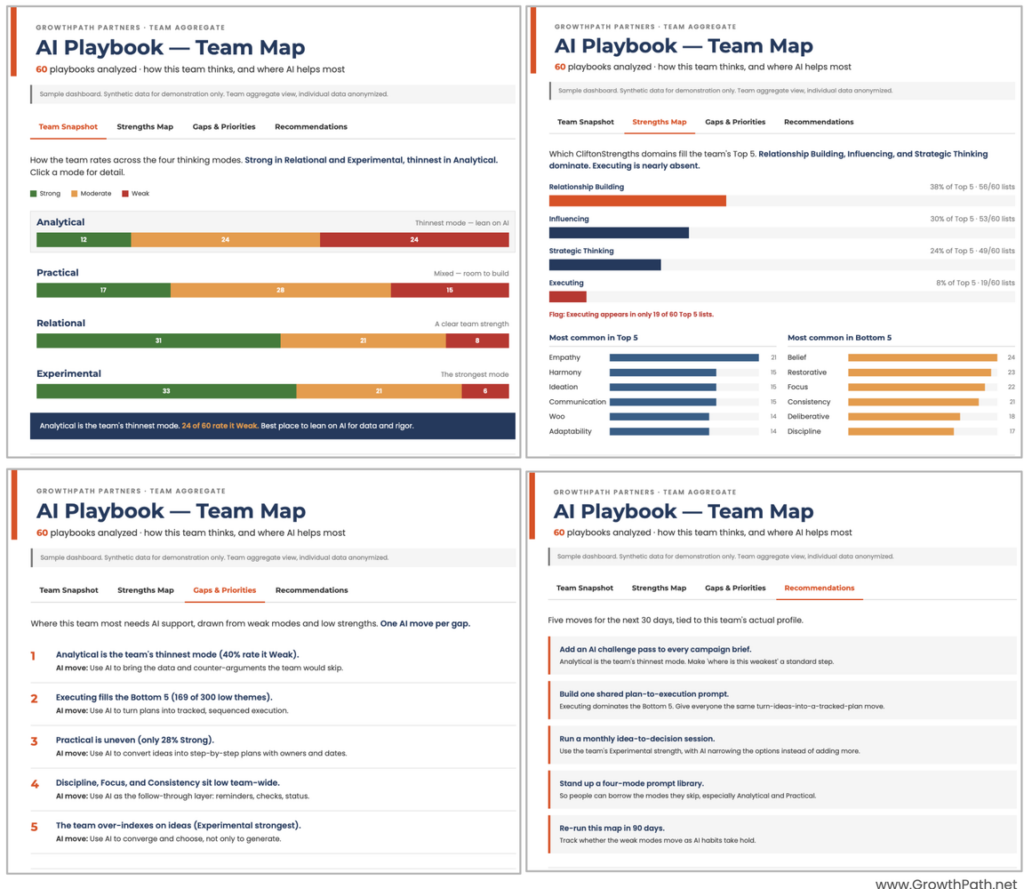
At the end, every Playbook card came together in one view, and Jessica built a team dashboard on the spot, in Claude. It showed where the team is strong, where the gaps cluster, and where AI helps most.
Looking at the map, Jessica made the point herself: the gaps belong to the whole team, and AI can help close them. None of them is a personal failing.
That’s the change. Sixty private blind spots became one shared map the team can act on together.
The map didn’t stop at the diagnosis. It recommended specific next steps, so the team walked out with a starting plan.
(The sample team map below is for illustration only. Here’s an interactive version to play with. It is not Cox Automotive’s actual map.)
Why This is Personal
I’ve worked with this team on several initiatives for a year, from changing how they think about AI, to showing what is possible, to hands-on workshops, to using AI to bridge their gaps, and to reimagining work.
Two things I care about run through this story. One is the strategic value of marketing, a function too often treated as the people who make things look good instead of the people who help run the business. This team is the opposite.
The other is people first, AI forward. Every AI decision gets a people lens, and the goal is work that wasn’t possible before. It’s also why I care about upskilling. When you invest in people, they can thrive in more places, in a new role, on another team, wherever they go next.
This team applies a growth mindset and has a lot of fun learning together. I’m super proud of them. Brittany said it better than I could in her LinkedIn post:
“There’s a version of a team meeting where you check the boxes and go home. This week wasn’t that. That’s not a given. That’s a culture. And this team built it.”
You can start where they did. Try the eight-minute audit above, find the mode you never use AI in, and test one prompt from it this week. That is the first step toward reimagining the work. What Cox built from there is a bigger lift: 60 twins, a team map, and continuously reworking how the work gets done.
What’s one thing your team could do differently if everyone knew their strengths and gaps before they use AI?
The Practical AI in Go-to-Market newsletter shares learnings and insights in using AI responsibly. Subscribe today and let’s learn together on this AI journey.
For applied learning: Explore our applied AI workshops, offering both strategic sessions to shift mindsets through practical AI uses and hands-on sessions to build human+AI workflows. You’ll leave with either a clear plan or working solutions. Office hours provide follow-on support to keep momentum going.
For ongoing advisory: I work with leaders as a strategic advisor through their AI transformation, providing guidance, frameworks, and a sounding board as they build. If that’s what you need, let’s talk.
For team transformation: I partner with GTM leaders to move from scattered AI adoption to an operating model where human and AI teammates work together across workflows. See real examples: a lean GTM team’s step-by-step playbook and a global cybersecurity leader scaling to 150+ marketers with 57 AI teammates integrated into daily workflows.
For speaking: Here are virtual and in-person events where I’ve covered a variety of AI topics. I’ve also keynoted at many conferences and corporate events.
If any of this resonated, I’d love to hear from you. Reply to this email, find me on LinkedIn, or come say hi at an event.