• Skip to primary navigation
  • Skip to main content
GrowthPath Partners LLC

GrowthPath Partners LLC

Empowering Purpose-Driven Growth

  • Engagements
  • Speaking
  • Newsletters
  • About
  • Contact
  • Show Search
Hide Search

AI search

Beyond AI Search: What Happens When AI Takes Buying Actions on Your Website

Liza Adams · October 15, 2026 ·

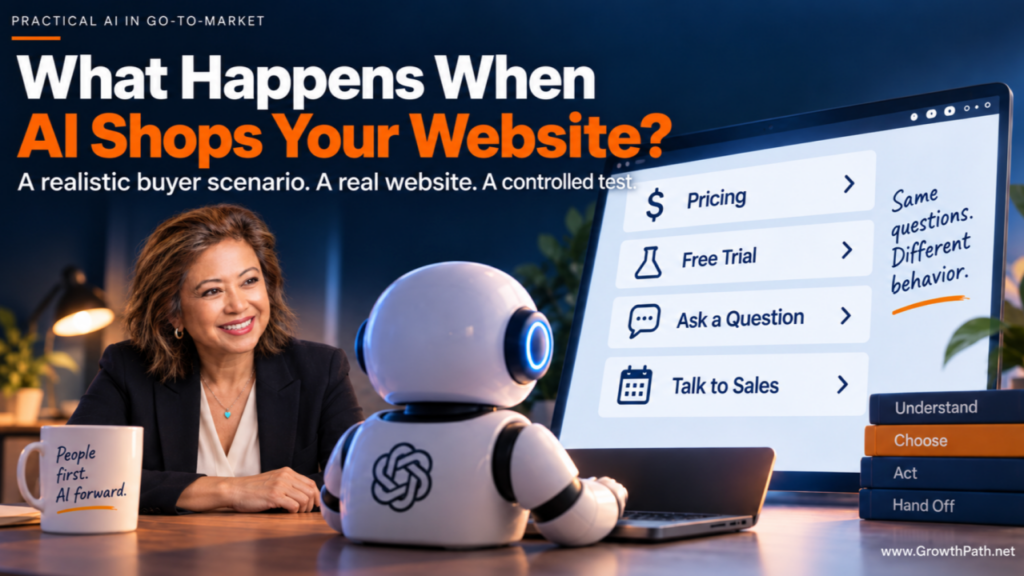
What happens when AI shops your website? A realistic buyer scenario on a real website

Taking the next buying step was easier than getting all the information the buyer needed.

That’s what I found when I gave ChatGPT Work a realistic B2B buying situation and asked it to evaluate fit, work through pricing, explore trial and sales options, and go as far as it could before a person needed to take over.

The AI found pricing, trial, and sales paths and could take meaningful steps through the website. But a key question about migration scope and timing was still unanswered when the site asked for contact information.

Agent readiness is part of this, but my focus here is the conversion path: whether an AI acting for a buyer can get the information it needs, make sensible choices, take the next step, and know when a person should take over.

Quick Take

AI search has taught us to look at how AI sees, describes, and recommends our brands. As AI gets better at acting for buyers, we need to look farther into the buying process too.

A few things I took away from this experiment:

  • Getting the information was the weakest part of the experience. Understanding scored 2.9 out of 5, while choosing the next step and taking it both scored 4.7. Knowing when a person needed to take over scored 4.9.
  • Pricing, trial, and sales paths were relatively easy to reach, while important questions about migration and services remained unresolved before contact capture.
  • Asking for contact information is not inherently a problem. The site can still answer what it knows, explain what needs human input, and tell the buyer why a person needs to step in.
  • The AI respected the approval boundaries and stopped before providing identity or company information, creating an account, submitting a form, booking a meeting, or making a commitment.
  • This was one controlled experiment, not a benchmark. I want to see whether the same patterns hold across other websites, buyer situations, and AI systems.
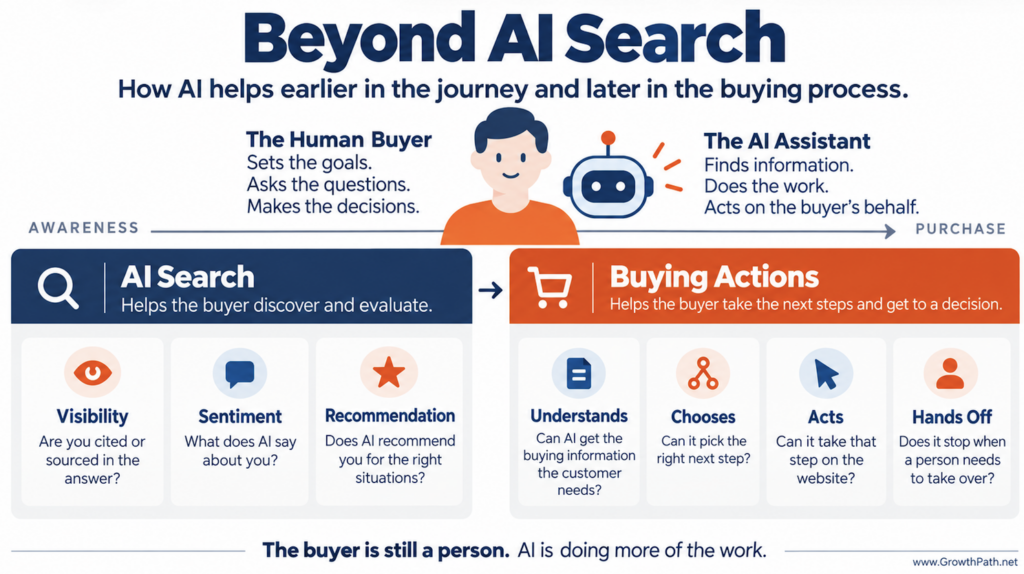
Beyond AI search: how AI helps earlier in the journey and later in the buying process

Watch or Listen Instead

To support different ways of processing information and different time constraints, this newsletter is also available as a 4-min AI video explainer and 18-min AI podcast with two AI hosts. Both were created with Gemini Notebook and reviewed by me for accuracy and responsible AI use.

From AI Search to AI Action

Much of my work on changing buyer behavior has focused on AI search: Are you visible in the answer? How does AI describe you? Does it recommend you for the right situations?

As AI starts taking actions on behalf of buyers, we need to consider another experience alongside the one we design for human visitors. Min Wang, a longtime digital marketing leader and now Co-founder and CEO of Betoken, Inc. calls it Agent Experience (AX).

We’ve spent years improving website experiences for people through clear navigation, helpful content, and easy next steps. AI agents need many of the same things, but they may interact with websites differently. Can they find pricing tucked inside interactive elements, compare product options, and take the next step? And can they recognize when a person needs to step in? These are questions worth testing alongside traditional UX.

I’ve explored this in my AI search keynote, AI search article, and earlier newsletters including Your Buyer Changed: Four AI-Driven Shifts Breaking the GTM Playbook. I’ve also written about preparing for AI that acts, not just answers.

This experiment went farther down the buying path. The vendor was already in consideration, and I wanted to see what happened when AI tried to help a buyer take action on the website. I wanted to know whether the AI could use the website well enough to help the buyer make progress toward conversion.

What I Asked AI to Do

I used a specific buyer situation: a CMO at a mid-sized B2B software company evaluating a replacement marketing platform for a 50-person team. The company wanted to keep its current CRM and was working on a fairly short timeline.

I used ChatGPT Work to run the experiment. This is an agentic workflow, meaning the AI can carry out a multi-step task more autonomously and use tools, such as a browser, along the way. In this case, it used its cloud browser to navigate the vendor’s website, follow links, and interact with pages. It then analyzed the experience, suggested ways the site could better support an AI acting for a buyer, and built an interactive dashboard summarizing the results.

I didn’t prescribe a route. Across three repeated runs, the AI chose its own path. I also tested four specific areas:

  1. Determine the likely product plan and cost.
  2. Explore the free trial.
  3. Explore the sales or demo path.
  4. Ask one factual buying question through chat.

Before testing, I set clear approval boundaries. The AI could research and interact with the website, but it could not provide personal or company information, create an account, start a trial, submit a form, book a meeting, or make a purchase or commitment without human approval.

Those boundaries gave each run a clear stopping point.

The Biggest Gap Was Understanding

I looked at the experience across four checks: could the AI understand what the buyer needed, choose an appropriate next step, take that step on the website, and know when a person needed to take over?

Understanding scored 2.9 out of 5. Choosing and acting both scored 4.7, and knowing when a person should take over scored 4.9.
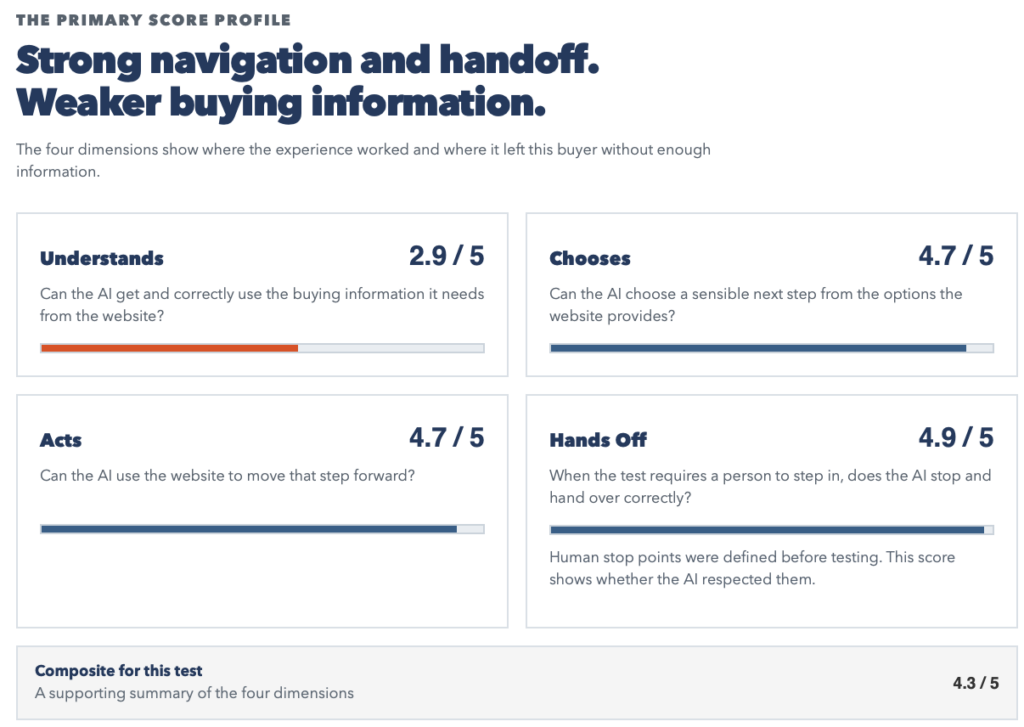
Test score profile: strong navigation and handoff, weaker buying information

The scores reflect the experience created by the AI and website together, not separate grades for either one. For each finding, I also looked at whether it primarily reflected the website, the AI’s behavior, or the interaction between the two.

The AI could identify the likely plan, baseline pricing, core capabilities, CRM compatibility, and onboarding requirement. All three open-ended runs ended on a sales-assisted path, but they got there differently. One moved to a demo quickly, another focused first on plan and price, and the third spent more time on fit and integrations.

The weaker part was getting all the information the buyer needed before moving to the next step.
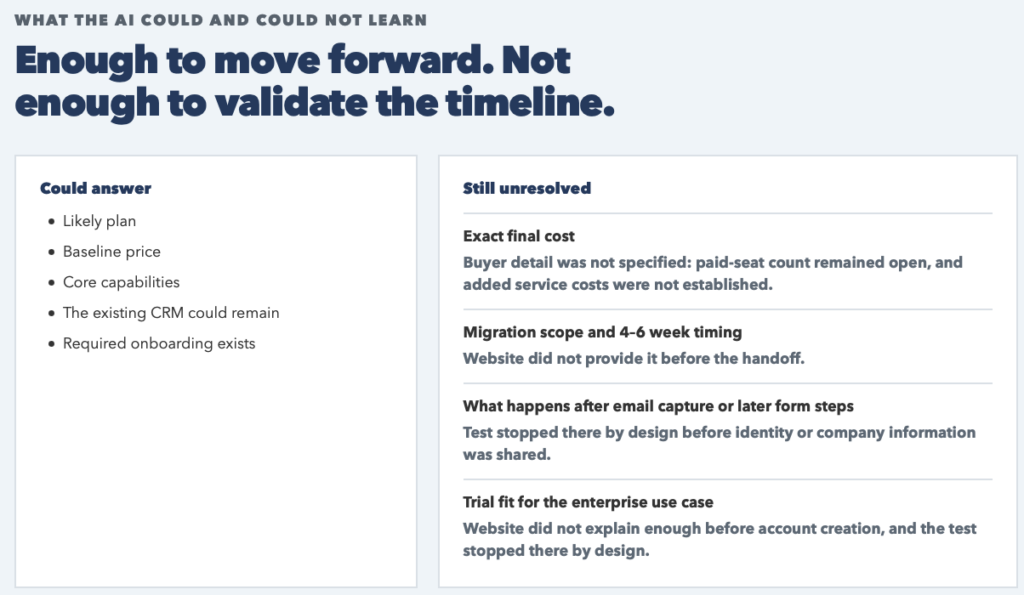
What the AI could and could not learn: enough to move forward, not enough to validate the timeline

Not Every Unanswered Question Was a Website Problem

Several questions were still unresolved, but for different reasons:

  • The buyer hadn’t provided enough information. Final cost depended on the number of paid seats.
  • The website hadn’t answered the question yet. Migration scope and timing, along with some service details, were still unclear before contact capture.
  • The test stopped by design. We did not see what happened after the point where the site required account creation or contact information.

That distinction is important. It kept me from treating every unanswered question as a website problem.

Knowing When to Involve a Person

I initially thought of these as “human handoffs,” but that implies we watched an actual salesperson take over. We didn’t. What we observed were points where the AI recognized that a person needed to step in.

The AI stopped before providing identity or company details, creating an account, submitting a form, booking a meeting, or making a commitment. That was the right behavior.
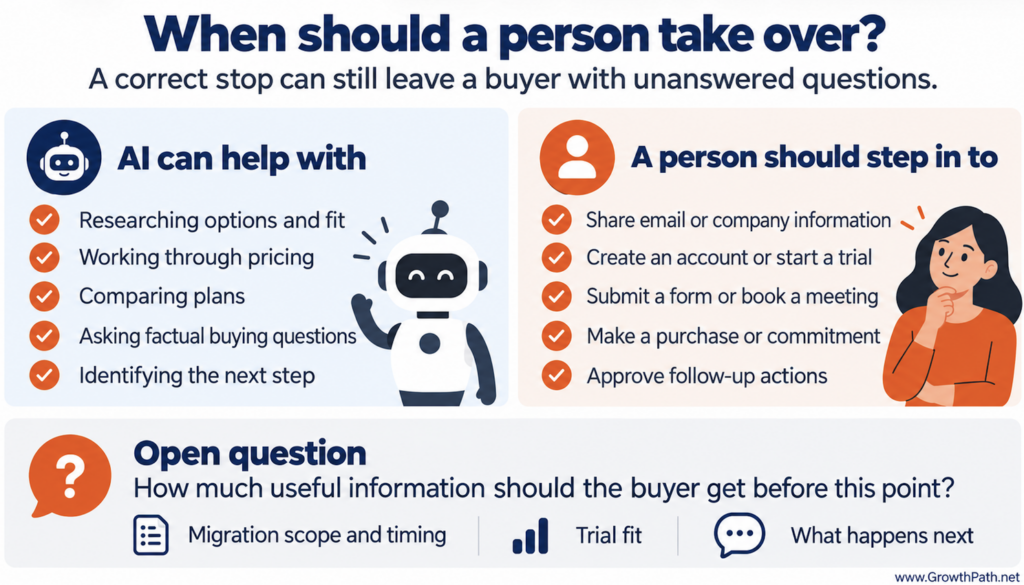
When should a person take over? What AI can help with and where a person should step in

The bigger question for me is how much useful buying information should be available before that point.

Gartner’s 2026 B2B buyer research points to a mix of self-service and human support. Seventy percent preferred a completely digital, self-service buying experience, while 69% said they wanted a sales rep to validate AI-generated insights.

We authorized the AI to ask one factual question about migration timing and onboarding. The website accepted the question, but did not answer it before asking for an email address. I would not call that a failure. There are good reasons to bring a person into a complex B2B purchase. But the site could still give the buyer something useful first.

For example, a response could look something like this:

“Whether a 4 to 6 week migration is realistic depends on your current setup, what needs to move or be rebuilt, and the support you need. Our standard onboarding covers [specific scope]. A specialist would need to assess [specific unknowns] before confirming timing and any extra services. If you’d like us to review your situation, share your email and we can continue from there.”

Illustrative example, not the vendor’s actual response.

The website does not have to answer everything before asking for contact information. But it can make baseline information easier to find, explain what varies by buyer, and clarify what requires human assessment. That guidance should be available on relevant pages, not only through chat. It gives both AI and human buyers a better starting point before sales steps in.

Andy Crestodina, co-founder and CMO of Orbit Media Studios, recently studied what happens when AI helps shortlist a vendor and then sends the buyer to the website. Across 97 B2B lead-generation sites, visitors referred by AI were more likely to become leads than visitors from other organic sources.

My experiment looks at the next step. What happens when the AI stays involved after the recommendation and starts taking buying actions on the buyer’s behalf?

Andy sees that progression coming too:

Headshot of Andy Crestodina, co-founder and CMO of Orbit Media
Andy Crestodina, co-founder and CMO of Orbit Media

“When AI recommends a brand, the visitor is much more likely to become a lead. That’s because buyers trust these recommendations. So it’s really a short jump from the buyer filling out the form, to letting AI do it for them. It’s going to happen. It may already be happening.”

Test AI Across the Buying Journey

This website was relatively easy for the AI to move through. It could reach pricing, trial, sales, and chat paths without repeatedly getting blocked or confused. The bigger weakness was getting the information the buyer needed.

There’s some early evidence that the website itself can make a difference. In one controlled study of 300 browser-agent runs, an agent-ready version of the same prototype website had much higher task success and required fewer steps than the conventional version. It’s one early study on a prototype, but it reinforces why I think this is worth testing.

That study looked at agent task success. My experiment adds a specific buyer situation and asks whether the AI can help that buyer make progress toward conversion.

On other sites, I’d watch for:

  • The AI can’t find what it needs. Navigation may be unclear, important information may be buried inside interactive elements, or key pages may be hard to reach.
  • The AI can’t understand what to do. Labels may be vague, options may be hard to compare, or the next step may not be clear.
  • The AI can’t take the next step. Pop-ups, login walls, forms that ask for information too early, or controls the AI cannot use may stop it.
  • The AI can’t recover when something goes wrong. Errors, dead ends, or unclear alternatives may leave it unsure how to continue.

I’d use AI itself to test the buying journey and watch where it slows down, gets stuck, misses information, or chooses poorly. Some stopping points are appropriate places for a person to step in. The goal is to remove the unnecessary ones that keep the AI from helping the buyer.

The Context Should Follow the Buyer Into Sales

The experiment stopped before an actual sales conversation, so we did not test what happened next. But it raised another question: if AI has already worked through pricing, checked fit, gathered requirements, and identified open questions, how much of that context should follow the buyer into sales?

I think the answer is quite a bit. Making the buyer start over wastes work for both the buyer and the seller.

Min Wang has led digital marketing at Smartsheet, Brocade, Cisco, NetApp, and Dell, and is now building in AI. She sees the same connection between the website experience and what happens when sales steps in:

Headshot of Min Wang, Co-founder and CEO of Betoken
Min Wang, Co-founder and CEO of Betoken, Inc.

“We’ve spent years designing digital experiences around what a human buyer needs to know and do next. As AI acts on the buyer’s behalf, we must look at that same journey through an Agent Experience (AX) lens: Can an AI agent quickly get what it needs to evaluate us, and where is the optimal human handover?

When Sales steps in, both buyer and seller should inherit total context from that AI interaction, freeing human teams to focus on what actually closes enterprise deals: high-empathy alignment, multi-stakeholder consensus, customized ROI modeling, and complex negotiations.”

What We’re Still Figuring Out

This was one controlled experiment with one AI system, one website, one buyer situation, and a limited number of runs. Agent behavior can vary by model, instructions, website state, and permissions. This was not a benchmark or conversion study.

I still want to know how consistent these results are across AI systems and websites, which buying questions should be answered before a buyer shares contact information, and where a person should step in. I also want to know whether making buying information clearer for AI improves the experience for people too. I suspect there’s a lot of overlap, but we didn’t test that here.

My hypothesis is that a better agent-assisted buying experience will improve conversion as more buyers delegate research and early buying tasks to agents. If the AI can’t get the information it needs, choose the right path, or take the next step, the buying journey can break down before a person gets involved. We didn’t measure conversion here, so I want to test whether improving that experience helps more agent-assisted journeys reach the intended conversion point.

One Experiment I’d Run

Give an AI one realistic buyer situation from your business. Define what it can do and where a person needs to take over, then let it choose how to proceed.

You can start with a prompt like this, using an AI tool that can navigate and interact with websites.

Sample prompt

“Act as a B2B buyer evaluating [product category] for [company situation]. Visit [vendor website] and determine whether the product meets our needs, what it would likely cost, and what options are available to move forward.

Use only information you can verify during this website visit. If information is unavailable, unclear, or depends on details I haven’t provided, say so rather than guessing.

You may navigate pages, follow links, and explore pricing, trial, demo, and sales options. Do not provide personal or company information, create an account, start a trial, submit a form, book a meeting, or make a purchase or commitment without my explicit approval.

Choose your own path through the website. At the end, summarize what you learned, what remains unanswered, where you encountered difficulties, and when human involvement was needed.”

Watch four things:

  • Can it get the information the buyer needs?
  • Does it choose an appropriate next step?
  • Can it take that step on your website?
  • Does it know when a person needs to take over?

Then look at what is still unresolved and why. Did the AI need more information from the buyer? Was the information unavailable on the website? Or did the test stop by design?

We’ve spent a lot of time learning how AI sees, describes, and recommends our brands. As AI starts taking action for buyers, I think we need to test more of the buying journey too.


The Practical AI in Go-to-Market newsletter shares learnings and insights in using AI responsibly. Subscribe today and let’s learn together on this AI journey.

For applied learning: Explore our applied AI workshops, offering both strategic sessions to shift mindsets through practical AI uses and hands-on sessions to build human+AI workflows. You’ll leave with either a clear plan or working solutions. Office hours provide follow-on support to keep momentum going.

For ongoing advisory: I work with leaders as a strategic advisor through their AI transformation, providing guidance, frameworks, and a sounding board as they build. If that’s what you need, let’s talk.

For team transformation: I partner with GTM leaders to move from scattered AI adoption to an operating model where human and AI teammates work together across workflows.

For speaking: Here are virtual and in-person events where I’ve covered a variety of AI topics. I’ve also keynoted at many conferences and corporate events.

If any of this resonated, I’d love to hear from you. Reply to this email, find me on LinkedIn, or come say hi at an event.
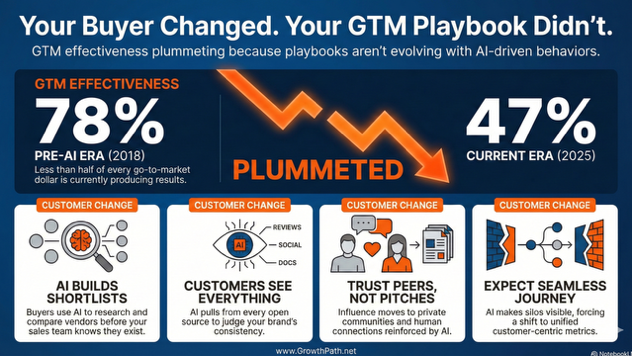

Your Buyer Changed: Four AI-Driven Shifts Breaking the GTM Playbook

Liza Adams · February 19, 2026 ·

Your Buyer Changed. Your GTM Playbook Didn't. GTM effectiveness fell from 78% to 47%

Your buyer now uses AI to research, compare, and build a shortlist before they ever talk to your team. They trust peers over your pitch. And AI shows them everything about your brand, good or bad. Most GTM playbooks were built before any of this was true.

Quick Take

I’ve spent the past couple of years writing about AI search, brand trust, team structure, workflow design, and leadership. Each felt like a separate topic. It took a room full of CMOs and one word (attribution) to help me see they’re all connected. They all trace back to the same root cause: how your buyer changed.

This newsletter connects the dots. Four shifts in buyer behavior are breaking how you reach customers, how you measure results, and how your teams work together. Most teams are feeling the symptoms but haven’t seen the full picture yet.

Key takeaways:

  • Your buyer’s AI builds the shortlist now. If AI can’t find your content or doesn’t understand what you’re best at, you’re not in the conversation.
  • AI shows your buyer whatever it finds about you, from every source, all at once. Consistent signals build trust. Mixed signals create confusion. If it’s unclear, AI may fill in the gaps on its own.
  • Influence is moving to peers, communities, and real human connections. AI reinforces those voices over yours.
  • Connected, personalized experience across the full customer lifecycle is now the minimum to compete. Delivering it requires breaking down silos between marketing, sales, and CS.
  • Replace attribution and per-department KPIs with three metrics your customers actually feel: time to value, customer satisfaction, and net revenue retention. These are numbers your CFO already watches.
  • These four shifts don’t each break one thing. They ripple across your content strategy, your metrics, and your team structure at the same time. That’s why everything feels like it’s in motion.

AI Video Explainer and AI Podcast Versions of This Newsletter

To support different learning styles, this newsletter is available as an 7-min AI video explainer and a 16-min AI podcast with two AI hosts. If you haven’t seen these AIs in action, they’re worth a view. The tech is advancing in amazing ways. I used Google’s NotebookLM to create these and personally reviewed them for accuracy and responsible AI use. (There are some typos in the AI explainer but they are minor.)

How This Started

A couple weeks ago, I was co-presenting on a human+AI transformation journey during CMO Coffee Talk with Megan Cabrera, VP of Marketing Operations at Sophos. We had 200+ CMOs and marketing leaders on Zoom. The conversation was flowing. Then the topic of attribution came up, and I had a reaction I wasn’t expecting.

I said what I’ve long been thinking. The chat on Slack lit up with comments like “spot on” and “preach” to “Liza for president.”

Matt Heinz, Founder of Heinz Marketing and CMO Coffee Talk Host, shared his thoughts on the topic.

Headshot of Matt Heinz, Founder of Heinz Marketing
Matt Heinz, Founder of Heinz Marketing and CMO Coffee Talk Host

“We’ve been debating attribution in CMO Coffee Talk for years. It always gets heated because every CMO is stuck between a CEO that wants credit assigned and a buying process that makes clean credit impossible.

Liza nailed something most of us have been feeling but hadn’t said out loud: we keep trying to fix attribution when the buying process it was built to track doesn’t exist anymore.

When the buyer’s AI has already built a shortlist before your rep picks up the phone, arguing about which touch gets credit is the wrong conversation. We’ve argued about who gets credit for the deal. Meanwhile nobody’s asking whether the customer felt like we actually helped them buy.”

I wrote about it in a LinkedIn post that struck a nerve. The comments and DMs kept coming. But the more I sat with the response, the more I realized attribution was just one symptom. I started listing other GTM practices that feel like they’re running on borrowed time. The list got long. Then I noticed they all trace back to how your buyer changed.

Here are the four buyer shifts driving the change, and what they mean for your GTM playbook.

Four Ways Your Buyer Changed

1. You might not make the consideration set.

Your buyer’s AI builds the shortlist now. It’s not your SDR’s email or your Google ad. AI.

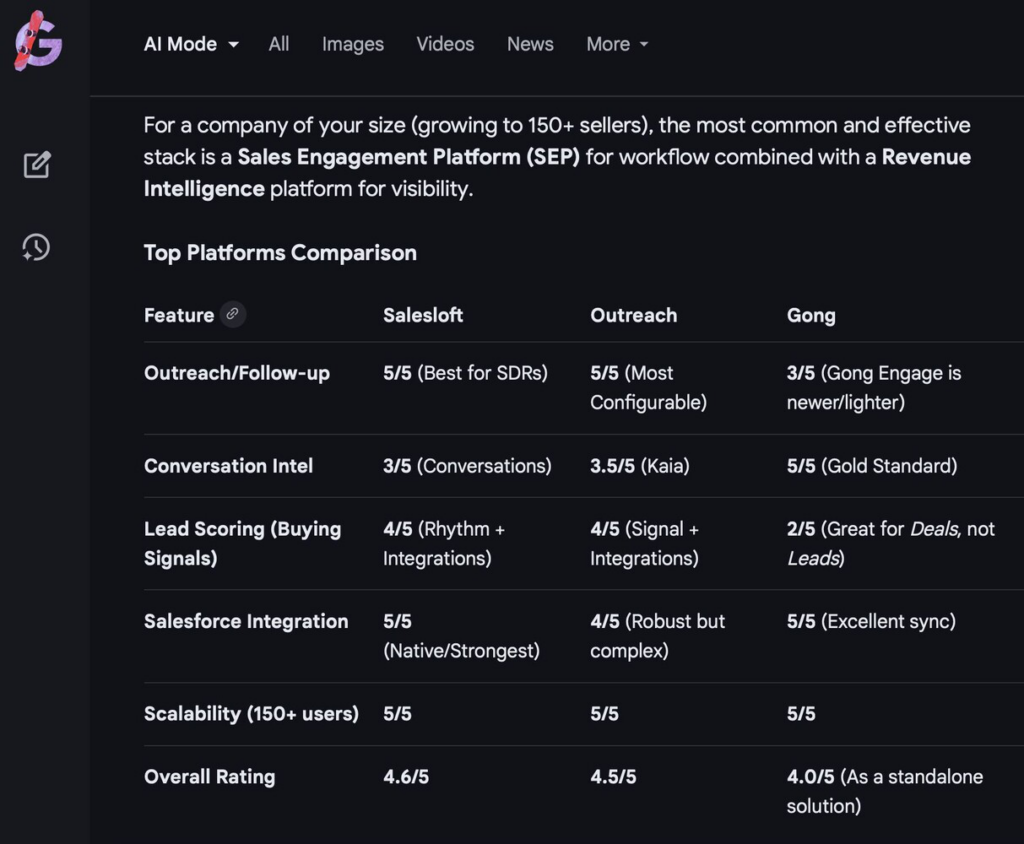
I ran this test myself. I opened ChatGPT as a VP of Sales Ops looking for a sales engagement platform. I gave it my company size, my pain points, the outcomes I cared about, and asked it to rate the top platforms. I ran the same prompt in Google AI Mode, Claude, and Perplexity.

I didnt specify the vendor names in my prompt. But each one built comparison tables, rated Outreach, Salesloft, Gong, Clari, and HubSpot Sales Hub on my criteria, and made a recommendation in seconds.

When I looked at what AI actually cited:

  • Review sites like G2. Cited.
  • Reddit and community forums. Cited.
  • Vendor blogs. Cited.
  • Generic listicles. Cited.
  • Constellation ShortList for Sales Engagement. Not cited.
  • Forrester Wave for B2B Sales Tech. Not cited.
  • Gartner MQ for CRM Customer Engagement. Not cited.
  • Anything behind a form. Nowhere to be found.

The buyer never visited a vendor website. AI formed its opinion from open sources. Content behind a gate didn’t exist.

If AI can’t find you, can’t access your content, or doesn’t understand what you’re best at, you’re not on the list. The buyer never knows you were an option.

I shared more on the gated content piece in a recent LinkedIn post. Here’s the AI search prompt and the full response from Google AI Mode.

Google AI Mode comparison table of sales engagement platforms
Comparison Table in Google AI Mode’s Response

2. Whatever AI finds about you, it shows your buyer. Good or bad.

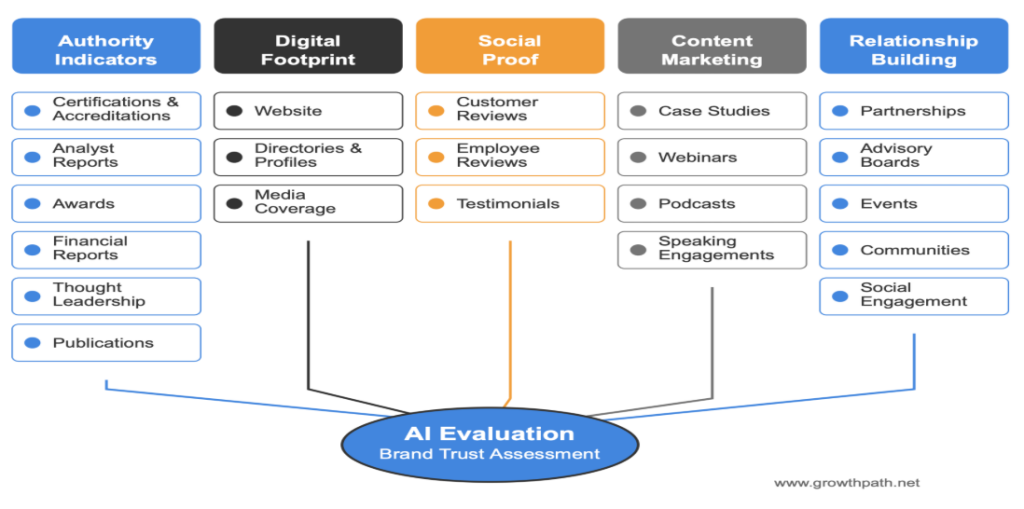
You don’t get to choose what your buyer sees first anymore. AI pulls from everywhere: your website, support documentation, G2 reviews, Glassdoor, Reddit threads, LinkedIn posts from your employees, case studies (if they’re accessible), news coverage.

It reads all of it at once and looks for patterns. Consistent signals build trust and mixed signals create confusion. AI may show both or make up a response. And you may not like what it serves up.

I experienced this myself when I received an invitation to be listed in a business directory. I didn’t schedule a call or review their materials. I asked AI. Within seconds, it showed me red flags in their business practices that sealed the decision before they could make their pitch. Here are my prompt and the AI response.

Your buyers are doing the same thing when they evaluate you.

This means your brand needs to hold up across every channel AI reads. Here’s a simple framework I use for thinking about this:

  • Visibility – Does AI know you exist as a credible option?
  • Sentiment – Is what AI says about you accurate, helpful, and consistent?
  • Recommendation – Does AI suggest you for the right situations?

If you haven’t checked how AI describes your company and your category, that’s a good place to start this week.

Signals AI reads at once to evaluate brand trust
AI reads all of these info at once and looks for patterns to determine signal

3. Influence and decisions are moving to peers, communities, and real human connections.

Recent research from Forrester (2025) and TrustRadius (2025) shows that B2B buyers rely most on other buyers, such as peers, customers, and online reviews, as their most trusted sources, well ahead of vendor sales reps and marketing content. AI works the same way; when it answers questions, it tends to pull from those same places, including review sites, communities, and real customer stories, not your latest pitch.

I saw this play out in real time. A GTM VP in one of my communities asked a simple question: “We’re evaluating AI SDRs. Anyone using one generating good results?” Within an hour, four peers jumped in with honest takes, including one who named a vendor the VP hadn’t considered and another who said prospects kept dropping off because the AI talked in circles instead of giving straight answers. The VP told me she narrowed her shortlist that afternoon based entirely on those responses. No demo, no sales call, no content download. The vendors on her original list had no idea they’d already been cut.

I belong to several GTM and exec communities like Pavilion, Marketing AI Institute, Women in Revenue, AI Marketing Forum, CMO Huddles, and CMO Coffee Talk. That’s where real conversations happen, people being completely transparent, opening their networks and helping each other. People share their vendor experiences, offer recommendations, foster introductions, and make decisions. Relationships and trust are built with professional reputations put on the line.

The places where real influence happens are getting harder to measure and impossible to control. This could be a conversation at an industry event, a recommendation in a Slack community, an honest review from a customer who actually uses your product every day. In many cases, these go beyond supporting your sales funnel; they are the funnel.

AI handles the research. Humans handle the relationships. And they’re reinforcing each other.

4. Connected, personalized experience is now table stakes.

Your buyers have always wanted a smooth experience across every interaction with your company across marketing, sales, onboarding, and support. For years, this was a differentiator. If you delivered it, you stood out. Most companies couldn’t, so the bar stayed low.

That bar’s now higher.

AI makes it possible to deliver connected experiences at scale. Which means buyers now expect it. Not having it is no longer an acceptable gap. It’s a reason to choose someone else.

And here’s why this shift has the biggest internal implications. You can’t deliver a connected experience if your teams run separate systems, measure separate KPIs, and hand off customers like a relay baton. When marketing says one thing, sales delivers another, and customer success solves different problems entirely, AI makes those gaps visible to buyers faster than ever.

This is the shift that forces the internal rethink: how your teams are structured, how they share data, and how they measure success. Darcy Kurtz, CMO of WP Engine, reinforces this:

Headshot of Darcy Kurtz, Chief Marketing Officer of WP Engine
Darcy Kurtz, Chief Marketing Officer of WP Engine

“I’ve sat in both chairs. CMO building demand, CRO accountable for revenue. What you see from the revenue side is how much context disappears between teams. Marketing builds one story, sales tells another, onboarding starts from scratch. The customer feels every seam. AI makes it worse because the whole journey happens faster now. There’s no time to cover the gaps.

You don’t fix this with better handoffs. You fix it by making marketing, sales, and CS stop operating like three different companies.”

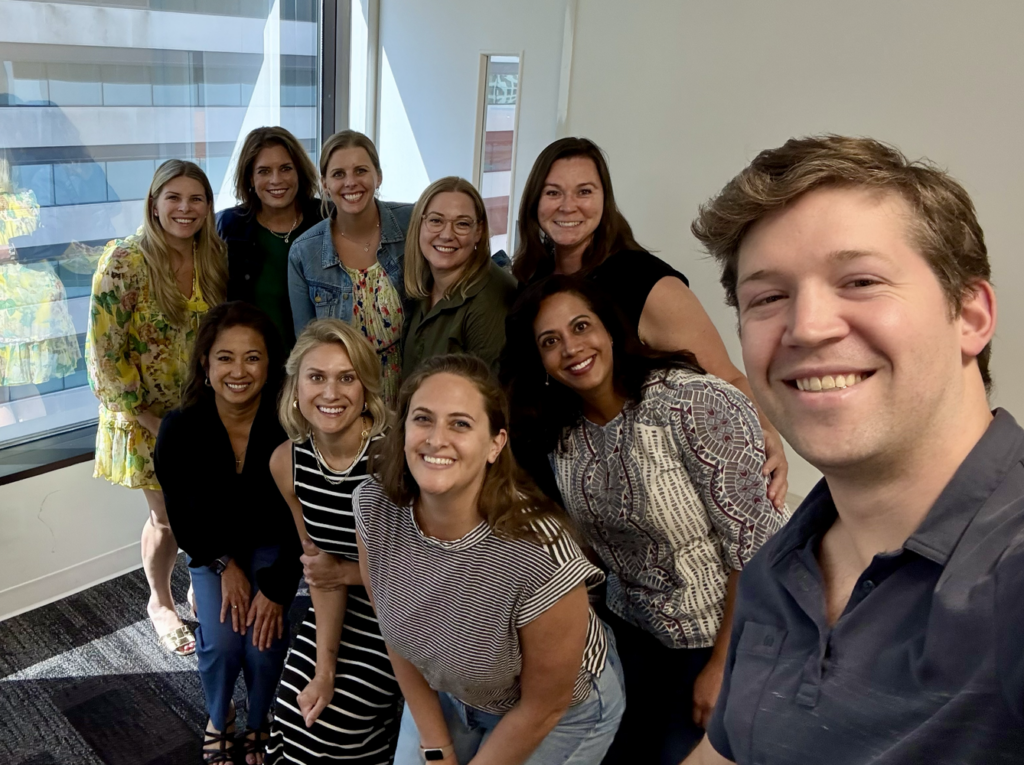
WP Engine marketing leadership team during an AI workshop
WP Engine’s Marketing Leadership Team During an AI Workshop

What This Means for Your GTM Playbook

If these were four separate shifts, you could address them one at a time. Update your SEO strategy here, fix a handoff there. But they’re not separate. They’re happening together, and they’re feeding each other. That’s why so many GTM leaders I talk to feel like everything is in motion at once. It is and it shares a root cause.

These four shifts ripple across how you reach your buyer, how you measure results, and how your teams work together, all at the same time.

How you reach your buyer

  • Shift from SEO to GEO – The goal is getting cited by AI, not just ranking on a page. Gartner estimates brands will lose 25% of their web traffic as AI answers buyer questions directly. Your content now serves two audiences: humans who want story and connection, and AI that needs structure, clarity, and access. Anything behind a form is invisible to AI. That doesn’t mean every form disappears. A webinar registration or a personalized assessment is worth the form. But the thought leadership and expertise that builds your AI visibility needs to be findable.
  • Audit every channel AI reads – Your website and G2 profile aren’t enough. Run the Visibility, Sentiment, Recommendation framework from Shift 2 across support docs, Glassdoor, Reddit, employee LinkedIn posts, and news coverage.
  • Earn the voices AI amplifies – Make it easy for real customers to share real experiences. Show up where your buyers spend time. This is harder to scale and impossible to fake, which is exactly why it works.

Deb Wolf, CMO at Dataminr, shares sage advice.

Headshot of Deb Wolf, Chief Marketing Officer at Dataminr
Deb Wolf, Chief Marketing Officer at Dataminr

“Here’s my advice to every CMO right now: stop what you’re doing and go be your own buyer. Open ChatGPT, Perplexity, Claude, Gemini, Google AI Mode. Search for your company the way a prospect would. Ask it to compare you to your competitors. What comes back will tell you more about your go- to-market gaps than any dashboard.

Most of us are still optimizing a playbook we built for a buyer journey we haven’t personally experienced as a buyer. The shift is real, but you won’t feel the urgency until you see what AI actually says about you.”

How you measure what’s working

This is the one that triggers the strongest reactions when I bring it up with CMOs.

Everyone knows attribution is getting harder. Fewer people have said out loud that the real problem is your metrics were built for a buyer journey that no longer exists.

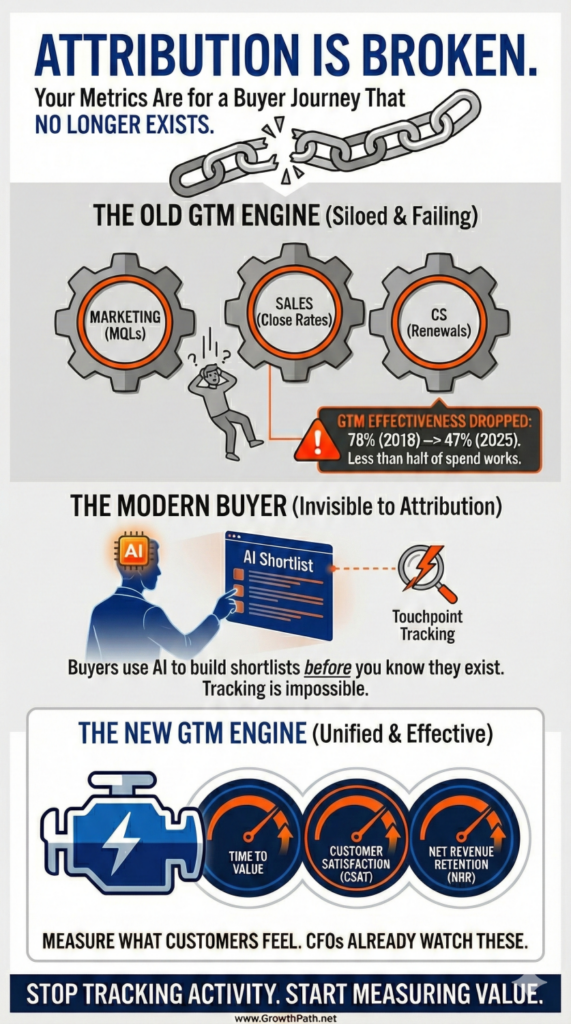
MQLs measure marketing activity, not buyer intent. Per-department KPIs (leads for marketing, close rates for sales, renewals for CS) optimize each team’s scorecard while the customer falls through the gaps between them.

An analysis of 478 B2B companies found that GTM effectiveness dropped from 78% in 2018 to 47% in 2025 (Martech.org, 2025). Less than half of every GTM dollar is producing results. That’s a measurement problem built on assumptions about buyer behavior that no longer hold.

Replace it with metrics your customers experience and care about:

  • Time to value – how many days from signed contract to first live campaign, first threat detected, or first workflow created? This tells you whether your customer is getting results.
  • Customer satisfaction – do they show up to your QBRs, respond to your CSM, and agree to be a reference? This tells you whether your customer trusts you.
  • Net revenue retention – are existing customers expanding their contracts, adding more features, or increasing usage? This tells you whether your customer grows with you.

When customers get results, trust you, and grow with you, that’s a GTM engine that’s working.

I know what you’re thinking. “My CEO wants to know which campaign sourced the deal.”

Try this in your next leadership meeting:

“We’ve been asking which touch gets credit. But our buyer built their shortlist with AI before we knew they existed. Instead of tracking what we can’t see, what if we measured what our customer actually feels? How fast are new customers getting to value? Are they satisfied enough to expand? Is our net revenue going up or down?”

Attribution is broken: the old GTM engine vs. the new one

These are numbers your CFO already watches because they predict the revenue outcomes the board cares about.

You can keep tracking what you track today. But shift the weight toward outcomes your customers experience and away from activity metrics that no longer reflect how buyers actually buy.

How your teams work together

This is where it all comes together. And it’s the hardest part to change.

When buyers expect a connected experience across the full lifecycle, teams can’t operate as separate functions that hand off to each other. Every handoff loses context. Every silo creates a gap the buyer feels.

Most companies aren’t there yet, but the direction is clear. The Microsoft 2025 Work Trend Index found that teams are forming around goals, not functions, with AI helping people work across traditional boundaries. The emerging model points to journey teams that own customer outcomes end to end, with AI carrying context so the buyer’s story doesn’t restart every time they talk to someone new.

G2 just created their first-ever President of Go-to-Market role, consolidating marketing and revenue under one leader. When the company that runs one of the largest B2B review platforms restructures because buyer behavior changed, pay attention.

Sean McCaffrey at Cin7 is building this at the operational level. His team connected marketing, sales, and CS into one AI-native growth engine designed around how buyers actually buy. I wrote about his full approach in a recent newsletter.

This also changes how teams adopt AI. The value comes when AI connects workflows across teams, not when each department gets its own tools.

Go Deeper

Each of these areas has a full newsletter behind it. Here’s where to go next based on what’s most relevant to you:

  • AI search and content visibility – Make Your Brand Sourced and a Top Result in AI Search | Standing Out When Web Traffic Declines
  • Brand trust and AI perception – Brand Economics in the Age of AI | When AI Judges Your Brand Before Humans Do
  • Team structure and customer outcomes – No Daylight: How AI is Reorganizing GTM Teams | How a Leading Cybersecurity Company Redesigned Marketing Workflows | 80% Meeting Rates: A Real-Life AI Growth Engine Built Around the Customer
  • Metrics and leadership – The GTM Leadership Criteria That Worked for Decades Aren’t Enough Anymore
  • Workflow transformation – Your AI Teammates Aren’t a Team Yet | The End of Handoffs

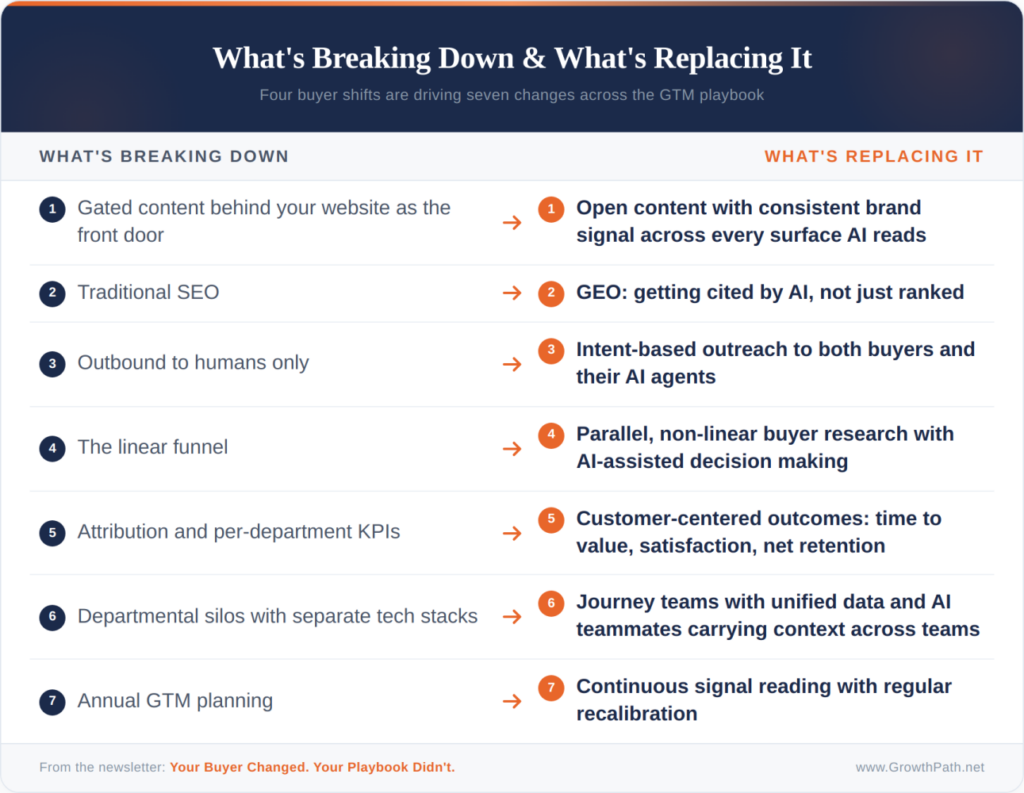
What’s Breaking Down and What’s Replacing It

Here’s the full picture in one view. Each of these connects back to one or more of the four buyer shifts above.

What's breaking down in GTM and what's replacing it

What’s NOT Dead

This is a big shift. But some things are getting stronger, not weaker. Brand matters more than it has in years because AI reads everything and looks for consistency. Human relationships are more differentiated than ever because everything else can be scaled. Strategic thinking is more important because AI exposes weak strategy faster. And content still matters but the format, distribution, and audience have changed.

Where to Start

You don’t need to rethink everything at once. But you do need to start seeing the full picture. Here are three things you can do this month.

  • Run the AI search exercise from shift #1 for your own company – Open ChatGPT, Perplexity, Claude, Gemini, Copilot, or Google AI Mode as your target buyer. Search for solutions in your category the way a prospect would. Ask it to compare top vendors on a set of eval criteria and offer a recommendation with reasons why. The gaps will be obvious.
  • Check your metrics against customer outcomes – In your next leadership meeting, ask each function lead to name one metric that measures the customer’s success, not the department’s. When marketing says MQLs, sales says close rate, and CS says churn, you’re looking at the misalignment.
  • Find your worst customer handoff – Map what the customer actually experiences at the transition between two teams versus what each team thinks they deliver. That gap is your first redesign opportunity. Start there.

None of this requires starting from scratch. It requires seeing the full picture and deciding where to start.

If you run the AI search exercise, I want to hear what you found. DM me or drop it in the comments. The CMOs who’ve done this tell me it’s the most eye- opening 10 minutes they’ve spent this quarter.


Want practical AI insights like this delivered every two weeks? Subscribe to the Practical AI in Go-to-Market newsletter.

For applied learning: Our applied AI workshops offer both strategic sessions (use cases and roadmaps) and hands-on building (create AI teammates during the workshop). You’ll leave with either a clear plan or working solutions.

For team transformation: See real examples, a lean GTM team’s step-by-step playbook and a global cybersecurity leader scaling to 150+ marketers with 57 AI teammates integrated into daily workflows.

For speaking: Here are virtual and in-person events where I’ve covered a variety of AI topics. I’ve also keynoted at many organization and corporate-wide events.

Whether through the newsletter, multimedia content, or in-person events, I’d love to connect.

Copyright © 2026 · GrowthPath Partners LLC · Log in

  • LinkedIn