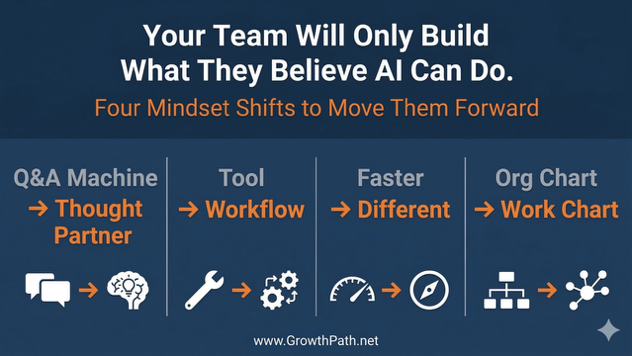
Your team is using AI. They prompt it for blog topic ideas. They ask it to do competitive research. Someone built an AI teammate to write nurture emails. They are all individual productivity plays.
That’s not a knock on the team. It’s what happens when people build based on what they’ve seen so far.
When the iPhone launched, most people treated it like a fancy way to make phone calls. It took time before anyone saw the wallet, the GPS, the camera, the way it would reorganize daily life. The technology didn’t change. What people believed it could do changed, and then everything they built on it changed too.
AI is in that same moment for most teams.
Quick Take
The hardest part of this transformation isn’t AI, it’s us: how we think about AI, how we grow with it, and how we move from scattered experiments to something that actually changes how we work.
This is Part 1 of two. This one covers where to start and how to measure where your team is. Part 2 covers how to move them forward.
Key takeaways:
- Your customers already use AI to research, compare, and decide. That’s the starting point.
- Four dimensions show where your team is and where they’re headed: Q&A Machine to Thought Partner, Productivity to Innovation, Tool to Teammate to Workflow, Task to Outcome.
- The progression starts with understanding how your customers changed, then shifting how your team thinks about AI, then building. You can start building now, but teams that shift their mindset first build for impact instead of just speed.
AI Video Explainer and AI Podcast Versions of This Newsletter
To support different learning styles, this newsletter is available as an 8-min AI video explainer and a 12-min AI podcast with two AI hosts. I used Google’s NotebookLM to create these and personally reviewed them for accuracy and responsible AI use.
It Starts with the Customer
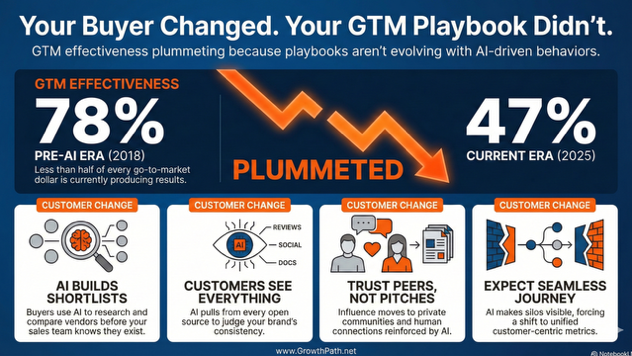
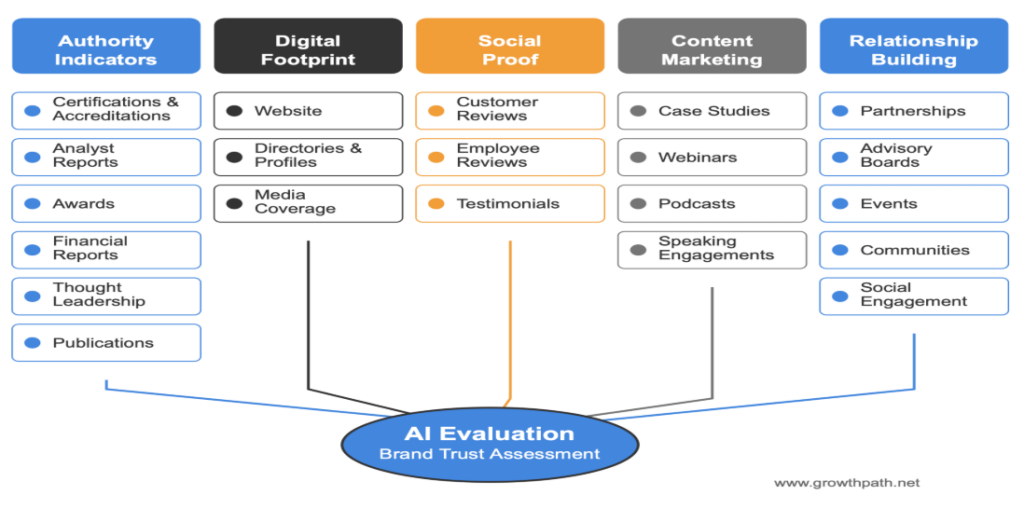
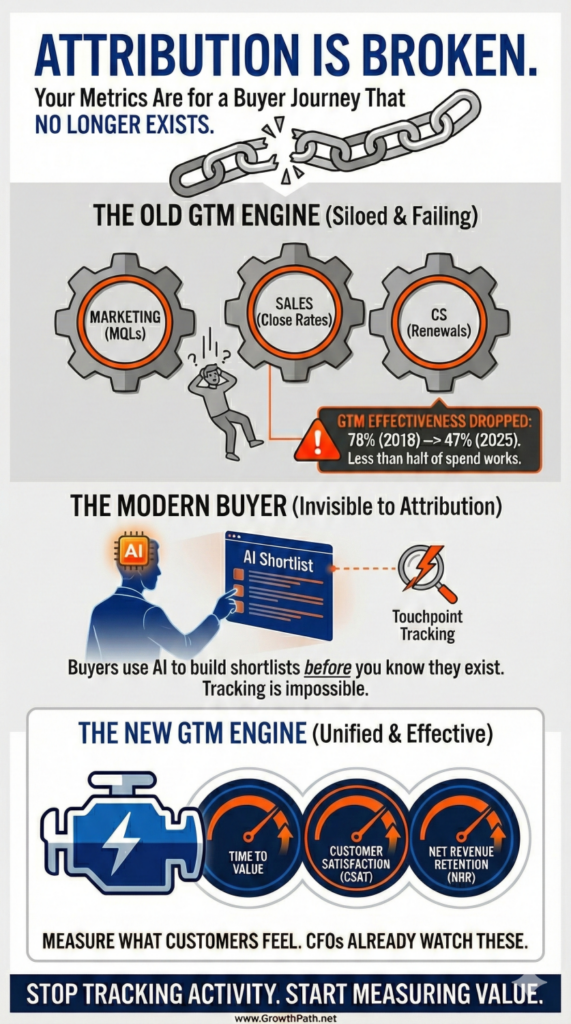
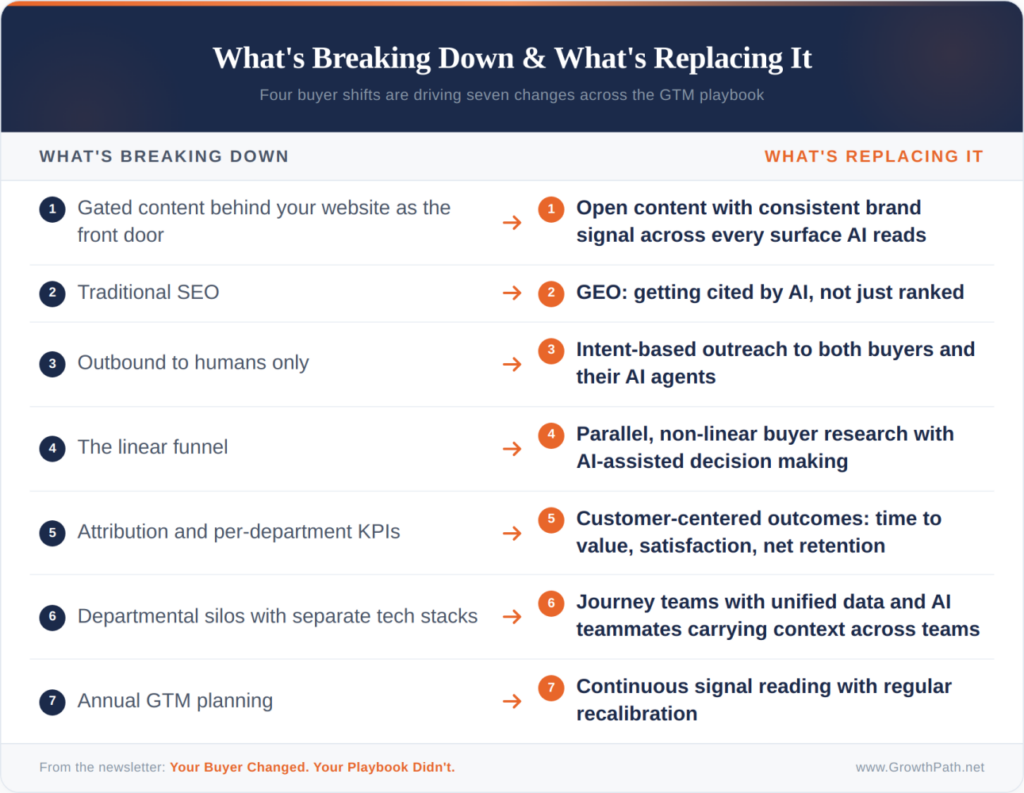
I covered four buyer behavior changes in a recent newsletter. AI builds shortlists before your sales rep talks to the buyer, AI shows buyers everything about you (good or bad), peers and communities carry more weight than your pitch, and buyers expect connected experiences across the full lifecycle.
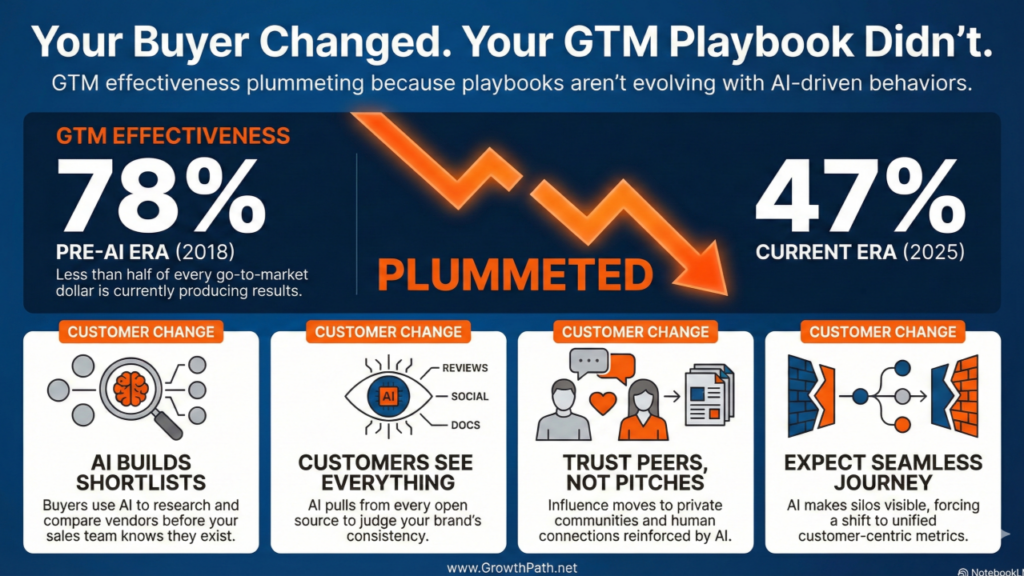
Every AI transformation conversation should start with the customer. Your customers changed. Your team needs to understand how.
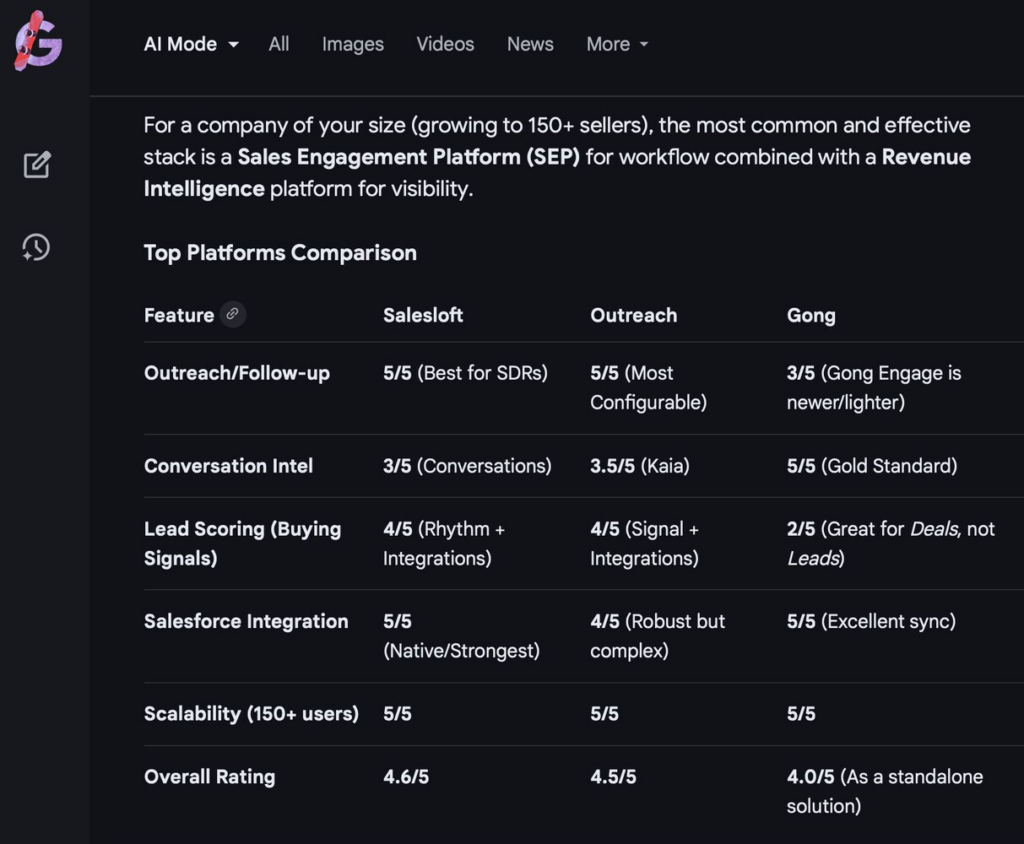
When I work with teams, I first show how buyers are using AI to find, evaluate, and make decisions about solutions and vendors. We open ChatGPT, Perplexity, Claude, Gemini, and Google AI Mode as their target buyer. We ask AI to compare them to competitors. We analyze each AI’s response.
Bernd Leger is CMO of Showpad, a sales enablement platform used by marketing and sales teams worldwide. His team ran this exercise recently.

“We talk about buyer engagement every day. So I figured we’d score well when we asked AI to evaluate us as a buyer would. We did, mostly. But the AI surfaced gaps between what we say on our site and what customers say in reviews. One of my team leads said, ‘If I were a buyer and this is what I saw, I’d want to dig deeper.’ Our positioning was strong. The signals across sources just weren’t telling the same story yet. That’s a gap you don’t find in a traditional competitive analysis.”
That’s what moves AI from “productivity tool” to “how we compete.”
Transformation starts with your team seeing how their customers already use AI to make decisions which makes this urgent. The four mindset shifts that follow change what they believe AI can do, and that belief determines what they build.
Four Dimensions Worth Measuring
How your team thinks about AI determines what they build with it. A team that sees AI as a search engine will use it for search. A team that sees AI as a thought partner, a teammate, a way to reimagine work will build differently. The progression is in the mindset, and the four dimensions below show where that mindset actually sits.
The gap between people is real, and it’s nobody’s fault. When differences are visible, like physical limitations, we give grace. We just help. When they’re invisible, like how someone’s brain processes information, we’re quick to judge.
AI right now rewards a specific way of thinking. If you naturally break problems into steps and see how a process connects end-to-end, it feels like a superpower. If your brain works differently, the same tools feel confusing and frustrating. That’s a difference in thinking style, not a lack of effort.
(I wrote more about this here, featuring a 6’11” former NBA player and me at 4’10”. The visual says it all.)

Your job as a leader is to see where each person actually is and help them progress.
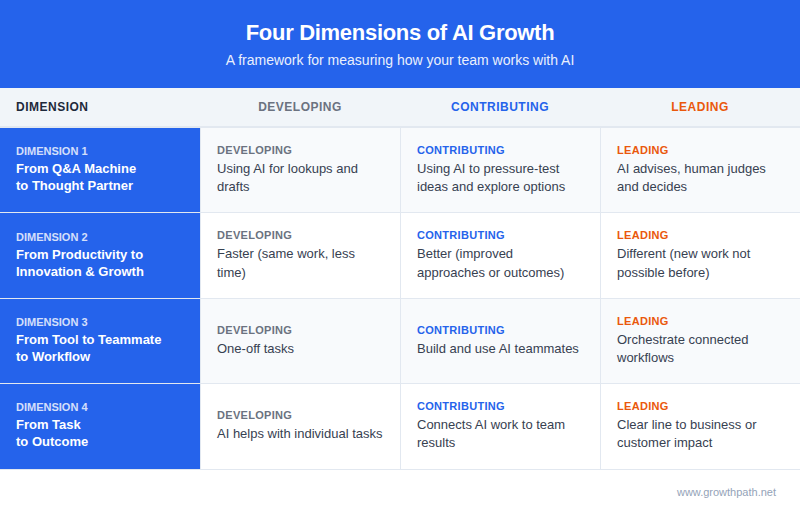
I use four dimensions to measure where teams are and where they’re headed. Each one has three stages: Developing, Contributing, and Leading. Where you start is less important than whether you’re progressing.
Dimension 1: From Q&A Machine to Thought Partner
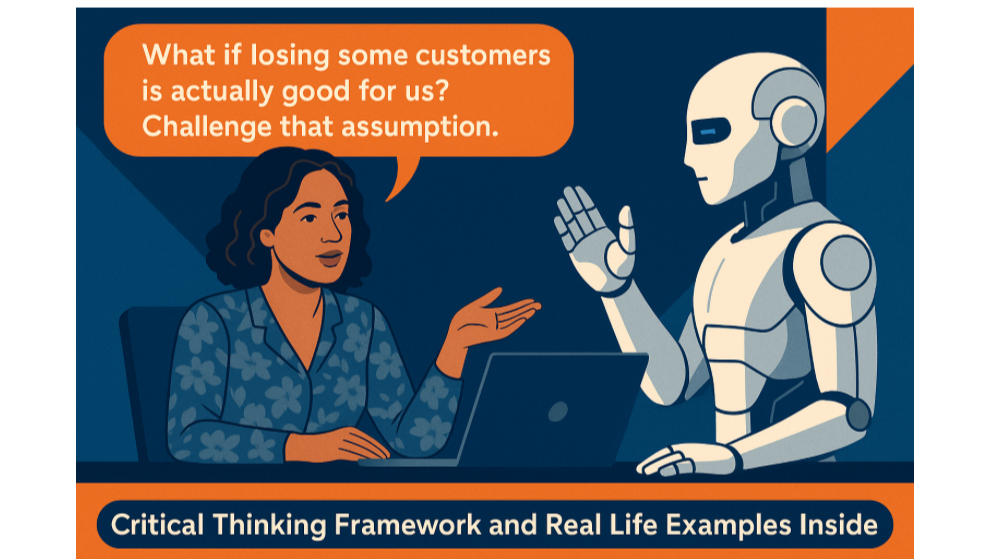
Most people start using AI as a search engine with better answers. That’s Developing. Contributing looks like using AI to pressure-test ideas, offer options, and challenge your thinking. Leading is when AI advises and you judge. You’re still making the decisions, but AI is helping you see what you might be missing.
A content lead at Developing asks AI to draft a blog post. At Contributing, she asks AI to identify gaps in her content strategy based on what buyers are searching for. At Leading, she uses AI to challenge her assumptions about what the audience actually needs before she commits to a content calendar.
How to Think Critically with AI walks through this progression with examples at each stage.
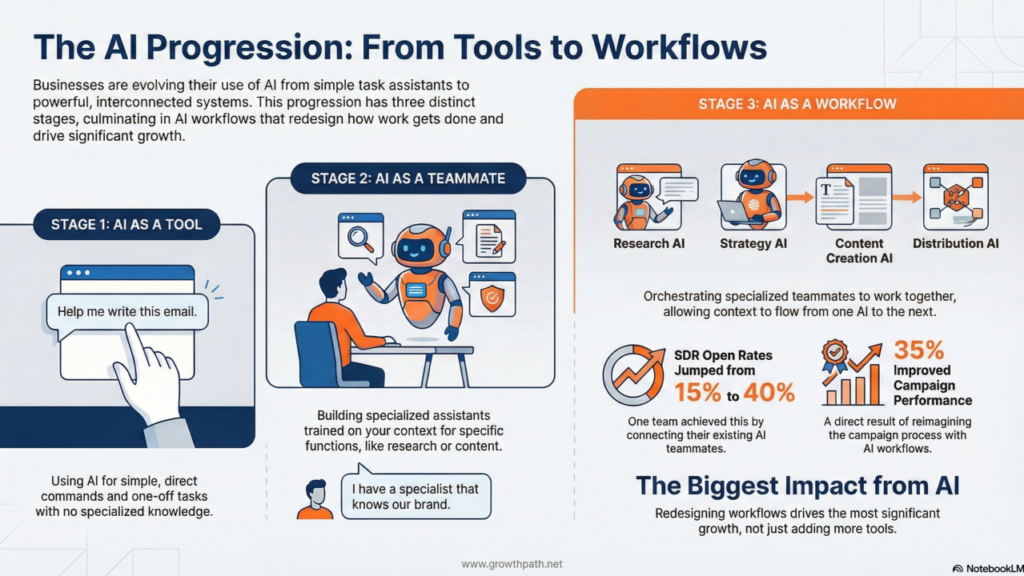
Dimension 2: From Tool to Teammate to Workflow
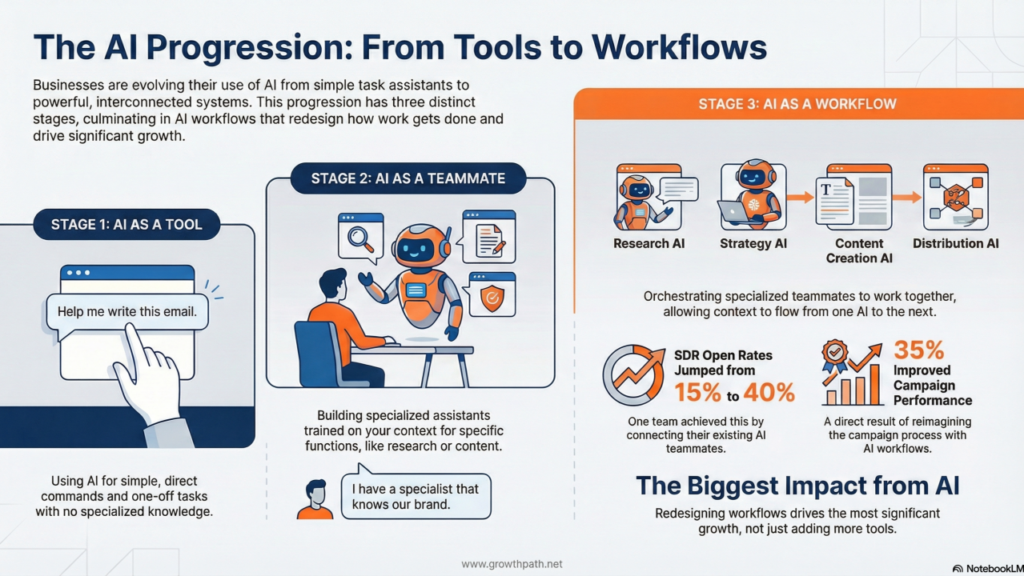
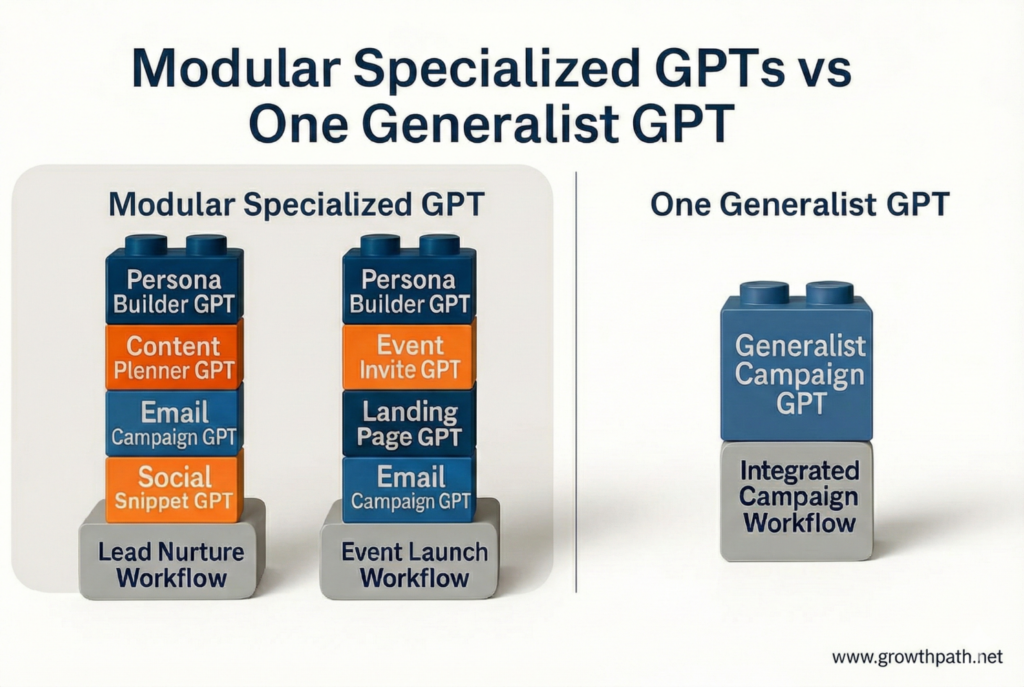
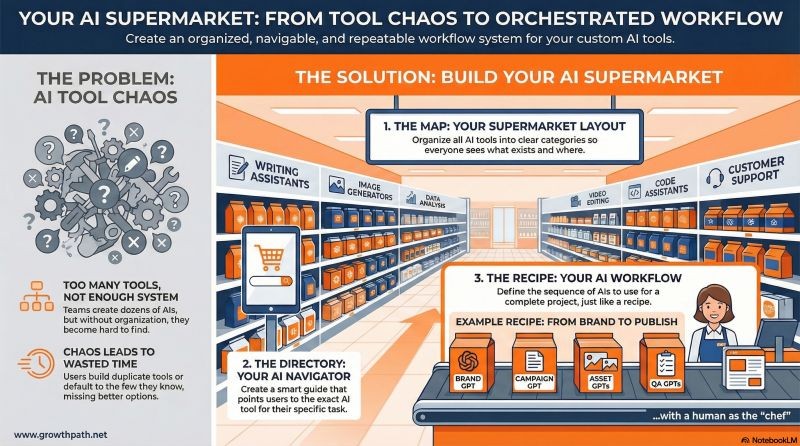
A tool does a task when you ask. A teammate has context about your work and collaborates with you over time. A workflow connects multiple teammates across a process with defined handoffs.
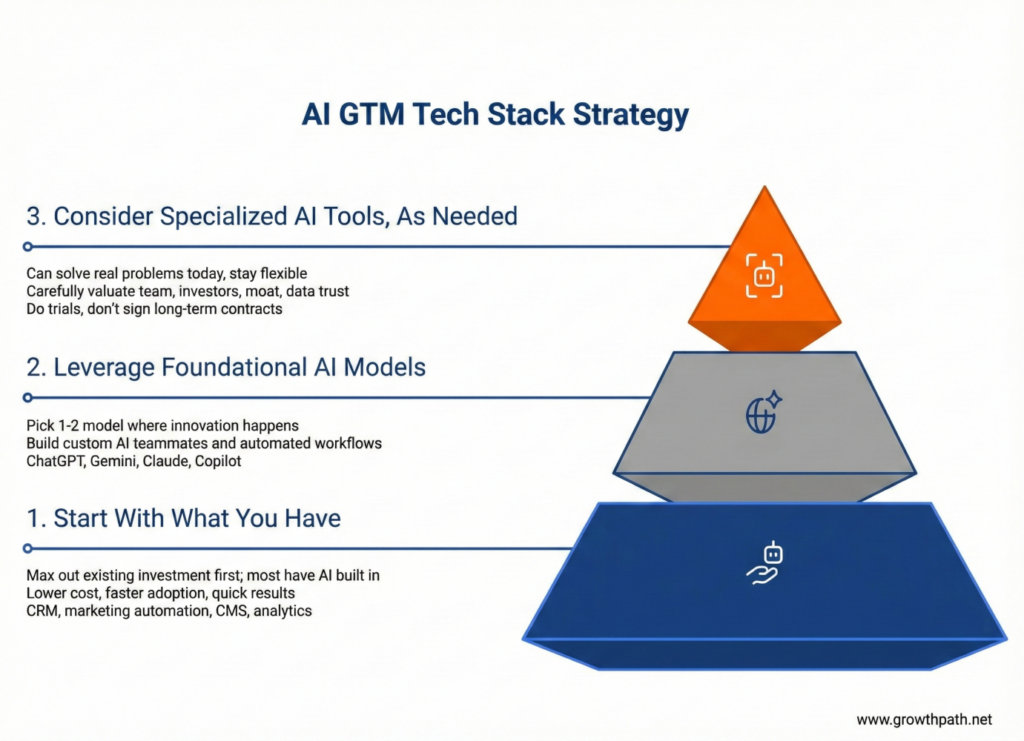
Most teams are still at tool. They’re using ChatGPT or Copilot for one-off tasks. The progression is building AI teammates trained on your knowledge, then orchestrating them into workflows that span your team or across teams.
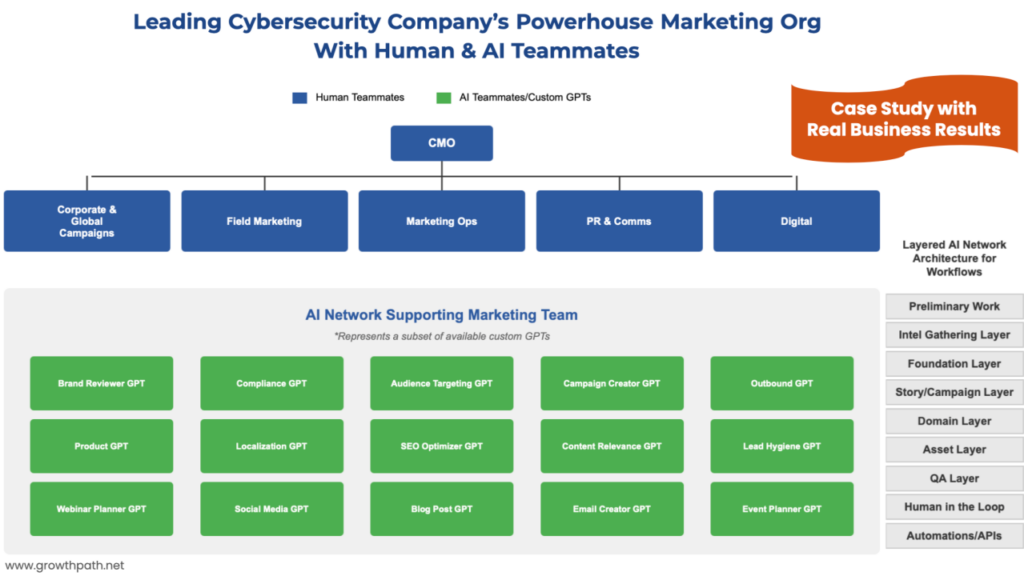
One team I worked with created 211 AI teammates during their experimentation phase. They kept 57 in active workflows. The rest weren’t all failures. Some were duplicates, some too narrow, some served one person’s needs just fine. But the 57 that stuck had something in common: their builders made five design decisions intentionally before they started. I covered those decisions in 211 AI Teammates, Only 57 Stuck.
Debbie Umbach is CMO of M-Files, a leader in AI-native document management. She ran this assessment with her marketing team.

“At M-Files, I found a team that was solid at using AI for everyday tasks. The next steps were building AI teammates and connecting them into workflows where the output of one feeds the next. Most people haven’t been shown what that looks like. Once we mapped the team across the four dimensions, I could see exactly where to focus.
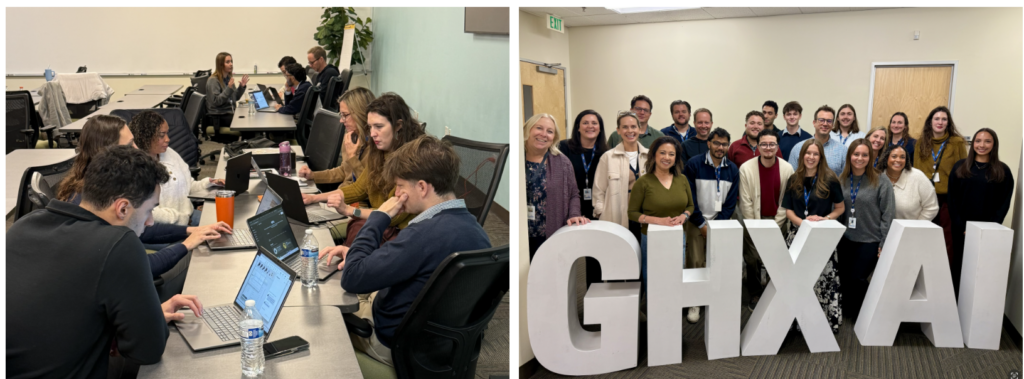
Within a couple of workshops, light bulbs came on. People got excited once they put hands on keyboard and saw what was possible. We went from scattered AI use to people building teammates and thinking about how to connect them.”
Debbie’s team saw the progression firsthand. Once you have teammates that work, connecting them is where the real scale happens. I covered that process in Your AI Teammates Aren’t a Team Yet.
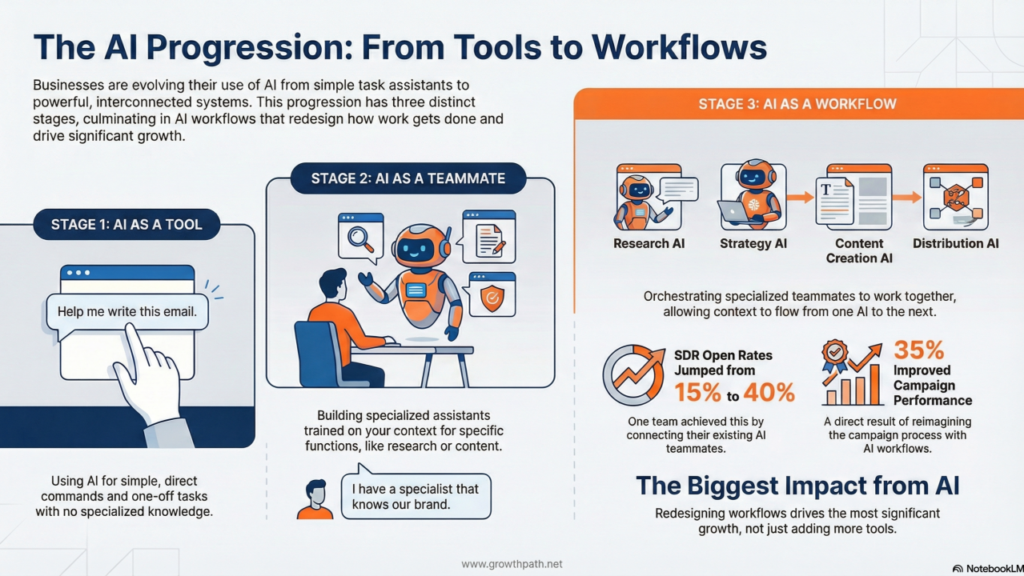
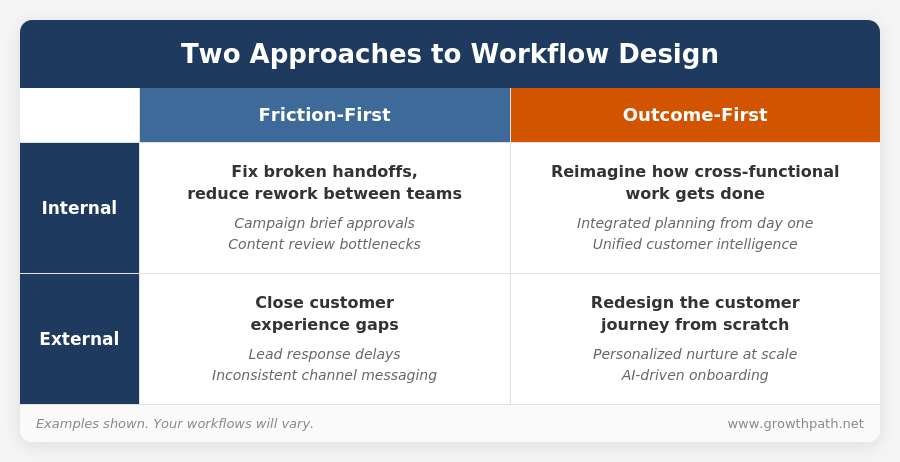
Dimension 3: From Productivity to Innovation and Growth
Most teams start with speed: faster reports, faster drafts, faster data formatting. Based on my work with GTM teams, 80-85% of AI use is speed: faster reports, faster drafts, faster data formatting. Speed is a good starting point, but it can’t be the ceiling.
The next step is quality. AI that pressure-tests your messaging against buyer personas before you launch. AI that runs A/B variations and identifies which positioning resonates by segment. AI that assesses your competitive gaps instead of just summarizing competitor websites.
The biggest opportunity is reimagined work, new capabilities that change what your team can do for customers and grow the business in ways that weren’t possible before.
Frank Nardi at Cloud Coach lived through this. His team started where most do, using AI to speed up content and messaging. Then Frank used AI to turn static buyer personas into dynamic, evolving systems that test messaging against real buyer needs before anything launches. Now his lean GTM team competes with companies 10x their size because AI gave them capabilities they couldn’t have staffed for. Same team, same budget. The belief about what AI could do changed, and so did the work. His full approach is in The Boldest AI Moves Are Coming From the Smallest Budgets.
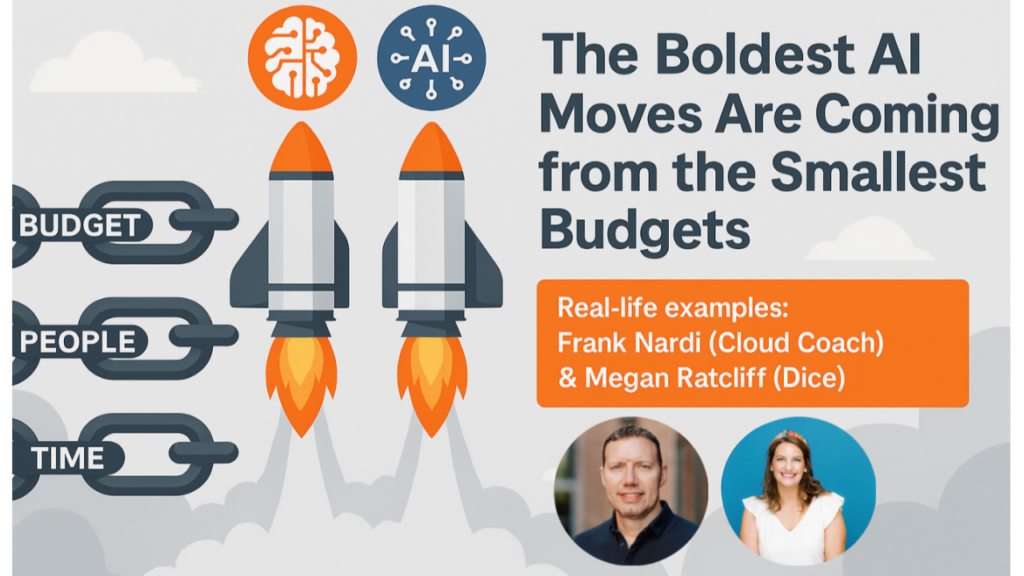
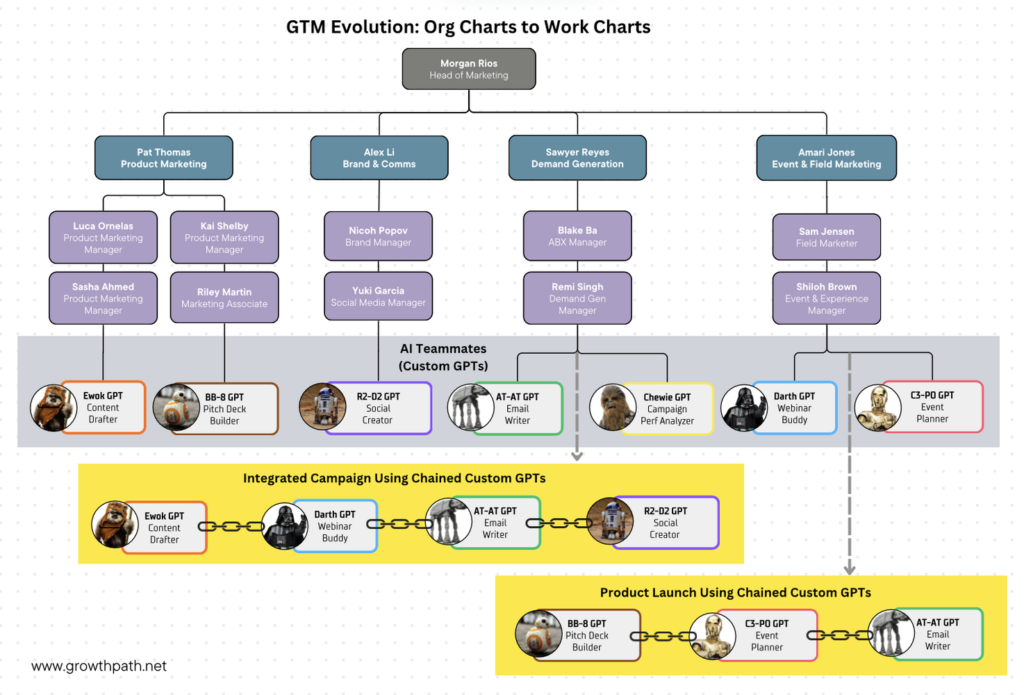
Dimension 4: From Task to Outcome (Org Charts to Work Charts)
Completing tasks is table stakes. The progression is toward outcomes: team outcomes first, then business outcomes, then customer impact.
A demand gen manager at Developing uses AI to generate campaign assets. At Contributing, she connects her AI work to team KPIs and helps teammates adopt what’s working. At Leading, there’s a clear line between what she builds with AI and business results or customer impact.
Megan Ratcliff, formerly of Dice, started by building AI teammates to handle individual campaign tasks (Developing). Then she connected those teammates across workflows, shared what worked with her team, and started influencing results beyond her own function (Contributing). Eventually she built a cross- functional GTM strategist that coordinated across marketing, sales, and customer success for a campaign launch that broke every traditional playbook at the company. Her role fundamentally changed from integrated campaigns to GTM architect. AI gave her the tools to work at that level (Leading).
This is where the shift from org charts to work charts becomes real. When people connect their AI work to outcomes that span functions, they stop working inside their role and start working across the customer journey. I wrote about this broader shift in No Daylight: How AI is Reorganizing GTM Teams Around Customers, Not Departments. Megan’s story and the full team playbook are in The Boldest AI Moves Are Coming From the Smallest Budgets and A Leader’s Playbook: How a Lean Team Transformed Into a Human-AI Powerhouse.
See Where You Are
I built an AI Growth Self-Assessment that walks you through questions across all four dimensions and shows where you’re Developing, Contributing, and Leading. Start with yourself before you assess your team.
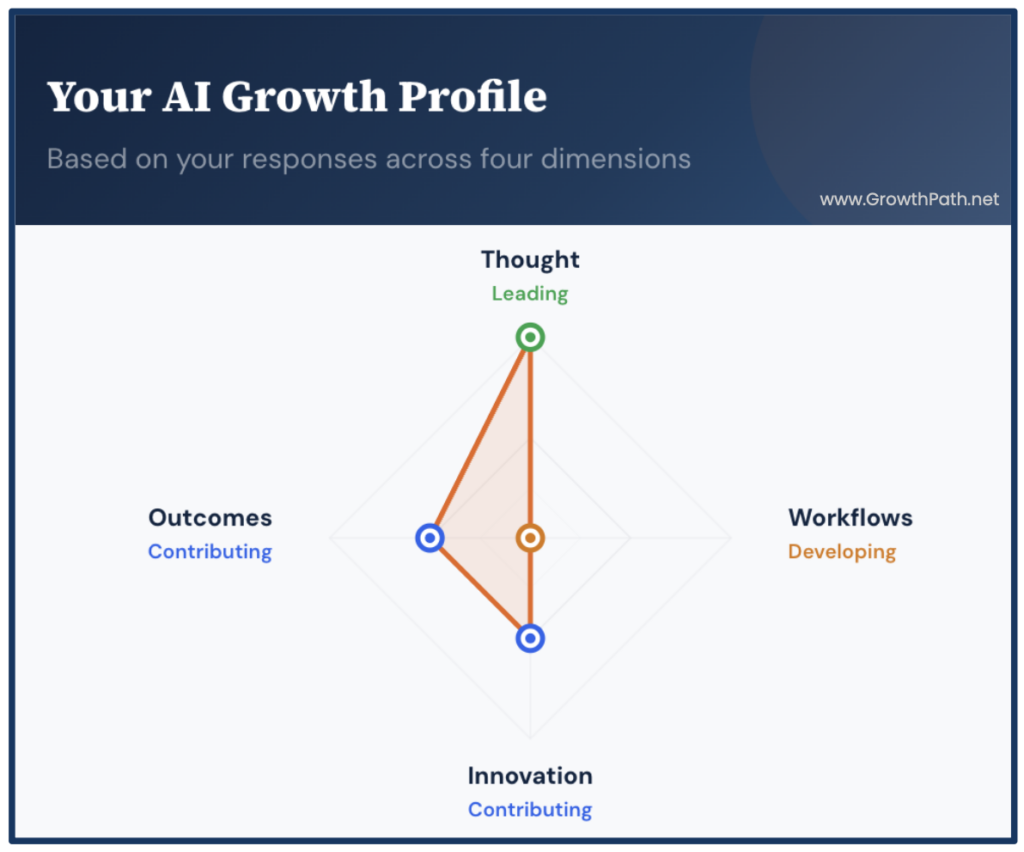
Seeing Where Your Team Actually Is
I built a sample interactive AI growth dashboard to help teams see this clearly. It tracks each person across the four dimensions, shows where gaps are, and identifies next steps. It also connects to recognition because progress is expected, not optional.
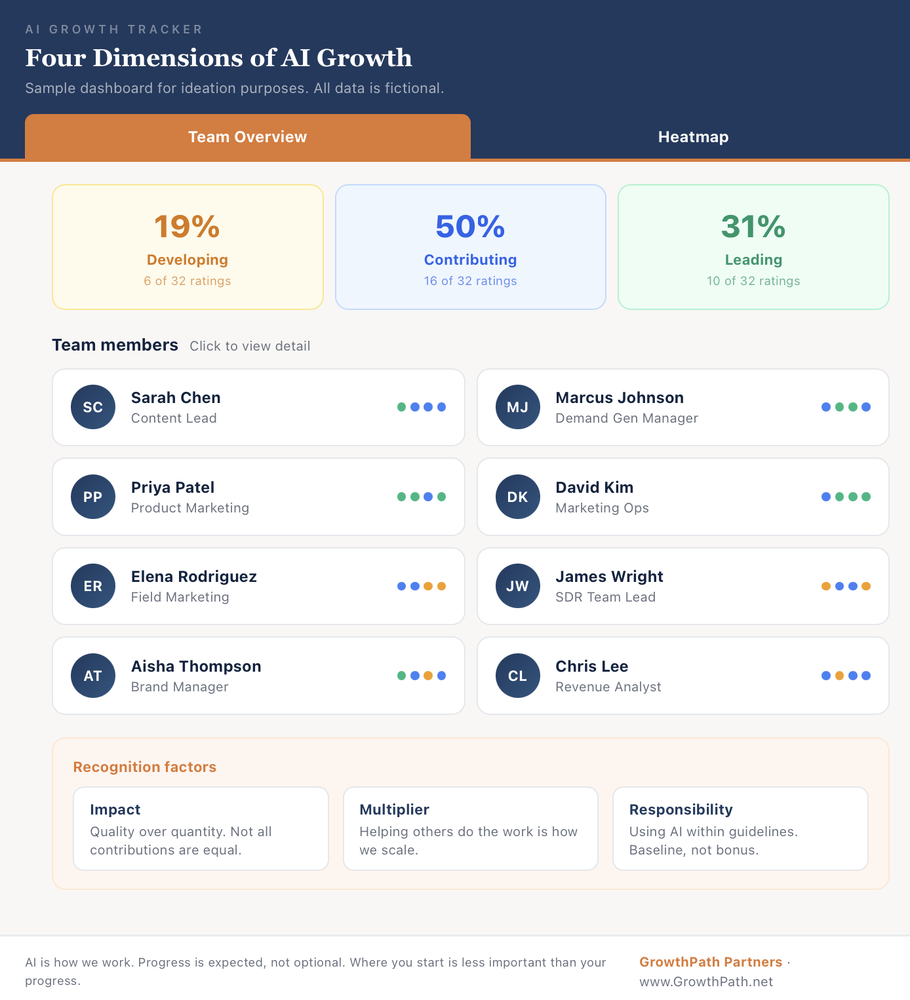
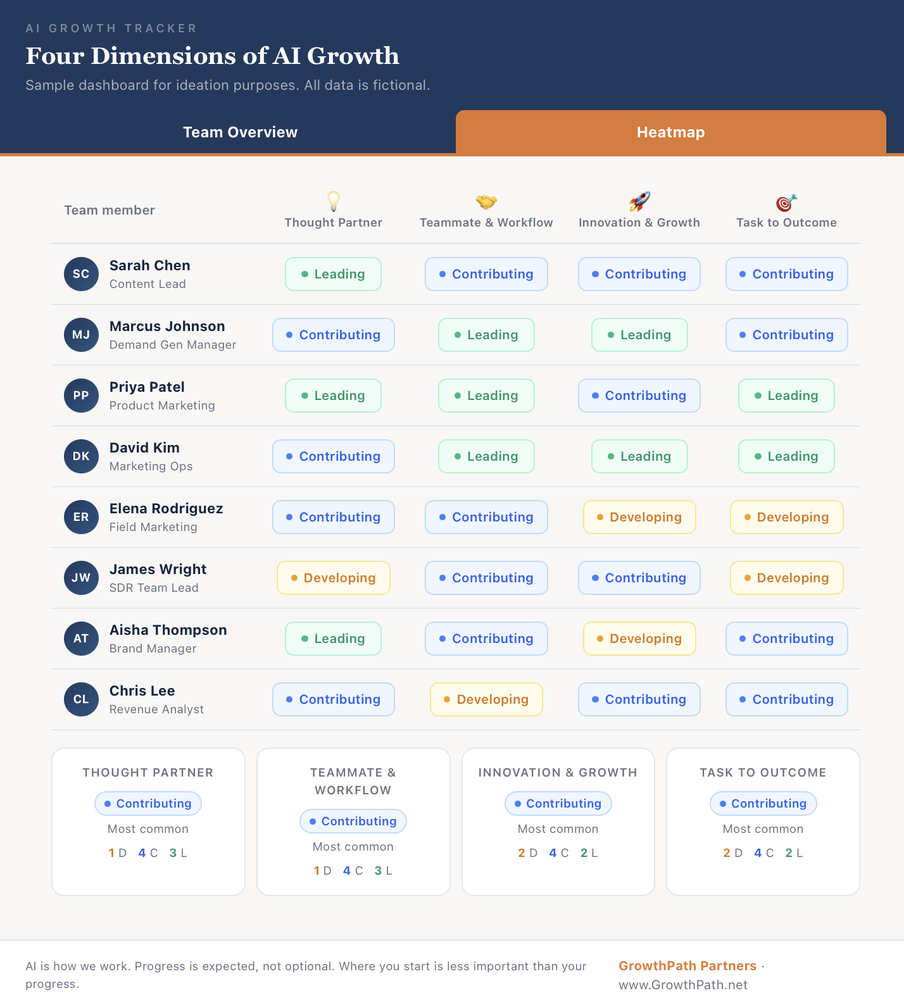
The dashboard includes metrics at each stage: queries per week, AI teammates built, workflows connected, and business outcomes tied to AI work.
Three factors influence how contribution is recognized:
- Impact – Not all contributions are equal. Quality over quantity. Some AI teammates improve internal efficiency. Others directly affect customer experience or revenue. The question to ask is: what does this enable?
- Multiplier – Doing the work is expected. Helping others do the work is how we scale. The people who share what they’ve built, document what works, and coach teammates through their first AI teammate create more value than someone building alone.
- Responsibility – Using AI within guidelines and protecting data. This is mandatory. Teams that skip governance create risk that slows everyone else down.
Where you start is less important than whether you’re progressing. The message to your team: we commit to providing tools, time, and support to help you get there.
What Comes Next
This framework shows you where each person is across the four dimensions, where the gaps are, and who’s ready to move. That clarity is the first step. Part 2 covers what to do with it.
Part 2 covers what applied work actually looks like, including the workshops that shift how people think, the phases teams move through, and the infrastructure that keeps transformation going after any initiative ends.
If you want to get ahead, start with the customer exercise. Open ChatGPT, Perplexity, Claude, Copilot, Gemini, and Google AI Mode as your target buyer. Ask them to compare you to competitors. What comes back will tell you more than any internal assessment.
I’d love to hear where your team lands across these four dimensions. Reply to this email. Your input directly shapes what I write next and what I cover in Part 2.
The Practical AI in Go-to-Market newsletter shares learnings and insights in using AI responsibly. Subscribe today and let’s learn together on this AI journey.
For applied learning: Explore our applied AI workshops, offering both strategic sessions (use cases and roadmaps) or hands-on building (create AI teammates and workflows during the workshop). You’ll leave with either a clear plan or working solutions.
For team transformation: See real examples—a lean GTM team’s step-by-step playbook and a global cybersecurity leader scaling to 150+ marketers with 57 AI teammates integrated into daily workflows.
For speaking: Here are virtual and in-person events where I’ve covered a variety of AI topics. I’ve also keynoted at many organization and corporate-wide events.
Whether through the newsletter, multimedia content, or in-person events, I hope to connect with you soon.