• Skip to primary navigation
  • Skip to main content
GrowthPath Partners LLC

GrowthPath Partners LLC

Empowering Purpose-Driven Growth

  • Engagements
  • Speaking
  • Resources
  • About
  • Contact
  • Show Search
Hide Search

Newsletters

Your Competitors Can Copy Your AI. Here’s How to Build a Lasting Moat.

Liza Adams · October 16, 2025 ·

Hello go-to-market (GTM) leaders, strategists, and innovators! 👋 Thank you for dropping by to learn practical AI applications and gain strategic insights to help you grow your business and elevate your team’s strategic value.

Quick Take

Will Guidara took Eleven Madison Park from a struggling two-star brasserie to the number one restaurant in the world. His secret wasn’t better food. Every restaurant on that list had exceptional food. His breakthrough came from making hospitality systematic across every customer touchpoint. He wrote about it in his New York Times bestselling-book Unreasonable Hospitality.

What Guidara did manually at one restaurant, AI can help us do at scale across thousands of customers. But most companies are using AI for automation to reduce human interaction. But what about using AI to enable more meaningful human connection throughout the entire customer journey?

Top takeaways in this newsletter:

  • AI features become table stakes quickly. Relationships built over time are the defensible moat.
  • While we can delight customers with surprise moments, the goal is to consistently make them feel understood using info they willingly share.
  • The Unexpected Experience Maturity Model shows the progression from Random Acts to Trust Moat, with most companies at Stage 1 or early Stage 2.
  • Systematic relationship building requires breaking down silos. Product, marketing, sales, and customer success must work as one connected experience.
  • AI should free us to be more human, not less. When AI handles analysis and pattern recognition, we can focus on connection.

In this newsletter, I’ll show you exactly what this looks like for B2B customer touchpoints, from webinars and content engagement to discovery calls and customer milestones. Plus, I’ve created a custom GPT that helps you design unexpected experiences tailored for your business and customers.

Want strategic AI insights and practical AI applications like this delivered every two weeks? Subscribe to get the latest case studies and breakthroughs from leading GTM teams.


Prefer to listen to an AI-generated podcast?

AI Podcast Version of This Newsletter

To support different learning styles, this newsletter is available as a 15-min AI podcast with two AI hosts. I used Google’s NotebookLM to create it and personally reviewed it for accuracy and responsible AI use. (Quick tip: After you click through, the player might take a moment to load when you press play.)

The Moment It Clicked

There were many excellent sessions at Pavilion‘s GTM2025 event in DC, but Guidara’s keynote was different. He wasn’t talking about customer service or restaurant operations. He was talking about using systematic approaches to make people feel genuinely seen and valued.
As he walked through examples from Eleven Madison Park, I realized he was showing us what systematic relationship building looks like when done with intention and care.

Then I found Steven Bartlett‘s interview with Jimmy Fallon, host of The Tonight Show. Bartlett shared his preparation process: monitoring CO2 level during interviews, creating custom playlists from guests’ first concerts, and handing Jimmy a personalized book of quotes and photos from the interview as he left. Jimmy said he cried in his car.

The Defensibility Shift

But Guidara and Barlett showed me what this actually looks like in practice. While competitors build AI wrappers and chase feature parity, companies that stand out use AI to build systematic relationship excellence.

Article content
Building Defensible Moats

Will Guidara: Making Unreasonable Hospitality Systematic

Will Guidara took Eleven Madison Park from a struggling two-star brasserie to the number one restaurant in the world. His secret wasn’t better food. Every restaurant on that list had exceptional food.

His breakthrough came when he gathered his entire staff and asked them to list every customer touchpoint. After one hour, they had 30. After three hours, they had 120.

Then they worked through each touchpoint asking: how can we make this moment exceed expectations?

The hot dog story became legendary. Guidara overheard European guests mention their only regret was leaving New York without trying a classic street hot dog. He ran outside, bought hot dogs from a cart, brought them back to the kitchen, and had his Michelin-star chef plate them perfectly. The guests went wild.

Article content
AI Rendering Using Guidara’s Ted Talk Transcript Describing the Plated Hotdog

But the hot dog story wasn’t what made Eleven Madison Park number one in the world. That was just one moment. What created their success was doing this consistently for years. One surprise creates a story people share. Systematic surprise creates trust that keeps them coming back.
Another family visiting from Spain mentioned their kids had never seen snow. Guidara’s team bought sleds, hired a limo, and took the family to Central Park for sledding before they returned to Europe.

These weren’t random acts of kindness. They were systematic. Guidara created a team called “Dreamweavers” whose job was to listen for these moments and act on them. He called it spending the “foolish 5%” of your budget on experiences that create lasting memories.

Captions are auto generatedPlayWill Guidara’s Keynote Session at Pavilion’s GTM2025 in DC

What if AI could identify those moments across hundreds of customer interactions? What if your team always knew exactly when and how to exceed expectations? The system becomes the moat.

Steven Bartlett: Sweating the Small Stuff at Scale

Steven Bartlett hosts The Diary Of A CEO, one of the world’s most popular podcasts with over one billion streams. His preparation process shows how systematic attention to detail builds unforgettable experiences.

Before each interview, Bartlett researches everything. When Jimmy Fallon appeared on his show, Bartlett knew about his first concert with “Weird Al” Yankovic. He created a custom playlist including that music for when Jimmy walked in.

But it goes deeper. Bartlett monitors CO2 levels during interviews because research shows that levels above 1,000 parts per million reduce cognitive capacity by 21%. For his first 200 episodes, he was essentially drunk because the room wasn’t properly ventilated.

He thinks about the scent in the room, the lighting, every detail. Then he applies the peak-end rule: people remember the peak of an experience and how it ends.

So when Jimmy finished his interview, Bartlett’s team handed him a personalized book. It contained photos from their conversation and actual quotes Jimmy had said during the interview, created in real time while they talked.

Jimmy shared on his show: “I got in my car when I left and I started crying. It’s the greatest thing ever.”

Here’s Steven’s LinkedIn post where he shares a video of him and Jimmy Fallon talking about the experience and his philosophy on “sweating the small stuff.”

Steven Bartlett and Jimmy Fallon on The Tonight Show

That’s the power of systematic relationship building. Bartlett used research tools, data monitoring, and systematic processes. But none of that tech is what Jimmy remembers. Jimmy remembers how he felt.

The more tech Bartlett used, the more human the experience became. That’s the irony most companies miss: they’re using AI to automate away human interaction, obsessing over efficiency – the means. But the defensible outcome is authentic human connection.

AI should free us to be more strategic and more genuinely human, not less.

Building Trust Without Being Creepy

Here’s the question you might be asking: does this approach require monitoring customers without their knowledge? No, absolutely not.

Maya Angelou said it best, “People will forget what you said, people will forget what you did, but people will never forget how you made them feel.”

You don’t need secret data to make people feel understood. You need to care more about the information they willingly share than your competitors do.

For example, your competitor gets a question during the webinar and sends a generic follow-up email. You get the same question and send a personalized resource addressing their specific challenge, plus an intro to someone who solved it. It’s the same data, different level of care, completely different feeling.

Yes, you lose some element of surprise when customers opt in to share info. But you gain trust. And trust sustained over time is what makes relationships truly defensible.

Competitors can copy your surprise tactic tomorrow. They can study Guidara’s hot dog story and try their own version. They can’t copy years of consistent care that builds deep trust.

What This Means for B2B and GTM

Both examples show what was done through human attention and systematic processes that AI can now help us do at scale: identify touchpoints, understand context, predict needs, and enable humans to act on those insights.

Here’s an example how this translates to B2B when done systematically over time, using only information customers willingly share:

Article content
Sample Unexpected Experiences at Various Touchpoints

The Multiplier Effect

When customers say “they really get us,” they’re not talking about the technology. They’re talking about how the technology enabled humans to show up as trusted advisors instead of vendor reps.

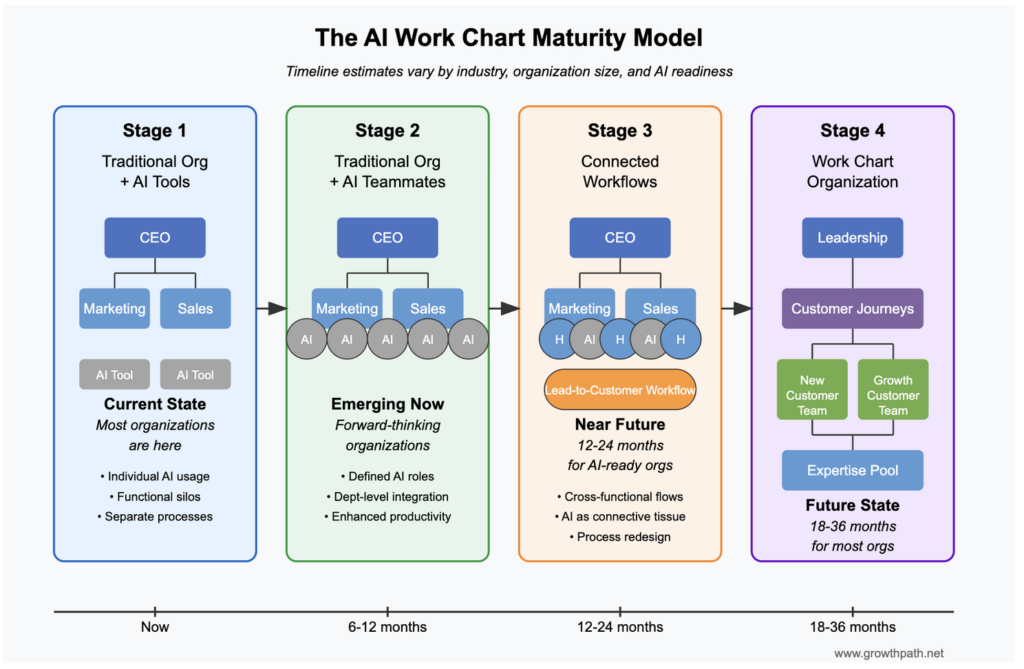
Notice how managing these touchpoints requires breaking down silos. Product, marketing, sales, and customer success can’t operate separately when you’re systematically exceeding expectations at 50+ touchpoints per customer. AI becomes the connective tissue that lets everyone see the full picture.

I explored this dynamic using the chart below in AI is Breaking Department Silos: Moving from Org Charts to Work Charts.

The Pattern Behind These Stories

Both Guidara and Bartlett share the same approach to building defensible advantage. They built systems to identify moments that matter, then empowered humans to act on them. The relationship is the work.

This approach works regardless of company size. A 50-person startup can build this moat as effectively as a 5,000-person enterprise. The differentiator isn’t budget or headcount. It’s commitment to making customers feel valued over time.

David Samuels, CEO of AgentSync and former Chief Customer Officer at SAP and Chief Commercial Officer at Pie Insurance, shares his perspective from leading customer organizations at scale:

David Samuels, CEO of AgentSync

I’ve seen that customers don’t remember your automation – they remember the moments when someone actually understood their challenge.

The companies using AI to identify those moments at scale, then empowering humans to show up with real value, are seeing it in retention metrics. It’s the difference between a 70% renewal rate and 110% net retention.”

This is about values, not just choice. Do you value efficiency or relationships? AI can serve either. Most companies default to efficiency because it shows immediate ROI. The defensible companies choose relationships and commit to them over time.

The Unexpected Experience Maturity Model

Most companies approach customer experience in one of four ways:

Article content

Stage 1: Random Acts – Occasional surprises with no system. Customer delight is inconsistent.

Stage 2: Mapped Moments – You’ve identified your customer touchpoints and know where opportunities exist. But execution is still manual and varies by person.

Stage 3: Systematic Care – AI spots patterns and flags opportunities while humans deliver personalized attention at scale. You’re consistent across all touchpoints using information customers willingly share.

Stage 4: Trust Moat – Consistent care over time makes the relationship your defensible advantage. Competitors can’t replicate years of earned trust.

Most B2B companies are at Stage 1 or early Stage 2. The defensible companies are building toward Stage 4.

Understanding Your Starting Point

Most companies don’t sit at just one stage across all touchpoints. You might be at Stage 3 for webinar follow-up (AI finds patterns, team acts systematically) but Stage 1 for customer milestones (completely forgotten or inconsistent). Your marketing team might have mapped moments while sales still operates on random acts.

This is normal. The framework helps you see where each critical touchpoint is today and prioritize which ones to move first. Start with touchpoints that have the biggest relationship impact and work systematically through the rest.

Here’s how to move forward:

In my newsletter A Leader’s Playbook: How a Lean Team Transformed Into a Human-AI Powerhouse, I showed how one CMO built a 45-member team where 25 humans work alongside 20 AI teammates. Today, they have more than 100 AI teammates. That organizational structure is exactly what enables this systematic experience approach. The AI teammates handle research, analysis, and pattern recognition. The humans focus on relationships and exceeding expectations.

Custom GPT: Your Unexpected Experiences Ideator

I’ve created a custom GPT called Unexpected Experiences Ideator to help you get started. Answer a few questions about your business, customers, and touchpoints. Get personalized suggestions for how AI can help you exceed expectations at every interaction.

What’s Next

The companies figuring this out first will have customers who become true partners because the relationship grows stronger with every interaction.

Your competitors can copy your AI features. They can study your playbook. They can’t copy years of customers feeling genuinely understood at every touchpoint.

That’s the moat.

Try the Unexpected Experiences Ideator GPT to start building yours.


The Practical AI in Go-to-Market newsletter is designed to share practical learnings and insights in using AI responsibly.Subscribe today and let’s learn together on this AI journey!

For those who prefer more interactive learning, explore our applied AI workshops, designed to inspire teams with real-life use cases tailored to specific go-to-market functions.

We also guide teams through their AI transformation journey. Check out this team transformation case study and step-by playbook of how we helped transform a lean GTM team into a human-AI powerhouse with human and AI teammates.

Also read this case study of a global leader in cybersecurity moving with 150+ marketers working alongside 57 AI teammates systematically connected in their daily workflows.

Or, if audio-visual content is your style, here are virtual and in-person speaking events where I’ve covered a variety of AI topics. I’ve also keynoted at many organization and corporate-wide events. Whether through the newsletter, multimedia content, or in-person events, I hope to connect with you soon.

AI Agent Mystery Shopping: Walk in Your Customer’s Buying Process

Liza Adams · September 25, 2025 ·

Hello go-to-market (GTM) leaders, strategists, and innovators! 👋 Thank you for dropping by to learn practical AI applications and gain strategic insights to help you grow your business and elevate your team’s strategic value.

Quick Take

Most customers aren’t using AI agents for vendor research yet. But you saw how search behaviors changed dramatically in just one year because of AI. The shift is coming fast.

AI agents can now browse websites, rate vendors, and even start purchase processes. While you optimize for human buyers, some prospects are developing new research habits with AI doing the work.

Key insights from testing ChatGPT’s Agent Mode as a mystery shopping tool:

  • You’ll spot competitive problems and research patterns that human browsing might miss as these tools spread to other platforms
  • AI weighs multiple factors to form preferences and recommend specific vendors for your situation
  • You can see the exact moment when AI asks permission before handling personal information

Agent Mode isn’t perfect, but this is the least capable AI we’ll see going forward. Learning to use it now helps you understand how prospects will research solutions as these capabilities become widespread.

And remember that not all agents will live in browsers. Future AI buyers may research from inside Google Workspace, Salesforce, or even Slack. That means optimizing for Agent Mode is smart, but it’s just one piece of a much broader shift.

Want strategic AI insights and practical AI applications like this delivered every two weeks? Subscribe to get the latest case studies and breakthroughs from leading GTM teams.


Prefer to listen to an AI-generated podcast?

AI Podcast Version of this Newsletter

To support different learning styles, this newsletter is available as an AI podcast (15 mins) with two AI hosts. I used Google’s NotebookLM to create it and personally reviewed it for accuracy and responsible AI use. (Quick tip: After you click through, the player might take a moment to load when you press play.)

What Is an AI Agent?

“Agent” might be the most thrown-around word in AI right now. Everything seems to be an agent. I’m no authority on this, but here’s how I keep it straight in my head.

An AI agent does things for us autonomously without us defining every step: it sets goals, plans, executes, analyzes, and learns. Some agents work more independently than others. Most agents today mainly execute tasks. Some plan and execute like the Deep Research capability from AI tools like ChatGPT, Gemini, Claude, and Perplexity. Over time, AI agents will handle more on their own.

This is different from automation. Automation follows pre-set steps that we give it. Agents figure out their own steps to reach the goal we set.

Agent Mode combines research, analysis, and action-taking. It can browse websites, fill out forms, take screenshots, put things in shopping carts, and hand control back when it needs sensitive information from you.

Your Customers Are Starting to Change How They Buy

AI agents are becoming research partners for busy professionals. Instead of manually visiting vendor websites, taking notes, and comparing options, some prospects now ask Agent Mode to handle the detailed research while they focus on making decisions.

David Rich, Chief Marketing Officer of DTN, shared his observations.

David Rich, CMO of DTN

“These are generally more qualified prospects because they’ve done their homework, and I’m seeing more of them than before. They come well informed and ask insightful questions about how we’re different and where we fit in their specific situation. It’s not every conversation, but I fully expect it to happen more frequently.

This makes it crucial for marketing teams to understand how buyers are researching now and adapt their approach accordingly. The teams that get ahead of this will have a significant advantage over those who wait to react.”

This changes the buying process in three important ways:

  • Research becomes systematic – AI agents gather the same info across vendors using the same criteria, creating more organized evaluations than typical human browsing.
  • Analysis happens during research – Instead of collecting information first and analyzing later, AI provides ratings, recommendations, and next steps as part of the research process.
  • Action becomes smooth – AI agents can move from research to taking action like signing up for webinars, requesting demos, or starting trials without switching tools or losing context.

Mystery Shopping with AI Agent Mode

I tested this by putting myself in the shoes of a marketing operations manager researching project management tools. The scenario: a 150-person SaaS company with a 12-person marketing team outgrowing Google Sheets, Trello, and Slack for campaign management.

I asked ChatGPT (with Agent Mode enabled) to research Monday(dot)com, Asana, and Smartsheet. These platforms compete directly for marketing teams that need team visibility and integration with existing tools.

Here’s the four-step process:

  1. Organized research – Agent Mode browsed all three platforms looking for pricing, marketing features, integrations, case studies, trial options, and ROI tools
  2. Side-by-side analysis – Agent created rating tables comparing ease of use, marketing features, integrations, pricing value, onboarding speed, and team collaboration
  3. Clear recommendation – Agent provided overall ratings with reasoning and recommended the best fit for the specific situation
  4. Next steps – Agent suggested relevant webinars and resources, then tried to start the registration process

See the agent in action for part of the process including my initial prompt in the short video clip below.Play

What the Mystery Shopping Showed

The organized approach found insights that typical prospect research might miss:

  • Competitive positioning and information gaps – Monday(dot)com emphasized visual workflows, Asana focused on simplicity, and Smartsheet highlighted advanced features at higher cost. Some platforms made pricing easy to find while others buried it. Case studies and integration details varied dramatically in depth and clarity across vendors.
  • AI-formed opinions – Most importantly, Agent Mode formed clear preferences and recommendations based on the research. It didn’t just present information, it combined findings and made buying recommendations, just like your prospects will experience.
  • The handoff moment – When Agent Mode reached webinar registration, it offered two options: provide personal information for completion or hand control back to me. This shows how AI builds trust around sensitive information rather than just taking action.
Article content
The “Take Over” Option to Sign Up for Webinar
  • AI-formed opinions. Most importantly, Agent Mode formed clear preferences and recommendations based on the research. It didn’t just present information, it combined findings and made buying recommendations, just like your prospects will experience.

After evaluating all three platforms, Agent Mode produced clear ratings and a recommendation:

Article content
Summarized Recommendation from ChatGPT Agent Mode (Infographic Created with Claude)

This shows how AI doesn’t just present information – it forms preferences and makes buying recommendations based on your specific situation.

For the complete details, here’s the full conversation with my prompts and responses from ChatGPT. Notice that my prompts asked AI to evaluate and rate the vendors across a set of criteria plus show its rationale for the scores. I also asked for pros and cons, recommendations, and reasons for the recommendations. This approach helps ensure that I’m not outsourcing thinking and the decision to AI. I’m still the judge and I make the final call.

This research was done using ChatGPT’s Agent Mode, but your prospects might use different AI platforms for their research.

One important discovery: Agent Mode made pricing comparison errors that favored some vendors over others. It used annual pricing for two platforms but monthly pricing for the third, making that vendor appear 25% more expensive than it actually was.

Most people won’t catch these kinds of inconsistencies, just like most don’t check the second page of Google search results. This shows why clear, consistent presentation of pricing and positioning becomes crucial when AI evaluates your competitive space.

Testing Across AI Platforms

Just like marketing teams used to test websites across different browsers, you’ll need to understand how your brand appears across different AI platforms. Each AI model evaluates information differently, just like browsers used to render websites differently.

Remember when websites looked completely different in Internet Explorer versus Firefox? The same challenge exists with AI platforms. ChatGPT might emphasize different aspects of your brand compared to Claude, Gemini, or Perplexity.

Marketing teams can relate to this from other platform testing:

  • Running ads across Facebook, LinkedIn, and Google yields different results from different algorithms
  • Email campaigns display differently across Gmail, Outlook, and mobile clients
  • SEO strategies work differently across Google and Bing

The same principles apply to AI agent research. Your prospects might use different AI platforms, and each could form different opinions about your competitive positioning. Testing your mystery shopping approach across multiple AI platforms helps you understand the full range of how prospects might evaluate your category.

Why This Matters for Marketing Teams

Understanding your customer’s AI-powered buying process helps in three critical ways:

  1. You see your competitive positioning through AI eyes – When prospects use AI agents for research, you learn how your messaging and information setup performs compared to competitors in organized evaluations.
  2. You find friction points in your buyer journey – If AI struggles to find your pricing, case studies, or trial signup process, human prospects face the same challenges but without an agent to help navigate.
  3. You prepare for changing buyer expectations – As AI agent capabilities expand across platforms – Google, Microsoft, and others are building similar tools – this research approach becomes standard prospect behavior.

The goal is to understand what thorough, organized research of your category shows about your competitive position and buyer experience. It goes beyond optimizing for AI agents specifically

Building on Website Experience Work

This mystery shopping approach builds on existing conversion optimization work. Andy Crestodina, Co-Founder and CMO of Orbit Media, recently showed how to use Agent Mode for detailed website experience testing and conversion path analysis. As Andy puts it:

Andy Crestodina, Co-Founder and CMO at Orbit Media

“Any friction or confusion and you’ll see a lower conversion rate. This is true for AI agents and humans. Optimize the entire conversion, not just the specific pages. Look for distractions or message mismatches. If you’re not sure if there’s an issue, ask AI (in “Agent Mode”) to try it for you.”

His approach shows how to optimize individual site experiences once prospects arrive. Check out Andy’s newsletter where he shares how to do this.

The mystery shopping approach I’m sharing focuses on the earlier stage of how prospects research and compare options across your competitive space before they dive deep into your specific conversion process. Both approaches help you understand different parts of the customer journey.

Making This Practical

Marketing teams can adapt this approach for their own categories:

  • Start with a realistic buyer scenario for 3-4 competitive platforms – Define the company size, role, and specific needs that represent your ideal customer profile. Focus on vendors that genuinely compete for the same customer rather than trying to cover your entire competitive space.
  • Apply the same evaluation criteria across all vendors – Ask Agent Mode to evaluate pricing, features, integrations, case studies, and trial processes using consistent criteria.
  • Document recommendations and test next steps – Pay attention to how Agent Mode ranks vendors and have it try the next steps like demo requests or trial signups to understand the complete buying experience.

The organized nature of AI research means this approach works across B2B categories. Software, services, and complex solution purchases all involve similar research and evaluation processes.

What Comes Next

Agent Mode is just the beginning. Google, Microsoft, and others are building similar tools that browse, analyze, and act on behalf of users. As these capabilities spread, your prospects will research with AI agents, not just search engines.

Right now, most marketing teams don’t know how AI evaluates their competitive space. The teams that understand this while competitors are still focused on traditional buyer research will have a significant head start in adapting their positioning.

Your prospects are already starting to let AI pick their shortlists. Understanding how this works gives you a competitive advantage that most marketing teams don’t have yet.


The Practical AI in Go-to-Market newsletter is designed to share practical learnings and insights in using AI responsibly. Subscribe today and let’s learn together on this AI journey!

For those who prefer more interactive learning, explore our applied AI workshops, designed to inspire teams with real-life use cases tailored to specific go-to-market functions—from strategic visioning to hands-on building of AI teammates and workflows.

We also guide teams through their AI transformation journey. Check out this team transformation case study and step-by playbook of how we helped transform a lean GTM team into a human-AI powerhouse with human and AI teammates.

Also read this case study of a global leader in cybersecurity moving with 150+ marketers working alongside 57 AI teammates systematically connected in their daily workflows.

Or, if audio-visual content is your style, here are virtual and in-person speaking events where I’ve covered a variety of AI topics. I’ve also keynoted at many organization and corporate-wide events. Whether through the newsletter, multimedia content, or in-person events, I hope to connect with you soon.

Great Strategies Die in the Reactions You Didn’t Simulate. AI Lets You Test Them First.

Liza Adams · September 6, 2025 ·

Liza Adams

Liza Adams
50 CMOs to Watch in 2024 | AI & Exec Advisor | Go-to-Market Strategist | Public Speaker | Fractional/Advisor of the Year Finalist

Hello go-to-market (GTM) leaders, strategists, and innovators! 👋 Thank you for dropping by to learn practical AI applications and gain strategic insights to help you grow your business and elevate your team’s strategic value.

Quick Take

We test subject lines, ad copy, and CTAs. But we don’t test as much how the people who influence our success will actually react to strategic moves.

Product marketers launch positioning without fully anticipating competitive responses. Brand teams may present to analysts while crossing fingers about tough questions. Revenue teams find themselves launching campaigns quickly based on assumptions about buyer priorities.

This guesswork costs millions in failed campaigns, competitive surprises, and deals that stall because we misread the buyer.

GTM teams no longer have to choose between moving fast and moving with strategic intelligence. AI simulation lets you pre-test strategies against key stakeholders in hours, not weeks, before spending budget or burning relationships. Real-world validation still happens, but you’ve already caught some of the major risks.

If you’ve built a digital twin of yourself, you already understand the power of AI simulation. (If you haven’t, see the newsletter on digital twins to learn more and how to build them). This takes that concept further. Instead of simulating yourself, you’re simulating the people who matter most to your business. The shift from “what would I do?” to “how would they respond?” changes strategic planning.

Most teams use AI personas to guide messaging like “Would this copy resonate with an IT director?” But that’s different from simulating how a real person — your CFO, your buyer, your fiercest competitor — will respond to strategic moves like market expansion, new tiered platform pricing, and channel partner approaches.

We’re going way beyond testing copy. We’re testing reactions to reduce the risk. That’s the difference between personalization and prediction.

Every strategy has a breaking point in the reactions. If you’re not simulating them, you’re flying blind.

Key takeaways:

  • AI simulators let you test strategies against the people who influence your success before you engage them
  • Three validation approaches: reactive (learn from failures), proactive (test before launch), predictive (anticipate moves)
  • The People Simulator Priority Matrix shows which stakeholders matter most for each GTM function
  • Most teams get the biggest impact by starting with research-based simulation for their top 2-3 critical stakeholders

Not all stakeholders carry equal weight. The People Simulator Priority Matrix helps teams prioritize whose feedback matter most and which functions need to test more deeply. Start with the people who can derail your launch, influence your strategy, or slow your momentum.

We’ll unpack this framework below to guide how your team applies simulation based on role.

Want strategic AI insights and practical AI applications like this delivered every two weeks? Subscribe to get the latest case studies and breakthroughs from leading GTM teams.


Prefer to listen to an AI-generated podcast?

AI Podcast
AI Podcast Version of this Newsletter

To support different learning styles, this newsletter as an AI podcast (15 mins) with two AI hosts. I used Google’s NotebookLM to create it and personally reviewed it for accuracy and responsible AI use. (Quick tip: After you click through, the player might take a moment to load after you press play.)

The Cost of Strategic Guesswork

Every quarter, GTM teams make million-dollar bets on assumptions.

Sales teams build pitches based on what they think buyers care about. Customer success teams launch retention campaigns without knowing what actually drives churn. Partnership teams negotiate deals while guessing at the partner’s real motivations.

When these assumptions are wrong, the costs add up fast. Campaigns that miss the mark. Analyst briefings that expose weak positioning. Competitive responses that catch teams off guard.

Teams face two bad choices: slow down with expensive research and surveys, or speed up and hope for the best. AI simulation offers a third path.

From Reactive to Predictive: Three Validation Approaches

Most teams validate reactively using traditional methods. They learn from expensive failures and adjust for next time.

Article content

How AI Simulation Works

Test your strategies against AI versions of the people who influence your success. Think of it as having permanent advisory access to your key stakeholders.

Before you start building simulations, check your company’s AI policy. Don’t input confidential, proprietary, or personally identifiable information. These tools are powerful, and using them responsibly builds trust and keeps your team protected.

Most teams follow a maturity progression through three implementation levels. Teams often start by testing messaging. But these tiers go beyond that. They help you test how real people will respond to the decisions that shape your strategy.

1. Basic Simulation

Simple role-play using AI’s general knowledge. Let’s say you’re testing new pricing strategy for your SaaS platform.

Example prompt: “You are a mid-market CFO evaluating our new pricing model. What concerns would you have about our 30% price increase? What would make you stick with us versus switching to a competitor? Please explain your rationale.”

Teams use this when they’re just getting started with AI validation, testing quick hypotheses, or need immediate directional feedback with no time for research or setup.

The benefits are zero setup time, immediate insights, works in any chat interface. But you get generic responses based on AI training data, not specific behavioral patterns.

2. Research-Based Simulation

These are AI advisors built with specific stakeholder data like their communication style, decision patterns, past positions, and known priorities. You can implement this through chat with uploaded research or custom GPTs (AI you can train to do a specific task) with knowledge bases.

Same pricing scenario, but now with research behind it.

Example prompt: “You’re a mid-market CFO based on this research data [upload persona profile, interview transcripts, survey data, past objection patterns]. I’m testing a 30% price increase. Instead of just reacting, help me think critically about this: What assumptions might I be making about CFO priorities that could be wrong? What questions should I ask myself to pressure-test this pricing strategy? What alternative scenarios should I consider – both best and worst case? Walk me through your reasoning for each concern you raise.”

Teams are ready for this when they’ve identified 2-3 critical stakeholders. They’re willing to invest research time upfront for ongoing value. They need consistent perspective across multiple team members. And they’re making repeated decisions involving the same stakeholders.

This works best for key accounts, major competitive threats, important industry analysts, and primary buyer personas.

3. Dynamic Simulation

With dynamic simulations, there’s real-time integration with CRM data, social listening, competitive intelligence, and other data sources. Updates happen automatically as stakeholder behavior changes.

Here’s the same pricing scenario, but with live market intelligence.

Example capability: Your CFO simulator automatically updates based on recent earnings calls, competitive pricing moves, and current economic conditions. When you ask about pricing strategy, it responds with current context: “Based on Q3 earnings calls, mid-market CFOs are focused on cash preservation due to rising interest rates. Your timing might be off. Three competitors dropped prices 15% in the last quarter. Here’s what CFOs are actually saying about budget priorities right now…”

Dynamic simulation makes sense for teams in fast-moving markets with access to real-time data. It requires technical setup, integration, and oversight, so it’s usually supported by specialists. Most GTM teams start with basic or research-based simulation for quick wins, then advance to dynamic once they have the right foundation in place.

Justin Parnell, my business partner who specializes in AI automation provides his perspective on the implementation reality.

Justin Parnell
Justin Parnell, Founder of Justin GPT

“Dynamic simulation doesn’t mean every GTM professional is wiring up AI systems.

A select few specialists build and maintain the automated workflows, manage integrations, and handle governance in partnership with legal and IT. They create the infrastructure so the rest of the organization can use it safely and effectively.”

No simulation is perfect. The value is in creating a strong draft of stakeholder reactions you can validate and refine. It’s far easier to pressure-test and adjust a simulation than to start from scratch every time.

The People Simulator Priority Matrix

Using marketing as an example, I built an interactive framework to help you identify which stakeholders matter most for your function.

Priority Matrix

Great strategies often fail because one overlooked stakeholder derailed them. This matrix helps you identify who can make or break your move.

Key stakeholder types:

  • Executives/C-Suite – Internal decision makers and budget holders
  • Customers – Existing relationships and revenue base
  • Buyer Personas – Target prospects you’re trying to reach
  • Partners – Channel and alliance relationships
  • Competitors – Market dynamics and positioning battles
  • Media & Analysts – External validation and market perception

The matrix shows exactly which combinations create the biggest impact for your specific role. Product Marketing teams get most value from buyer persona, competitor, and analyst advisors. Brand teams need media, analyst, executive, and customer advisors.

Below is an example (Buyer Persona for Product Marketing) of the guidance for building a simulator once you click on one of the icons in the matrix.

Buyer Persona Example

Claire Darling, CMO at Clari, has put this approach into practice at scale:

Claire Darling
Claire Darling, Chief Marketing Officer at Clari

“We’ve doubled our marketing team by creating 40 AI teammates in Q2. Our Persona Messaging Auditor has been transformational. Before launching any campaign, we audit messaging against our CRO, RevOps, and finance buyer personas. The auditor surfaces specific concerns each persona would have, like when our RevOps messaging focused on features instead of the workflow integration challenges they actually face.

This process gave us deeper insights about buyer decision patterns that become competitive intelligence. We’ve moved from assuming our messaging works to validating it works before we spend money.

That’s just the beginning. Messaging is where we started, but we can now explore how to simulate stakeholder reactions to strategic decisions — not just what we say, but what we do.”

The Impact

Some of the benefits of AI advisors are as follows:

  • Risk Reduction – Catch problems before launch instead of learning from expensive mistakes. Test positioning with your analyst advisor before briefings. Check retention messaging with your customer advisor before campaigns.
  • Strategic Preparation – Get perspective when you need it most. War-game competitive responses before product launches. Test partnership proposals before formal presentations.
  • Competitive Advantage – Move faster with better intelligence than teams still using guesswork. While competitors learn from post-mortems, you prevent problems by testing first.

Your Next Steps

Start with one key stakeholder whose perspective would most improve your strategies and decision-making:

  1. Pick your first advisor based on your biggest strategic blind spot
  2. Research their behavior through public statements, past interactions, and communication patterns
  3. Build your advisor using the research as foundation (custom GPT works well)
  4. Test on a real decision and compare guidance to actual outcomes
  5. Expand your advisory team based on what you learn

You’ll still validate in the real world, but simulation gives you a massive head start. Instead of choosing between moving fast or getting insight, you get both.

Great strategies fail in the reactions. AI-forward teams won’t guess anymore, they’ll simulate first.


The Practical AI in Go-to-Market newsletter is designed to share practical learnings and insights in using AI responsibly. Subscribe today and let’s learn together on this AI journey!

For those who prefer more interactive learning, explore our applied AI workshops, designed to inspire teams with real-life use cases tailored to specific go-to-market functions.

We also guide teams through their AI transformation journey. Check out this team transformation case study and step-by playbook of how we helped transform a lean GTM team into a human-AI powerhouse with human and AI teammates.

Or, if audio-visual content is your style, here are virtual and in-person speaking events where I’ve covered a variety of AI topics. I’ve also keynoted at many organization and corporate-wide events. Whether through the newsletter, multimedia content, or in-person events, I hope to connect with you soon.

AI Is Only as Sharp as Your Questions: How Critical Thinking Turns Any Work into Better Decisions

Liza Adams · August 21, 2025 ·

Hello go-to-market leaders, strategists, and innovators! 👋 Thank you for dropping by to learn practical AI applications and gain strategic insights to help you grow your business and elevate your team’s strategic value.

Quick Take

Most people use AI to get tasks done faster and take the first response. They’re training themselves to accept answers without question. Every day, teams walk away from high value insights because they never learned to think systematically about what AI tells them.

This approach changes any AI interaction into deeper insight. Here’s what happens when you shift your approach:

  • Ask “why” behind every recommendation – You see how AI thinks, can check its work, and train yourself to think more systematically about your own decisions
  • Challenge assumptions in any context – Whether you’re questioning “educational content performs best” for social media or “Europe is our best market” for expansion, the same principles apply
  • Get multiple views and confidence levels – Turn any AI response into a thinking exercise that shows blind spots and options
  • Critical thinking works regardless of scope – The same line of question that improves email subject lines also makes sense for strategic planning
  • Work in a judgment-free space – AI doesn’t care about your ego or timeline, making it easier to question assumptions you’d defend in front of colleagues

The difference isn’t the technology or the complexity of your work. It’s how you think about thinking. When you approach AI as a thinking partner rather than a task doer, every interaction becomes an opportunity to make your decision-making better.


Prefer to listen to an AI-generated podcast?

AI Podcast Version of this Newsletter

To support different learning styles, this newsletter is also available as an AI podcast (13 mins) with two AI hosts. I used Google’s NotebookLM to create it and personally it for accuracy and responsible AI use. (Quick tip: After you click through, the player might take a moment to load after you press play.)


From Execution to Insights

AI can help with any type of work across your entire GTM org and beyond. Whether you’re writing email subject lines or planning market expansion, creating battle cards or setting sales territories, the same tech supports both daily tasks and big decisions.

But here’s what separates good AI use from transformational AI use: applying this approach to any of it, tactical or strategic work as shown in the table below.

Article content

Most teams automate what they already know how to do. Teams that understand AI’s real potential use it to uncover what they don’t yet know.

The Power of Asking “Why”

The key is asking AI to explain its reasoning.

Most people take AI’s first answer and run with it. But when you ask “Why do you recommend this?” or “What’s your reasoning behind this ranking?”, we learn something new.

You see how AI thinks. When you ask for reasons behind every response, you’re not just getting answers. You’re learning to think more clearly yourself.

You can check its work. This is how you catch AI confidently recommending terrible strategies that look brilliant at first glance. You catch gaps in logic. And you train yourself to think more clearly about your own decisions.

We’ve been rewarded our entire lives for having the right answers with good grades, promotions, recognition. But watch any great meeting: the most valuable person isn’t the one with all the answers. It’s the one asking the insightful questions that shift how everyone thinks about the problem. AI doesn’t change this dynamic, it amplifies it.

Getting better AI outputs is just the beginning. The real value is building better thinking habits that stick with you in every conversation and decision. Whether you’re planning enterprise strategy or choosing social media topics, asking “why” transforms any work into deeper analysis.

Mandy Dhaliwal, CMO at Nutanix, has experienced this firsthand.

Mandy Dhaliwal, CMO of Nutanix

“It’s important not to use AI like a Q&A machine. We guide its thinking, we brainstorm together, but we still make the final call.

How many breakthrough ideas get killed because someone had to wait for the next team meeting to bounce them around? We can test messaging ideas off hours or work through event plans during our morning walk.

That immediate access to a thinking partner completely changes how we make decisions.”

The Psychology Behind Better Questions

When you shift from asking AI to execute tasks to asking it to challenge your thinking, the psychological barriers that normally keep us from questioning our own work disappear.

This works because:

  • AI doesn’t judge – No ego, politics, or timelines. This makes honest evaluation possible.
  • Private testing leads to public confidence – Challenge ideas with AI first, then show up to meetings prepared.
  • Silos vanish – A Harvard study with P&G professionals found teams working with AI “stop caring as much about the normal boundaries of your job.” AI focuses on problems, not politics.
  • Real example: strategic confidence builds fast – During a recent workshop, an ABM marketer used AI to challenge her key account marketing plan. Despite her excitement about the possibilities, she admitted, “It hurt because I’d worked so hard on this. This is my baby and AI was calling it ugly. But the questions were so good.” She realized she could strengthen her strategy by validating key assumptions.

This shift happens faster than you might expect. This week in Atlanta, I conducted function-specific AI workshops with 60+ marketers at Cox Automotive Inc., the company behind Kelley Blue Book and Autotrader that helps dealers and partners buy and sell millions of vehicles each year. Ramon L. Cortes, AVP of Marketing Operations, saw these mindset changes happening in real-time.

Ramon Cortes, AVP of Marketing Operations at Cox Automative Inc.

“I watched lightbulbs come on and mindset shifts happen right before my eyes. Once people started asking AI deeper questions and working as a group, the discussions became richer, more analytical, and focused on business outcomes.

These kinds of conversations typically don’t happen until later in our process – sometimes not until we’re already presenting to executives. Now it will happen sooner, which means we’ll identify gaps faster, use resources more efficiently, and increase our strategic value.”

The Critical Thinking Framework

This approach turns every AI conversation into critical thinking practice. I’ve been using this with teams for a couple years and my own thinking has gotten sharper because of it.

Here’s a three-level approach behind this thinking.

Level 1: Basic Evaluation

  • Offer some alternatives to this approach.
  • Give me the pros and cons of each option.
  • Rank these ideas based on [specific criteria].
  • Rate these from highest to lowest confidence.
  • Sort these options into must-have, preferred, and nice-to-have.
  • Break this down into smaller steps and show the timeline.

Level 2: Different Views

  • How might this be seen by [specific stakeholders]?
  • Put these options in a 2×2 chart using [X and Y criteria].
  • What would [competitor/customer/exec team] think about this approach?
  • Show me the decision tree for checking these choices.
  • What are the key factors and how does weighing them change the outcome?
  • Compare how this problem is solved in [different industry/company size/region].

Level 3: Assumption Challenging

  • What assumptions am I making that might not be true?
  • What would make this idea 10x stronger?
  • Where might this approach fail or backfire?
  • Run 3 what-if scenarios and show how each changes the outcome.
  • Challenge my assumption that [specific belief]. What situations would make our current approach actually work best?
  • Point to relevant data sources and provide reasons for your recommendations?

Yes, this takes more time upfront, but it saves you from spending weeks executing the wrong plan.

The important step is to always ask “What’s your reasoning?” or “Why do you recommend this?”

These techniques work whether you’re allocating marketing budgets or brainstorming content ideas. The scope changes, but the thinking discipline stays the same.

Critical Thinking in Action

Here are examples of what you can expect when you ask basic questions vs insightful ones. These assume some basic context was provided, but the real difference is how better questioning turns any conversation into deeper insights. With basic questions, we get basic answers. Insightful ones result in thoughtful responses that help us make better decisions.

The final judgment and answer are always on us, not AI.

Case 1: Social Media Topics (Level 1 Critical Thinking)

Instead of “Please give me social media topic ideas” that outputs this fairly generic response below:

Article content

Try: “Please suggest 3 social media topics for our demand gen audience. I’ve been doing mostly educational content but engagement feels flat. What different approaches should I try? Please rank them by likely impact vs effort and tell me why.”

Sample Response:

Article content

Case 2: Pricing Model Analysis (Level 2 Critical Thinking)

Instead of asking “Please compare these pricing options” which gives you this basic answer:

Article content

Try: “We’re considering three pricing models for our project management platform. Please put them in a 2×2 matrix using customer acquisition vs revenue predictability. Please show how sales, finance, and product would view each differently.”

Sample Response:

Article content

Case 3: Account-based Marketing Strategy (Level 3 Critical Thinking)

Instead of “Please create an ABM strategy for our cybersecurity platform targeting mid-market companies” that gives you this answer:

Article content

Try: “We’re considering ABM for our cybersecurity platform. What if our assumption that “bigger accounts mean better ROI” is wrong? Challenge this approach. What alternative targeting strategies might work better? What could make traditional ABM backfire for us?”

Sample Response:

Article content

In the AI era, the most dangerous decisions aren’t the ones you get wrong. They’re the ones you make quickly, confidently, and unquestioned because the answer sounded right.

Note: In any of the examples above and in your work, context and what we share with AI so that it can better help us are key. Reminder to share your goal, role you want it to play (e.g., competitive analyst, skeptical buyer, etc.), actions it should do or not do, context (e.g., current situation, relevant files, accurate data, etc.), and examples (i.e., what good looks like).

Where Do You Stand?

Want to see how you currently approach AI? Take this quick assessment to discover whether you’re using AI as Task Executor, Analytical Collaborator, Developing Critical Thinker, and Critical Thinking Partner. You’ll get personalized next steps based on your results.

The quiz takes 3 minutes and shows you specific ways to level up your AI thinking, regardless of whether you’re working on major strategic initiatives or daily tactical tasks.

The Breakthrough

Critics worry AI will make us intellectually lazy. The opposite is happening with teams that take this approach.

When you systematically challenge AI outputs and ask for reasons behind every recommendation, you develop stronger evaluation skills than most traditional education provides. You’re getting hands-on practice in logic, understanding perspectives, and systematic analysis.

These same analytical habits show up in your team meetings, strategic reviews, and decision-making conversations.

I’ve noticed this with my own thinking. The questions I ask now, of AI and in regular work conversations, are richer. I automatically look for alternatives, ask for confidence levels, and pressure-test assumptions in ways I didn’t before.

Your Critical AI Thinking Starter Kit

Want to start using AI as thinking partner? Try this prompt with your next project:

“I’m working on [PROJECT DESCRIPTION] with the goal of [SPECIFIC OUTCOME]. Here’s some context: [SITUATION/CONSTRAINTS]. You’re a [strategist/devil’s advocate/customer advocate].

Instead of solving this for me, suggest 5-7 strategic questions I should ask you that will help me think more critically, evaluate options thoroughly, consider different perspectives, and understand implications I might be missing. Focus on questions that challenge assumptions and identify blind spots.”

Then use those questions. Ask for rationale. Push back on the reasoning. Build on the ideas. That’s where the real value lives.

Sydney Sloan, CMO of G2, applies this thinking to customer feedback analysis.

Sydney Sloan, CMO of G2

“When I look at customer feedback, I don’t just ask AI to tell me what people are saying. I ask it to spot what we might be getting wrong. Like ‘Based on these reviews, what customer problems are we not solving that we think we are?’ or ‘What are customers actually using our product for that’s different from what we built it for?’ Those questions reveal gaps between what we assume and what’s really happening.”

The Bigger Picture

Whether you think you’ve mastered AI or you’re still struggling with it, you’re probably operating at 20% of what’s possible.

The biggest AI advantage comes from questioning what everyone else takes for granted, not from better tools or prompts.

When teammates say this is overthinking, show them the difference between your basic and thoughtful responses, the value becomes obvious quickly.

This also becomes essential as we build AI teammates. Teams that can’t think critically with these tools now won’t be able to build teammates that think critically later.

Pick one decision your team made in the last month. Ask AI to play devil’s advocate and identify risks you missed. Share those insights with your team. That’s how you demonstrate AI’s potential for critical thinking and get the most out of it.

AI makes it easier than ever to act fast. But it also makes it easier to be confidently wrong. Clear thinking still sets you apart.

Remember: you’re building critical thinking habits that improve every meeting and decision.


The Practical AI in Go-to-Market newsletter is designed to share practical learnings and insights in using AI responsibly. Subscribe today and let’s learn together on this AI journey!

For those who prefer more interactive learning, explore our applied AI workshops, designed to inspire teams with real-life use cases tailored to specific go-to-market functions.

We also guide teams through their AI transformation journey. Check out this team transformation case study and step-by playbook of how we helped transform a lean GTM team into a human-AI powerhouse with human and AI teammates.

Or, if audio-visual content is your style, here are virtual and in-person speaking events where I’ve covered a variety of AI topics. I’ve also keynoted at many organization and corporate-wide events. Whether through the newsletter, multimedia content, or in-person events, I hope to connect with you soon.

The GTM Leadership Traits That Worked for Decades Are Now Holding Teams Back

Liza Adams · August 6, 2025 ·

Practical AI in Go-to-Market
Get practical insights in using AI for go-to-market strategy, initiatives, workflows, and roles.

Hello go-to-market leaders, strategists, and innovators! 👋 Thank you for dropping by to learn practical AI applications and gain strategic insights to help you grow your business and elevate your team’s strategic value.

Quick Take

GTM functions are converging. The silos between sales, marketing, and customer success are breaking down, especially in the AI era.

  • The leaders who rise will think about entire customer experiences and naturally bring people together across boundaries

  • Five GTM leadership traits that now matter more than scaling experience

Your buyers don’t care about your org chart. Neither does AI. But most GTM teams are still led like it’s 2015.


Prefer to listen to an AI-generated podcast or view an AI video explainer?

AI Podcast Version of this Newsletter

To support different learning styles, this newsletter is also available as an AI podcast (13 mins) with two AI hosts. I used Google’s NotebookLM to create it and personally it for accuracy and responsible AI use. (Quick tip: After you click through, the player might take a moment to load after you press play.)


The Convergence Is Already Happening

Future GTM leaders will think customer-first, collaborate across department lines, and run their teams like integrated businesses instead of separate functions. The Microsoft 2025 Work Trend Index Report noted that “teams form around goals, not functions, with AI helping employees do more and work faster.”

Ethan Mollick, Associate Professor and Co-Director of the Generative AI Lab at The Wharton School, shared insights from a Harvard study with P&G professionals. Cross-functional teams working with AI experienced an interesting finding:

“You stop caring as much about the normal boundaries of your job.”

There are distinct differences between what works before and what works now.

These changing expectations require fundamental shifts in how GTM leaders think and act.

Everything we’ve been measuring and rewarding in GTM leadership – the scaling credentials, the functional expertise, the proven playbooks – matter less than traits most companies aren’t even screening for yet.

The Five Traits That Define Future GTM Leaders

These five traits better position GTM leaders for success in the AI era.

1. Adapt to New Buyer Behaviors and Expectations

AI is changing how people find and choose vendors. Beyond searching, they’re asking AI tools like ChatGPT or Perplexity who’s best suited to solve their problem and who they should trust.

That change has real consequences. According to a recent Semrush Study, AI search visitors convert 4.4x better than regular organic traffic because they arrive educated and ready to buy. But AI forms opinions about your brand before humans do, crawling every touchpoint from your website to employee review sites.

Great GTM leaders think about both the human buyers and the AI influencing them, too. That means making sure your brand is easy to understand, credible, and recommended by both people and machines.

Today’s buyers expect more from every interaction. Leaders need to balance:

  • Automation with the human touch

  • Personalization with transparency

  • Convenience with privacy

  • Efficiency with empathy

  • Innovation with ethics

Making sure this balance happens is not trivial but the leaders who get this right will rise.

Where to Start: Want to see how AI recommends you vs. competitors? Use the Deep Research functionality inside tools like ChatGPT, Claude, Gemini, or Perplexity. This prompt works well to simulate how AI evaluates vendors and makes recommendations:

“I’m the [TITLE] at a [COMPANY SIZE/TYPE]. We’re dealing with [TOP 2-3 PAIN POINTS]. Please evaluate the top 3 solutions that can help. Evaluate them on criteria most important to [TARGET MARKET]. For each competitor, please provide 1-5 ratings for each criterion plus overall in a table and include your rationale. Give pros/cons, which fits best for our situation and why. Also output 3 questions I should ask each competitor in areas that are limitations or challenges for the vendor.”

Use this to see how your brand stacks up, what’s showing up as your perceived strengths and gaps, and how the AI is telling your story.

For more insights on how to become more relevant in AI search and help AI understand for situations you company and products are most suitable, check out:

  • Make Your Brand Sourced and a Top Result in AI Search: Practical Strategies for Marketers

  • When AI Judges Your Brand Before Humans Do

2. Shift from AI Tools to AI Thinking Partners

Many teams use AI for emails, social posts, and basic content creation. More AI-forward teams do that AND use AI to pressure-test decisions, do scenario planning, identify and analyze gaps, and spot new opportunities. The gap widens daily between teams using AI as a strategic thought partner and those primarily using AI to write blogs.

Where to Start: Pick one decision your team made last month. Ask AI to play devil’s advocate, identify risks you missed, or suggest alternative approaches. Share the results with your team to show AI’s strategic potential.

Below are some examples of strategic AI use cases to get the ideas flowing.

Dive deeper into the topic here, Beyond Q&A: Using AI as a Thinking Partner.

3. Fix the Foundation Before Your Try to Scale

AI amplifies whatever you have. Poor product-market fit plus AI-powered campaigns equals faster path to failure. Plus it’s a waste of time, budget, and resources. But with good product-market fit, AI can speed up growth. Just like we can’t out-exercise a bad diet, we can’t out-campaign a bad product-market fit.

Where to Start: Complete the interactive Trust & PMF Assessment based on recent customer feedback. Know which quadrant you’re in to inform strategy and before you scale with AI.

Here’s another quick check: If your product hasn’t changed much in the last few years, it might be worth checking whether you’re still solving the right problems for your customers.

4. Measure What the Business Cares About

Kate Bullis, Global Marketing and Sales Practice Leader at ZRG, sees this in her executive search work.

Kate Bullis, Global Marketing and Sales Practice Leader at ZRG

“The most successful GTM leaders aren’t just functional experts, they’re business leaders who think like CEOs. Among other things, this means they think outside-in, so they optimize their departments by thinking first about optimizing the entire customer experience.  They understand that their org chart is only as good as the market’s experience and results.  This has always been the case but AI has made this increasingly important.”

Where to Start: Pick your biggest challenge in delivering customer success. Write what success looks like from their perspective. Then ask each department (marketing, sales, success) what metric they’d use to measure it.

You’re looking for misalignment. When different teams use different metrics to measure the same customer outcome. These gaps show where you’re thinking like separate functions instead of one business.

What you’ll typically find:

  • Marketing – “20% more qualified leads”

  • Sales – “45-day sales cycles”

  • Success: – “Under 5% churn”

What you want:

  • Everyone – “First value in 30 days with 90% satisfaction”

Those misaligned metrics are your roadmap for bringing teams together around shared customer outcomes. When everyone measures the same result, they naturally start working as one business instead of competing functions.

To learn more about the hidden cost of misalignment, check out AI Will Force Marketing and Sales Alignment: The Revenue Gap You Can’t Hide Anymore.

5. Develop People Alongside the Tech

The hardest part of AI transformation isn’t AI, it’s the human side. Leading through convergence requires understanding people’s fears, motivations, and passions. You’re asking teams to change how they’ve worked for years while navigating messy politics and ingrained culture.

Christine Heckart, CEO of Xapa, focuses on conscious leadership in the AI era.

Christine Heckart, CEO of Xapa

“The most expensive AI deployment is one where people don’t know how to use it effectively. You have to meet people where they are and bring them along. The focus can’t just be on training machines. It has to be on investing in humans so people can guide AI responsibly and ethically.”

Where to Start: Several shifts to consider…

  • From: Driving AI adoption To: Developing AI-ready careers

  • From: Giving people tools To: Giving people space to learn

  • From: Mandating use To: Inspiring possibilities

  • From: Early wins at any cost To: Building confidence that lasts

Choose one shift above. This week, have one conversation with a team member about how AI could enhance their career.

We’re already seeing these traits used in practice especially in how teams are moving from physical handoffs to human–AI partnerships. I’ve shared how GTM leaders are breaking silos, connecting AI teammates, and building organizations that operate across functions instead of around them.

If you missed those, check out The End of Handoffs: How AI Teammates Work Together and Leader’s Playbook: How a Lean Team Transformed Into a Human–AI Powerhouse for real examples of what these leadership shifts look like in action.

The Human Side of Convergence

A few months ago, one of my 2025 predictions is that the GTM engine will begin to converge and that there are key leadership traits for those who will lead this unified org successfully. Today, it’s becoming more of a reality.

As expected, the human side matters more. People first, AI forward. That’s the formula that works.

This shift requires two things: GTM leaders developing these new capabilities, and organizations recognizing and hiring for them. The transformation happens faster when both sides evolve together.

The leaders who thrive will be those who remember that behind every metric, workflow, and optimization lives a human being trying to do their best work.

That’s worth celebrating.


The Practical AI in Go-to-Market newsletter is designed to share practical learnings and insights in using AI responsibly. Subscribe today and let’s learn together on this AI journey!

For those who prefer more interactive learning, explore our applied AI workshops, designed to inspire teams with real-life use cases tailored to specific go-to-market functions.

We also guide teams through their AI transformation journey. Check out this team transformation case study and step-by playbook of how we helped transform a lean GTM team into a human-AI powerhouse with human and AI teammates.

Or, if audio-visual content is your style, here are virtual and in-person speaking events where I’ve covered a variety of AI topics. I’ve also keynoted at many organization and corporate-wide events. Whether through the newsletter, multimedia content, or in-person events, I hope to connect with you soon.

  • « Go to Previous Page
  • Page 1
  • Page 2
  • Page 3
  • Page 4
  • Interim pages omitted …
  • Page 12
  • Go to Next Page »

Copyright © 2026 · GrowthPath Partners LLC · Log in

  • LinkedIn