• Skip to primary navigation
  • Skip to main content
GrowthPath Partners LLC

GrowthPath Partners LLC

Empowering Purpose-Driven Growth

  • Engagements
  • Speaking
  • Resources
  • About
  • Contact
  • Show Search
Hide Search

Newsletters

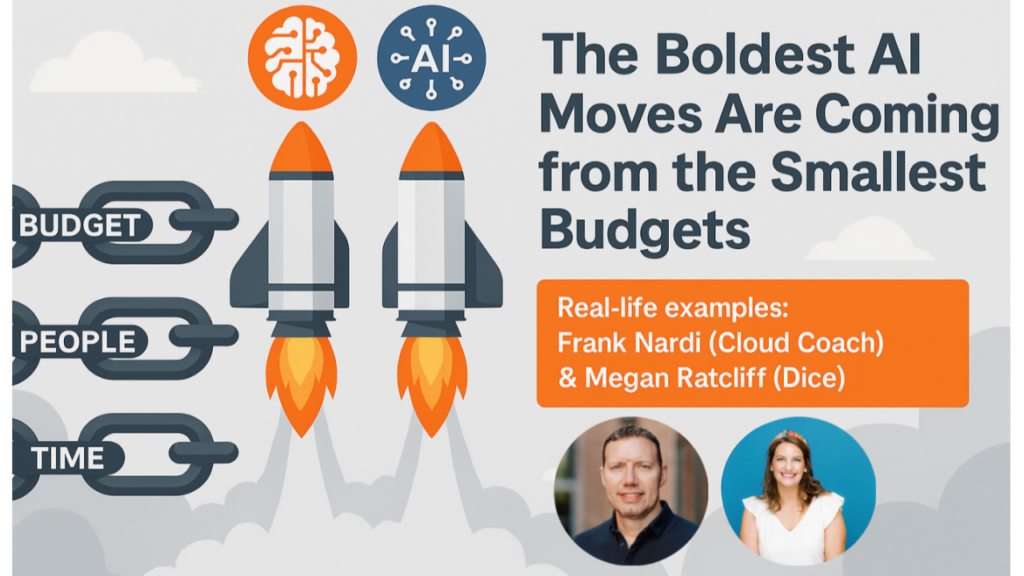
The Boldest AI Moves Are Coming From the Smallest Budgets

Liza Adams · May 28, 2025 ·

Practical AI in Go-to-Market
Get practical insights in using AI for go-to-market strategy, initiatives, workflows, and roles.

Hello go-to-market leaders, strategists, and innovators! 👋 Thank you for dropping by to learn practical AI applications and gain strategic insights to help you grow your business and elevate your team’s strategic value.

Quick Take

When resources are tight, leaders stop asking “How can AI help us work faster?” and start asking “What could we become?”

That shift changes everything.

This happens whether you’re a startup with one marketer or an enterprise team navigating approval processes and budget cycles.

Frank Nardi leads Cloud Coach with a highly efficient team, focused on maximizing resources as they scale. Rather than getting stuck on constraints, Frank leveraged AI to turn static buyer personas into dynamic, evolving systems. Now, messaging is tested before launch, campaigns align with real buyer needs, enabling his GTM team to compete effectively with companies 10x their size.

Megan Ratcliff and the Dice team faced the challenge of a new product that broke all the traditional go-to-market rules at the company. Instead of months of alignment meetings, she created a GTM strategist that coordinates across departments.

Companies with the fewest resources are building some of the most advanced uses of AI today because they have no choice but to reimagine everything. Whether you’re constrained by budget, approvals, or old systems, those limitations push you toward the breakthroughs that actually matter.

Your biggest constraint might be your secret weapon.


Prefer to Listen? Try the AI-Generated Podcast

For those who prefer to consume information through audio, I’ve used Google’s NotebookLM to transform this newsletter into a short podcast episode, featuring a natural conversation between two AI hosts. You can listen to the 10-min AI podcast here while driving, walking the dog, or doing chores. Once you hit play, give it just a few seconds then it will start.


When Constraints Force Breakthrough Thinking

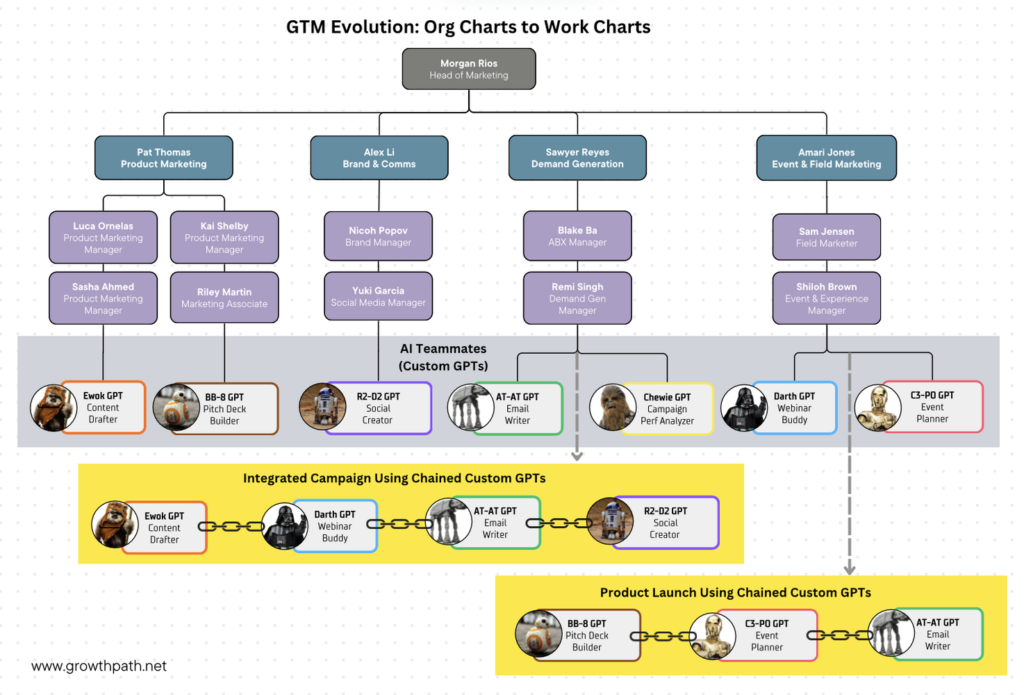
In my previous newsletter “AI is Breaking Department Silos: Moving from Org Charts to Work Charts,” I explored how AI enables teams to organize around workflows instead of departments. Today’s examples show this transformation in action.

The leaders making the biggest leaps share something unexpected. They started with significant constraints.

Limited resources force better questions:

  • What if we can’t hire more people?

  • What if we must achieve bigger goals with less?

  • What if we can’t get approval for new platforms?

  • What if we’re stuck with legacy systems?

These questions lead to breakthrough thinking.

These constraints exist everywhere, from startups to Fortune 500s.

Frank Nardi: CEO as AI Strategy Partner

Frank Nardi leads Cloud Coach, a project management/PSA platform for professional services teams. As CEO and former CRO with deep go-to-market experience, he faces a classic startup reality: scaling smart with a lean, focused team, finite budgets, and ambitious goals.

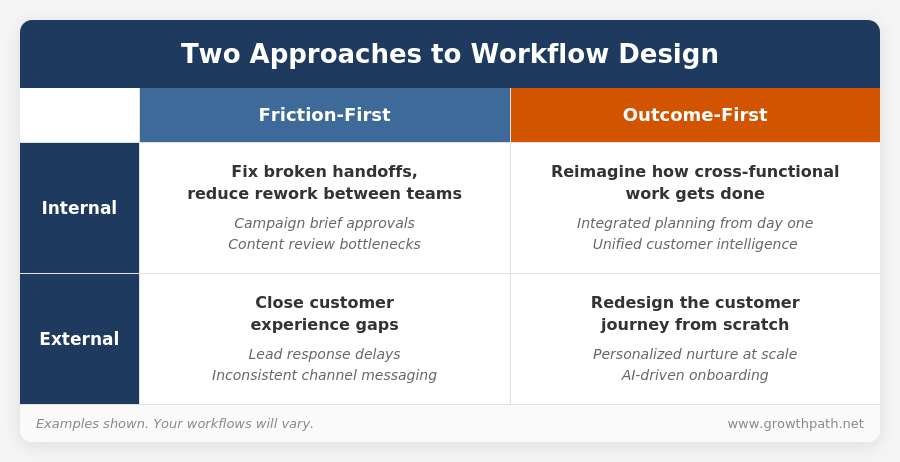
Rather than letting those limits define the approach, Frank reimagined how work gets done.

The Challenge – Frank and team needed to quickly and efficiently target ideal buyers and stay aligned with a moving market. Traditional personas were static, slow to produce, and often outdated by launch time. This led to misaligned messaging, poor targeting, and inefficient ad spend. For a fast-growing company, wasted spend adds up fast.

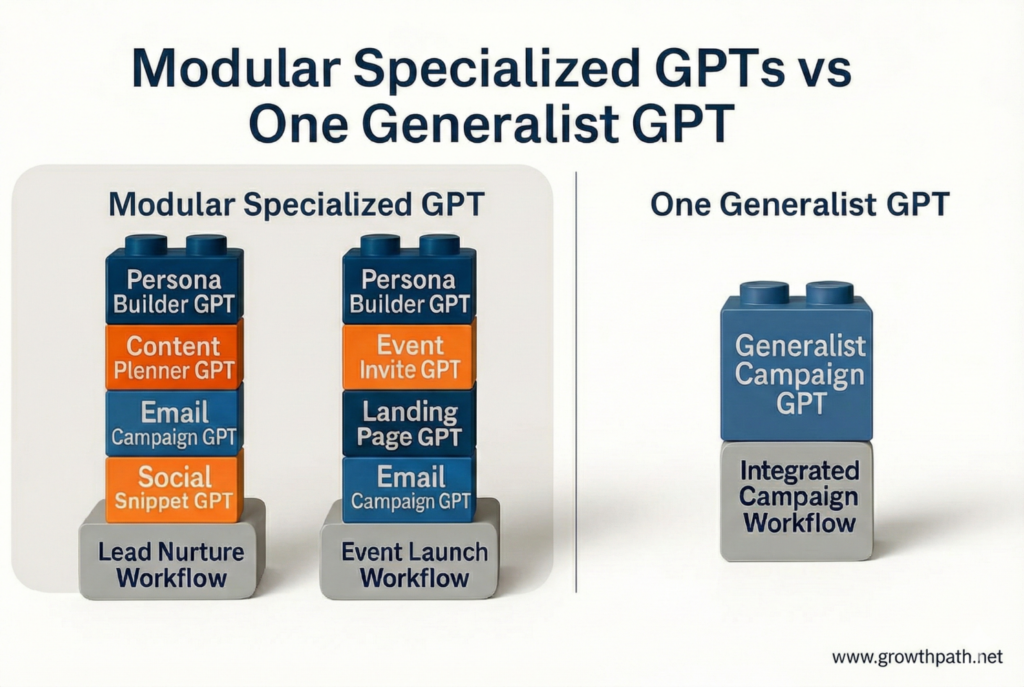
AI as a Teammate – Frank built adaptive buyer personas using four AI tools, but this approach works with any combination—some teams get 80% of the benefit using just ChatGPT and one other AI. The key is matching AI capabilities to your biggest business needs rather than making one AI do everything. Frank chose his tools strategically:

  • ChatGPT – Foundational strategic messaging and persona development

  • Claude – Ad strategies and campaigns

  • NotebookLM – Sales knowledge base (plus Frank likes the AI podcast feature for sales)

  • Jasper – Brand voice consistency

Using CRM data, call transcripts, customer insights, market research and psychological drivers as inputs, Frank created adaptive personas that evolve continuously. Every message, ad, and email gets pressure-tested against these personas before hitting the market, providing instant feedback on relevance and helping the team move faster with better precision.

But even the best AI outputs can miss the mark. That’s why every message is still pressure-tested by humans. Responsible AI means pairing fast automation with real-world judgment.

The Bigger Transformation – Frank is designing an AI-enabled workplace where every team member has personalized tools that eliminates busywork and boosts performance allowing them to focus on high-impact, strategic work.

Frank’s next step is to automate this into live agents connected to real-time prospect data, latest emails, transcripts, and win/loss signals to keep the feedback loop fast and actionable.

Frank shared his vision:

Frank Nardi, CEO of Cloud Coach

“At Cloud Coach, we’re designing an AI strategy that empowers every team member by automating repetitive tasks so they can focus on high-impact work. The goal is to accelerate execution, continuously adapt to customer needs, and create a seamless flow of knowledge that breaks down silos and enables smarter, faster decisions.”

The Early Results – Personas are now fully embedded in workflows, guiding messaging decisions early and often instead of sitting idle in decks. Teams now make more informed decisions, run focused campaigns, and validate messaging before going to market. Creative aligns with what buyers actually care about.

Frank’s Pro Tip – “Treat personas and targeting as living systems that evolve alongside your customers.”

Frank represents an early look at Stage 4 of the AI Work Chart Maturity Model with work organized by what needs to be done, not departmental silos. Smaller companies can compete with enterprise resources by reimagining how work flows.

The data backs this up from the 2025 Microsoft Work Trend Index report. Companies making this transformation see workers who are:

  • More optimistic about future work opportunities (93% vs 77% globally)

  • Less worried about AI taking their jobs (21% vs 38% globally)

  • Better able to take on meaningful work (90% vs 73% globally)

  • More capable of handling additional responsibilities (55% vs 20% globally)

These aren’t just productivity gains. They’re fundamental shifts in how people experience work.

Megan Ratcliff: Cross-Functional AI Orchestrator

Megan Ratcliff at Dice, the career marketplace that connects tech professionals with opportunities, is part of a team that grew from a small marketing group to a 45-member powerhouse with 25 humans and 20 AI teammates in just 6 months. Now, they have 63 AI teammates and expect having more than 100 this summer.

She and her team faced a unique challenge: launching a new product that didn’t fit inside their traditional GTM box. Everything was different – the audience, sales process, invoicing, and messaging.

The challenge required cross-functional collaboration, but no one person could own such a complex shift across departments.

The Challenge – Standard GTM approaches failed because this product required different invoicing, sales motions, and messaging. The kind of cross-functional coordination that usually takes months through endless alignment meetings.

AI as a Teammate – So Megan built a GTM strategist (a custom GPT) to serve as their “connective tissue and voice of reason.” This AI teammate helps define the ideal customer profile, determines next steps, and guides each department on their specific contributions.

For example, when they needed to define the ICP for this relatively new product that had some data but required additional research, the GTM strategist helped determine how to source that additional information. Then it told the team what the next task was and which department should handle it.

The Transformation – Megan’s role is changing. She’s now working across the entire GTM motion and becoming a much more valuable coworker in the process. AI gave her the tools to answer questions and guide action at a strategic level.

As Megan puts it:

Megan Ratcliff, Director of Marketing – B2B Growth and Integrated Campaigns at Dice

“AI has unleashed my superpowers. I’ve always been a strategic thinker, but having tools to answer questions and guide action has been transformational. I’m working across the entire GTM motion now.”

The Results – The GTM strategist is getting them started and organizing the work, speeding up time to action. Megan envisions they’ll iterate on it over time and eventually allow it to work on their behalf, but for now it’s getting them started on a major business transformation. Instead of departmental silos, there’s unified movement toward shared goals.

Megan’s Pro Tip – “The first few things you make will probably be mediocre. That’s okay. Keep going because you’ll get better and better.”

The Pattern: Three Critical Questions

Both Frank and Megan answered three questions that separate AI optimizers from AI transformers:

1. What do you finally have time to focus on?

  • Frank – Strategic thinking across the business instead of tactical execution

  • Megan – Cross-functional orchestration instead of departmental tasks

2. What parts of your role become more strategic, creative, or cross-functional?

  • Frank – Building adaptive systems instead of static processes

  • Megan – Breaking down silos instead of working within them

3. What does your job become when AI becomes a teammate, not just a tool?

  • Frank – CEO as AI strategy architect designing human-AI workflows

  • Megan – Marketing professional as cross-functional orchestrator

A Simple Framework to Begin

Here’s a simple framework to get started:

Understanding AI isn’t something you can delegate. It’s not a report you can read or a task you can hand off.

Unlike past innovations, AI changes how work happens. That means everyone, from individual contributors to CEOs, needs to put hands on keyboard.

Try tools. Break things. See what AI can and can’t do. Only by doing will you start to see where the real opportunities lie.

Exploration isn’t optional. It’s the first step in reimagining your role, your team, and your business.

Your Next Steps

The leaders getting ahead aren’t waiting for perfect conditions or unlimited resources. They start with what they have and build AI teammates that transform how work happens.

Here’s how to begin:

  1. Identify your biggest constraint

  2. Map what you’d do despite the constraint

  3. Design one AI teammate to bridge the gap

  4. Test for 30 days and measure results

  5. Share learnings and expand what works

Small steps lead to significant gains in productivity, innovation, and competitive positioning. While these examples focus on go-to-market, these principles apply across all functions.

Your scarcity might be your secret weapon. The question is: Will you keep treating AI as a tool or turn it into your strategic advantage?


The Practical AI in Go-to-Market newsletter is designed to share practical learnings and insights in using AI responsibly. Subscribe today and let’s learn together on this AI journey!

For those who prefer more interactive learning, explore our applied AI workshops, designed to inspire teams with real-life use cases tailored to specific go-to-market functions.

Also check out this team transformation case study and step-by playbook of how we helped transform a lean GTM team into a human-AI powerhouse with human and AI teammates.

Or, if audio-visual content is your style, here are virtual and in-person speaking events where I’ve covered a variety of AI topics. I’ve also keynoted at many organization and corporate-wide events. Whether through the newsletter, multimedia content, or in-person events, I hope to connect with you soon.
AI is Breaking Department Silos: Moving from Org Charts to Work Charts

Liza Adams · May 14, 2025 ·

Practical AI in Go-to-Market
Get practical insights in using AI for go-to-market strategy, initiatives, workflows, and roles.

Hello go-to-market leaders, strategists, and innovators! 👋 Thank you for dropping by to learn practical AI applications and gain strategic insights to help you grow your business and elevate your team’s strategic value.

Quick Take

AI is changing how teams work together. It’s moving us from strict department lines to simple, flexible ways to get work done.

Enter work charts.

What’s different?

  • Org charts = who knows what (departments + roles)

  • Work charts = what needs doing (jobs-to-be-done + workflows)

In this edition, I’ll share real-world examples and proven results from companies already starting to work this way and how you can take the first steps.

The shift:

  • AI breaks down traditional silos by making expertise available on demand.

  • Forward-thinking companies organize around workflows, not functions.

  • Humans + AI systems work side by side.

  • Rising customer expectations + economic pressure accelerate this.

Start with one cross-functional workflow. Prove value. Expand.

While my work often focuses on go-to-market teams, these concepts apply across all functions and can scale throughout the entire company.

The shift:

  • AI breaks down traditional silos by making expertise available on demand.

  • Forward-thinking companies organize around workflows, not functions.

  • Humans + AI systems work side by side.

  • Rising customer expectations + economic pressure accelerate this.

Start with one cross-functional workflow. Prove value. Expand.

While my work often focuses on go-to-market teams, these concepts apply across all functions and can scale throughout the entire company.


Prefer to Listen? Try the AI-Generated Podcast

For those who prefer to consume information through audio, I’ve used Google’s NotebookLM to transform this newsletter into a short podcast episode, featuring a natural conversation between two AI hosts. You can listen to the 12-min podcast here while driving, walking the dog, or doing chores. Once you hit play, give it just a few seconds then it will start.


The Shift Already Happening

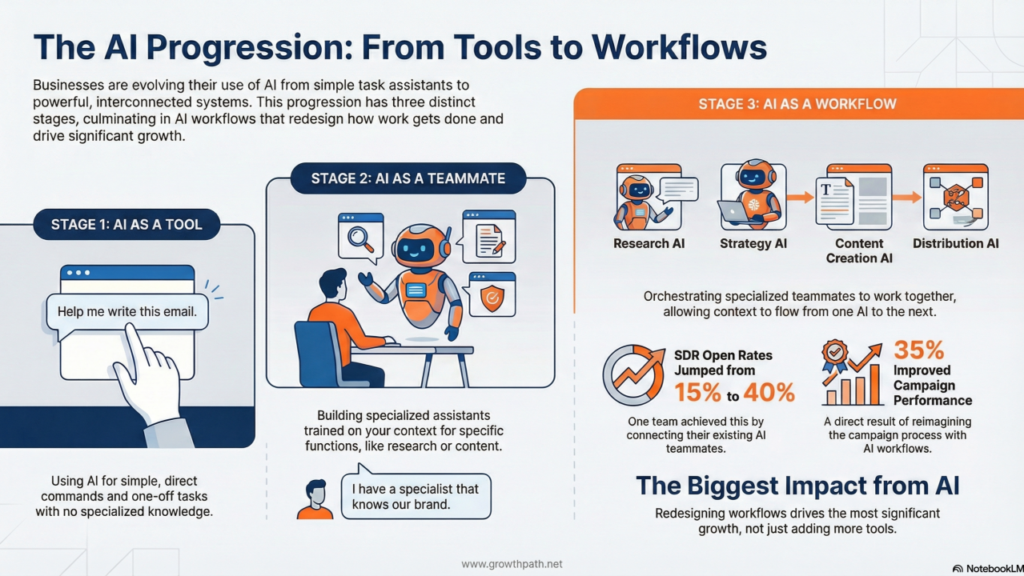
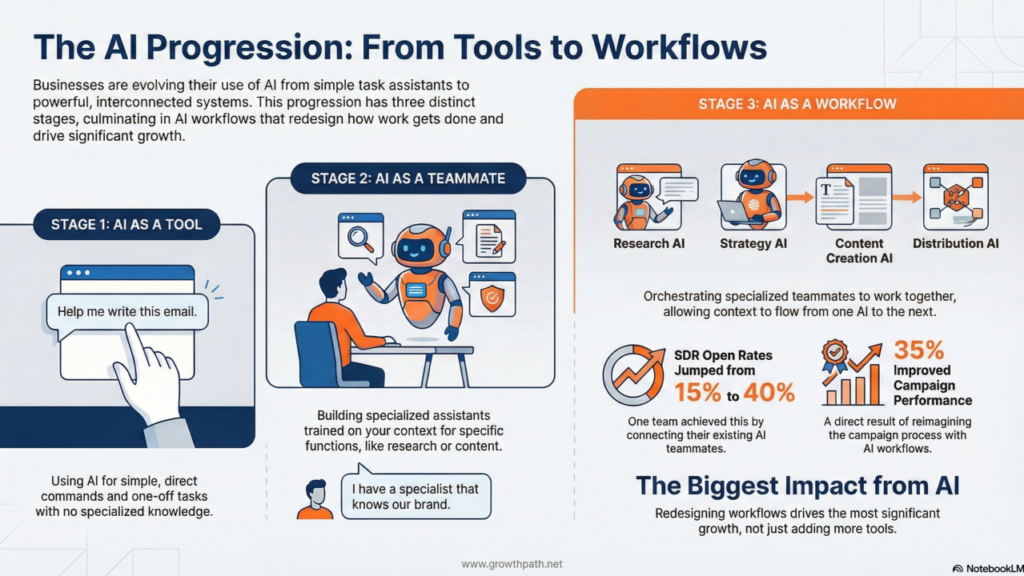
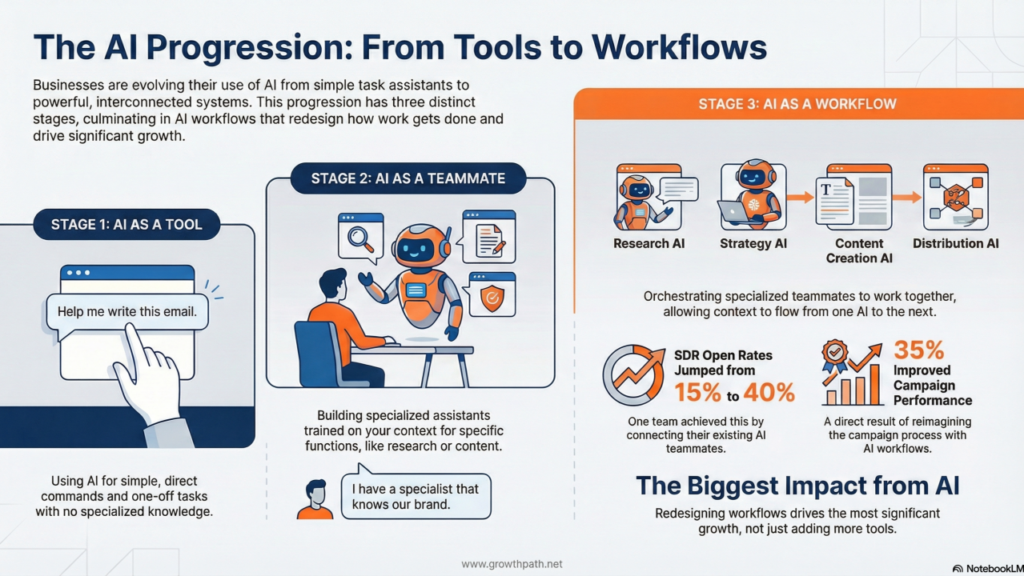
If you’ve read my previous newsletters, you’ve seen how AI is changing go-to-market teams. In “AI Is Redefining GTM Jobs,” we explored how teams move through three phases: using AI as tools, guiding AI as teammates, and orchestrating AI systems.

The walls between departments are blurring as:

  • AI teammates make expertise available across traditional boundaries

  • Customer workflows run with fewer handoffs and stops

  • The gap between “who knows what” and “what needs to be done” shrinks

This marks the beginning of a new way to organize teams.

In “Human-AI Org Transformation Playbook,” we examined how a lean marketing team grew to include 25 humans and 20 AI teammates working side by side.

From Org Charts to Work Charts: The Next Step

We can see a practical shift in how organizations will structure themselves:

This approach aligns with trends we’re seeing across industries. The Microsoft 2025 Work Trend Index Report offers a similar model. They note that “teams form around goals, not functions, with AI helping employees do more and work faster.”

Ethan Mollick, Associate Professor at the Wharton School, recently shared insights from a Harvard study with P&G professionals. Cross-functional teams working with AI experienced an interesting finding:

“You stop caring as much about the normal boundaries of your job.”

When specialists from different functions used AI, the lines between expertise areas nearly disappeared. Traditional silos broke down as AI helped people think beyond their specialized training.

Leaders are experiencing this firsthand. Scott Braun, CMO of SimpliSafe, shares:

Scott Braun, CMO of SimpliSafe

“When we started with AI at SimpliSafe, honestly, we weren’t quite sure how it could help us at scale. With the help of Liza Adams during a strategic AI workshop where she inspired us with what’s possible with various applied AI use cases, we quickly realized the real power wasn’t in just making our old processes more efficient.

We can get the most out of it when we use it as a teammate, as a thought partner, and to connect dots across functions in our org. It was a wake-up call.”

Where We Are Today: Reality Check

While work charts show where we’re heading, most companies are at earlier stages:

The AI Work Chart Maturity Model presents a staged and simplified view of how organizations are evolving in the AI era. Your company’s path may look different based on industry, maturity, and structure.

Stage 1: Traditional Org + AI Tools

Most organizations currently work here, with individual AI usage within functional silos. Teams use AI separately with limited sharing across departments.

Stage 2: Traditional Org + AI Teammates

Forward-thinking companies work at this level, with defined AI teammates working alongside humans in departments. AI teammates have clear roles and help improve team output within traditional structures. While organizational silos still exist, AI augments individual and team productivity dramatically.

In working with the Dice marketing team, we successfully transitioned to Stage 2 by embedding structured AI teammates into their existing organization. What started as a lean team evolved into a 45-member powerhouse with 25 humans and 20 AI teammates working side by side.

That was in January 2025. Today (May 2025), they have 63 AI teammates. And they anticipate having more than 100 by this summer.

The results:

  • 50–75% faster content creation with higher quality

  • 98% accuracy in lead qualification

  • 35% improvement in campaign performance

Dice built their AI teammates using ChatGPT Custom GPTs and Claude Projects to support specific tasks. But you can also use Gemini Gems, Copilot GPTs, or Glean Apps.

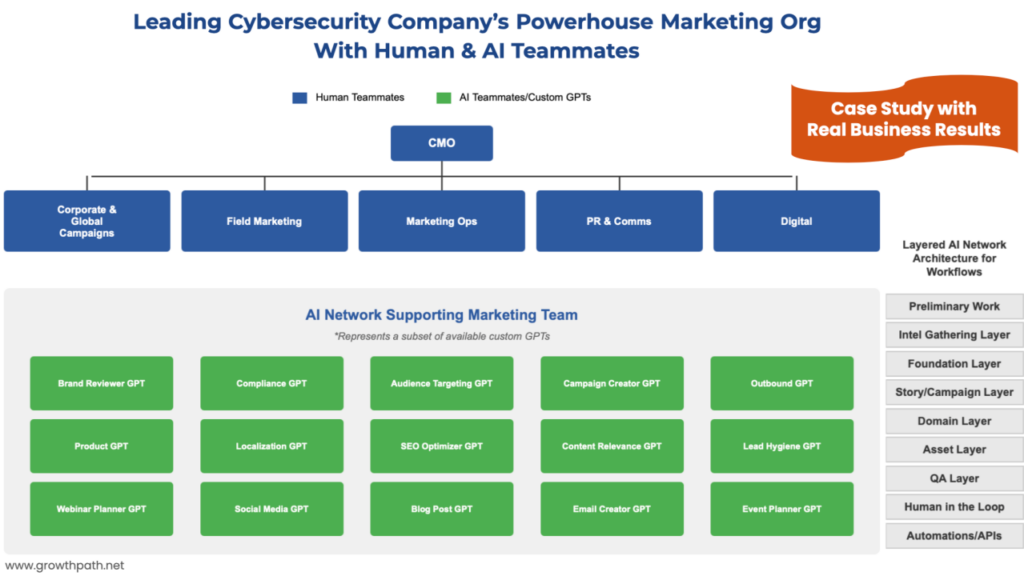
While each company’s structure varies, this diagram shows a conceptual example of how marketing teams can pair human expertise with assigned AI teammates to enhance productivity and reduce repetitive tasks.

AI teammates take on well-defined tasks (like data analysis, content generation, compliance checking), guided and maintained responsibly by human team members.

The Dice marketing team, led by Carol-Lyn Jardine, has since become a trailblazer for the company, conducting AI workshops and mentoring other departments like Sales and Customer Success. They are now beginning to explore cross-functional AI workflows—an early move toward Stage 3 of the AI Work Chart Maturity Model.

Carol-Lyn Jardine, SVP of Marketing at Dice

Stage 3: Connected Workflows

Pioneers explore this stage, creating workflows where AI connects previously separate processes. Cross-functional workflows form with AI serving as the link between departments. AI enables smoother handoffs, faster information flow, and more consistent customer experiences across teams.

Cin7 offers a real-world example of a company with some workflows operating at Stage 3 of the AI Work Chart Maturity Model.

Sean McCaffrey, Senior Director of Marketing Strategy and Operations at Cin7, shares:

Sean McCaffrey, Senior Director of Marketing Strategy and Operations at Cin7

“When we first used AI to identify our most engaged accounts, it opened the door to smarter marketing. Now, we’re going further.

We’re using AI-powered SDR outreach to follow up on demo requests and post-event engagement—personalized at scale on behalf of our human sales reps. Each message adapts based on CRM data, industry, and what we know from their website visits. We’re sharing relevant customer stories and speaking directly to pain points we’ve seen in similar businesses.

We’re also sharing what we learn from sales conversations with customer success for better onboarding.

What began as one focused solution has become a connected workflow.

This level of scale and precision simply wasn’t possible with manual email sends. AI isn’t just making our process more efficient—it’s helping us meet prospects where they are, with what they care about.”

Their results speak for themselves:

  • 78% open rate + 20% booked meetings for demo requests

  • 92% open rate + 3.5% booked meetings for event follow-up

AI has moved from simply enhancing tasks to orchestrating cross-functional work at Cin7.

Stage 4: Work Chart Organization

The full work chart model takes shape when companies organize primarily around jobs to be done rather than departments. This creates a new way to structure teams.

Most companies are in Stage 1 or early Stage 2. The full work chart model (Stage 4) exists in pieces but not yet fully in most organizations. However, this change moves faster than many expect.

The Stage 4 work chart structure aligns with my automation vs. augmentation framework above that I sketched out over a year ago. I originally drew this for marketing but this can be applied across organizations. It was a hypothesis back then. Now we’re seeing evidence that this is becoming reality.

In this model, experts (both human and AI) come together to support specific workflows—some joining for short periods (ephemeral) while others stay involved longer (everlasting).

Three Forces Speeding Up This Change

Why is this organizational shift happening now? Three key forces come together:

1. Economic Pressure

Microsoft found that 53% of leaders say productivity must increase, while 80% of workers report lacking time and energy. Their data shows employees face interruptions every 2 minutes—275 times daily. Traditional structures can’t solve this productivity gap.

2. AI Advancement

AI is growing from simple tools to systems that can coordinate work. OpenAI describes five levels of AI growth:

  1. Chatbot – Answers questions with information.

  2. Reasoner – Asks questions and adapts to context.

  3. Agent – Takes action, plans, and completes tasks autonomously.

  4. Innovator – Uncovers insights and proposes new ideas independently.

  5. Organization – Works and learns across many functions with minimal human input.

We’re currently between levels 2 and 3, with levels 4-5 on the horizon. As AI reaches these higher levels, work charts become a more natural way to organize.

3. Higher Customer Expectations

Customers don’t care about internal departments. They want seamless experiences. 

Jacob Warwick, CEO of ThinkWarwick Global and an executive coach explains:

“Top leaders no longer hide behind department lines. The best are business leaders first, functional leaders second. They see problems and collaborate to fix them—even if it means funding another team’s solution.

AI exposes exactly where customers get frustrated and leave. Customers don’t care about your org chart. They leave when they hit walls between teams. Period. Top leaders must do the same or quickly become irrelevant or replaced. “

A Simple Template to Begin the Change

Here’s a practical approach to move toward work chart organization:

This approach lets you start the change without disrupting your entire organization. Begin small, show value, and grow what works.

Your Next Steps

The move from org charts to work charts happens step by step but has already begun. Companies that see this coming can make choices today that support this change.

Here’s how to get started:

  1. Map your key workflows across department lines

  2. Find your worst handoff points

  3. Create one cross-team test with shared AI support

Small steps in this direction lead to significant gains in customer experience, team effectiveness, and company speed. While I’ve focused on go-to-market teams, these concepts apply across HR, finance, product, engineering, and other functions.

This shift aligns perfectly with what I covered in my “AI is Raising Customer Expectations” newsletter. As buyers increasingly demand seamless experiences, companies need unified workflows that connect insights across the entire customer journey—exactly what work charts enable.

As the Microsoft 2025 Work Trend Index notes: “We are entering a new reality—one in which AI can reason and solve problems in remarkable ways… A new organizational blueprint is emerging, one that blends machine intelligence with human judgment, building systems that are AI-operated but human-led.”

The move from org charts to work charts has already begun. The companies that embrace this shift today will have a massive competitive edge when AI-driven organizational design becomes the standard, not the exception. Where is your organization on this journey?


The Practical AI in Go-to-Market newsletter is designed to share practical learnings and insights in using AI responsibly. Subscribe today and let’s learn together on this AI journey!

For those who prefer more interactive learning, explore our applied AI workshops, designed to inspire teams with real-life use cases tailored to specific go-to-market functions.

Also check out this team transformation case study and step-by playbook of how we helped transform a lean GTM team into a human-AI powerhouse with human and AI teammates.

Or, if audio-visual content is your style, here are virtual and in-person speaking events where I’ve covered a variety of AI topics. I’ve also keynoted at many organization and corporate-wide events. Whether through the newsletter, multimedia content, or in-person events, I hope to connect with you soon.
First, You Built a Digital Twin. Now, It’s Time to Build a Team.

Liza Adams · April 30, 2025 ·

Practical AI in Go-to-Market
Get practical insights in using AI for go-to-market strategy, initiatives, workflows, and roles.

Hello go-to-market leaders, strategists, and innovators! 👋 Thank you for dropping by to learn practical AI applications and gain strategic insights to help you grow your business and elevate your team’s strategic value.

Quick Take

A marketing team I worked with recently grew from 20 to 63 AI teammates in just 90 days. They’re instantly available and endlessly patient. And while they don’t have a human’s fire in the belly or an ethical compass, they help us lead better especially on the days we can’t be our best selves.

Some might view building AI teams as simply ‘doing more with less’ in an era of constrained resources. But this misses the point. This approach isn’t just about tactical efficiency. It’s about transforming marketing into a true growth engine by scaling strategic thinking across the organization.

This edition is about what comes after your digital twin. It’s about building a real AI team around you, specialized teammates that scale your judgment, pressure-test your thinking, and help others collaborate with you even when you’re not in the room.

You’ll learn:

  • Why a single twin can only take you so far

  • How real marketing leaders are structuring their AI “inner circles”

  • Examples of teammates by function, from product marketing to leadership

  • Starter Kits and demo videos so you can build your next smartest collaborator today

For those who prefer to consume information through audio, I’ve used Google’s NotebookLM to transform this newsletter into a short podcast episode, featuring a natural conversation between two AI hosts. You can listen to the 10-min AI podcast here while driving, walking the dog, or doing chores. Once you hit play, give it just a few seconds then it will start.

Disclaimer: This podcast was generated by AI based on this written newsletter and reviewed by me to ensure ethical and responsible AI use. It’s designed to provide an efficient, more inclusive way to consume information.


From One Team to a Full Team

From One Twin to a Full Team

Digital twins helped us validate what AI could do for us. But the real impact happens when we build with AI to support teammates, accelerate workstreams, and help others collaborate with us in ways that weren’t possible before.

(If you missed it, I introduced the concept of the digital twin in Digital Twins: Your First AI Teammates – How to Build AI Simulators That Transform Work. You’ll also find a demo video of how to build and use one.)

Along the way, you may expand beyond a single twin. You can create executive simulators to prep for board meetings, customer simulators to pressure-test messaging, and peer simulators to model team collaboration. (Digital twins can take many forms, not just copies of ourselves.)

But even with a few simulators, one twin, or even a small set, can only do so much.

The future belongs to those who build the right AI teammates around them.

Mary Kay Evans, CMO of Alida, has seen firsthand how marketing teams move from experimenting with AI to building real competitive advantages.

Mary Kay Evan, Chief Marketing Officer at Alida

“Our biggest gains with AI came when we stopped experimenting with isolated tools and started building real AI teammates. Working with Liza Adams helped spark this shift. We are seeing real progress in how we capture insights, plan launches, and adapt messaging faster than ever.”

The Marketing AI Ecosystem: Humans Still Lead

Adding AI teammates doesn’t mean losing control. It means gaining strategic leverage.

While many leaders face pressure to “do more with less,” the true value of AI teammates goes far beyond cost efficiency. These partnerships elevate marketing from a service function to a strategic driver of business growth.

When your expertise is amplified through specialized AI teammates, you maintain consistent brand voice across all touchpoints while freeing yourself to focus on the high-level strategic decisions that truly move the business forward.

Here’s what the future might look like using a marketing leader with AI teammates, as an example. In fact, some marketers are already building and operating in this manner.

At the center: you. Around you:

  • Strategy copilots that see opportunities before they’re obvious.

  • Content builders that translate insights into action faster than human-only teams.

  • Workflow partners that handle the grind, so you stay creative and strategic.

The best future teams won’t be human or AI. They’ll be human–AI partnerships built intentionally from the start.

Real Example: Megan’s Expanding Team

Meet Megan Ratcliff, Director of Growth Marketing and Integrated Campaigns at Dice.

She started like many do: with a strong digital twin trained on her knowledge. But as her work scaled, she added specialized AI teammates to help as shown in the diagram below.

Megan described the responsibilities of each of her AI teammates in this post. She worked faster and led better as a result of building AI teammates.

More strategic launches, tailored messaging, and more time to coach her human team.

Megan is part of the 45-member human-AI powerhouse team with 25 humans and 20 AI teammates that Carol-Lyn Jardine (SVP of Marketing) leads. I shared the case study and playbook for this team in a previous newsletter: “A Leader’s Human-AI Org Transformation Playbook.”

But that was in January 2025. By April, the team had 27 human and 63 AI teammates. They anticipate 100+ AI teammates this summer.

Remember last year when Moderna made headlines about their employees having “created over 750 unique, tailored versions of OpenAI’s ChatGPT, also known as GPTs, that are designed to facilitate specific tasks or processes across the business.”

The company said that AI could accelerate the delivery of much-needed new products and allow Moderna to move quickly as it aims to roll out 15 new products in the next five years.

What these AI teammates offer isn’t just speed. It’s consistency, availability, and fresh thinking. They amplify our best work and support us when we can’t bring our A-game.

It approach of building human-AI teams is no longer the future. It is today, deployed by more and more companies, from Moderna to Dice!

Starter Kits to Inspire Your Own AI Team

You don’t need to guess what your next teammate could look like.

I’ve created Starter Kits for 11 key marketing functions, each with 3 examples of potential AI teammates.

Here’s a quick preview:

Each starter kit includes:

  • The AI teammate’s job description

  • What it needs to be trained

  • Sample conversations (input → output)

Here’s a screenshot of the interactive starter kit for marketing leadership just so you see what a kit looks like.

Click on the following links to see the individual interactive starter kits by marketing role.

  • Product Marketing: Battlecard Builder, Messaging Architect, Win/Loss Analyzer

  • Content Marketing: Content Topic Generator, Content Multiplier, SEO Strategist

  • Brand & Comms: Brand Voice Guardian, Crisis Response Advisor, Media Relations Strategist

  • Digital and Web: Conversion Path Optimizer, Analytics Interpreter, SEO Tactician

  • Demand Generation: Campaign Strategy Strategist, Lead Qualification Engine, A/B Test Designer

  • Customer Marketing: Customer Lifecycle Strategist, Customer Insights Generator, Customer Advocacy Cultivator

  • Marketing Ops: Campaign Orchestration Strategist, Marketing Technology Architect, Analytics Strategist

  • Ecosystem Marketing: Partner Marketing Strategist, Marketplace Growth Strategist, Ecosystem Intelligence Analyst

  • Field Marketing: Event Strategy Architect, Regional Market Strategist, Sales Alignment Orchestrator

  • Event Marketing: Event Strategy Architect, Content Experience Designer, Attendee Journey Orchestrator

  • Marketing Leadership: Document Review Advisor, Strategic Decision Architect, Team Comms Advisor, Thought Leadership Assistant

⭐️ Melinda Monaco ⭐️, Senior Director of Revenue Marketing and Operations at Folloze, embraced digital twins to rethink how strategic frameworks and customer engagement scale across teams.

Melinda Monaco, Sr. Director of Revenue Marketing & Operations at Folloze

“Creating my digital twin, inspired by Liza Adams’ masterclass, showed me how AI can scale strategic thinking, frameworks, and customer value. Now I am building my next set of AI teammates to accelerate campaign planning, optimize account engagement, and deliver measurable revenue impact faster than we could before.”

Check out her post on how she uses her ABX Strategist!

Want to See It in Action? (Demo Available)

Nothing beats seeing how this works in real life.

Here are some ways you can build AI teammates:

  • ChatGPT Custom GPTs

  • Gemini Gems

  • Claude Projects

  • Custom CopilotGPTs/Copilot Studio

  • Glean Apps

  • Specialized AI Apps

I built a special version of ChatGPT (called a custom GPT or custom Generative Pre-trained Transformer) that’s trained to find new angles on common topics. Think of it as your personal content brainstorming partner that knows your industry and audience. I named it Persona- & Buyer Stage-Specific Content Creator.

Here’s how it works.

Train it with your knowledge about:

  • Customer personas and journeys

  • Positioning and messaging

  • Industry trends and beliefs

  • Brand guidelines

Then ask it to find unique stories that:

  • Challenge common beliefs not backed by data

  • Reveal overlooked but important areas

  • Connect unexpected dots across industries

  • Offer fresh perspectives on trending topics

  • Offer counter-narratives that receive less coverage

Collaborating with AI in this way not only gives us new ideas, it also jumpstarts our thinking quickly.

The short video below shows the custom GPT in action and a behind-the-scenes peek at its instructions.

Closing Thought

You don’t need a massive AI team tomorrow. You need one smart teammate today.

If you have a team of 20 and each one starts building one AI teammate today, you’ll have a team of 40 tomorrow!

Gina Hortatsos, SVP of Marketing at HackerOne, believes AI is reshaping what great work looks like, pushing teams to innovate faster and build stronger customer connections.

Gina Hortatsos, Head of Marketing at HackerOne

“AI is helping marketing teams work smarter, build stronger customer connections, and accelerate innovation. The teams that thrive will be the ones who use AI to reimagine what great work looks like, not just make old processes faster.”

In a few years, the most effective leaders won’t be the ones who just use AI tools. They’ll be the ones surrounded by AI teammates. These AIs are trained to extend their thinking, support their team, and help them lead well, even during a tough day.

Don’t wait for that future to arrive. Build it, one teammate at a time.


The Practical AI in Go-to-Market newsletter is designed to share practical learnings and insights in using AI responsibly. Subscribe today and let’s learn together on this AI journey!

For those who prefer more interactive learning, explore our applied AI workshops, designed to inspire teams with real-life use cases tailored to specific go-to-market functions.

Also check out this team transformation case study and step-by playbook of how we helped transform a lean GTM team into a human-AI powerhouse with human and AI teammates.

Or, if audio-visual content is your style, here are virtual and in-person speaking events where I’ve covered a variety of AI topics. I’ve also keynoted at many organization and corporate-wide events. Whether through the newsletter, multimedia content, or in-person events, I hope to connect with you soon.
The Smartest AI Teammate You’ll Ever Build

Liza Adams · April 16, 2025 ·

Practical AI in Go-to-Market
Get practical insights in using AI for go-to-market strategy, initiatives, workflows, and roles.

Hello go-to-market leaders, strategists, and innovators! 👋 Thank you for dropping by to learn practical AI applications and gain strategic insights to help you grow your business and elevate your team’s strategic value.

Quick Take

Over the past few weeks, I’ve spoken with dozens of GTM leaders experimenting with AI. One theme keeps coming up: people are overwhelmed by tools, but hungry for strategy. This edition is about helping you build the smartest teammate you’ll ever have—not by copying yourself, but by designing a partner that thinks like you and helps you scale what matters.

  • A digital twin lets you apply your best thinking consistently across more tasks, without reinventing the wheel.

  • It’s not a copy of you. It’s a thought partner that sharpens your work and expands your impact.

  • Specialization matters. Like any strong team, your AI teammate gets more powerful when you tailor it for specific jobs.

  • I demoed how I built and use LizaGPT in a recent webinar from training it on how I think to real use cases in my day-to-day.

How I Built and Use LizaGPT

I recently joined Xapa’s Get Filthy Enriched™ series, a monthly leadership experience hosted by Christine / Chris Heckart and the Xapa team. Their focus on emotional intelligence and strategic clarity couldn’t be more timely as we navigate the human side of AI.

Huge thanks to Christine and team for sparking such a meaningful conversation.

In the session, I shared how I built and use LizaGPT, my general-purpose digital twin using a custom GPT, to extend how I think, write, and decide.

  • How I trained it on an AI deep research report about my work, my thinking, frameworks, tone, and decision patterns

  • How I used it for segmentation, blind spot analysis, and storytelling

  • How I co-created slides, keynote abstracts, and messaging

  • How I made it critique its own outputs and push back on mine

Watch the full recording here.

Here are the key topics with time stamps:

  • 0:38 – Why I use AI to amplify purpose, not just productivity

  • 2:10 – AI as behavior shift, not just a tool

  • 4:32 – Practical use cases across marketing and GTM

  • 6:00 – What AI teammates actually are

  • 9:22 – Harvard study: AI teammates reduce stress and improve emotional outcomes

  • 11:05 – Case study: building a 45-member human-AI GTM org

  • 14:55 – Simulators and digital twins: not copies, but partners

  • 17:03 – The “Justice League” model of humans and AI

  • 21:02 – Step-by-step walkthrough of building a twin

  • 24:00 – How I trained it using a Deep Research report on my work, tone, frameworks, and decision patterns

  • 31:00 – LizaGPT outputs a keynote abstract, refines options, and critiques itself

  • 35:44 – Blind spot analysis and audience segmentation

  • 39:43 – Slide creation and storytelling collaboration

  • 41:02 – How to prompt for expert quotes using your own newsletter knowledge

  • 43:08 – Responsible AI instructions: constrain your twin’s behavior to its true purpose

  • 44:48 – What to upload to train your twin: newsletters, posts, frameworks, even personal stories

  • 46:01 – Enabling capabilities: how to decide if you need web access, data analysis, or image creation

  • 48:50 – How I wrote the actual instructions for LizaGPT (thinking partner, not a mirror)

  • 50:57 – Making your AI challenge you, not to always agree with you

  • 52:58 – Final tips: guiding your AI to ask you better questions so it can improve its output

How I Trained LizaGPT to Think Like Me

To build LizaGPT, I didn’t just upload documents. I started with deep research. See my prompt below.

A note about sharing prompts: You’ll see my actual prompts throughout this newsletter. Many want the prompt, fewer want to understand what makes it work. Copying prompts without understanding the problems they solve is like memorizing answers to a math problem without learning the formula. It might work once but fails when circumstances change. The most effective way to learn is by building your own prompts. If you succeed, you win. If you fail, you learn.

I asked ChatGPT to analyze my work including newsletters, posts, frameworks and what others have said about me. In 11 minutes, it pulled from 63 sources and generated a 20-page report that became a foundational input for my twin.

The results were humbling. AI formed an opinion based on patterns in my content and how others respond, helping me understand how I’m perceived at scale.


Side note: I ran this report through NotebookLM to create an AI podcast. Hearing two AI hosts discuss my work helped me process insights differently and appreciate how my thinking has added value.

Want to hear it? Here’s the AI podcast of my deep research report.


From there, I layered in structured instructions. I told LizaGPT how I think, what I value, and how I want to be challenged. Because the goal wasn’t speed. It was sharper thinking.

And it’s not just for me. My team, client teams, and partners can use it too.

A digital twin like this can support your entire team, not just your own workflow. They can use it to run ideas by your thinking model, ask questions when you’re unavailable, or stress-test early drafts before sharing them with you.

It becomes a strategic stand-in, helping you scale guidance, reduce back-and-forth, and enable collaboration any time, even across time zones or calendars.

It saves you time. It saves your team time. And it helps you scale strategic clarity across your org.

Check out this real-life execution of a digital twin from @Carol-Lyn Jardine who’s the SVP of Marketing at Dice. Her team uses Carol-Lyn’s digital twin to get feedback on their work, best ways to present ideas and communicate with her, prepare for 1:1s, etc.

Carol-Lyn leads the team that I profiled in this human-AI org evolution case study and playbook. Back in Jan, the team had 25 human and 20 AI teammates. Today, they have 27 human and 63 AI teammates!

If you try this, remember that AI amplifies everything: what’s strong, what’s questionable, and what’s missing. It’s a reflection without judgment, a powerful way to check how your body of work adds up.

This process gave me a clear starting point for training. From there, I added structured instructions about how I think, what I value, and how I want to be challenged. The goal wasn’t just saving time; it was building a partner that helps me think better.

Mary Gilbert, Founder of InfiniteEdge and fCMO of Folloze, recently built and shared her own digital twin, MaryGPT, on LinkedIn after attending the Xapa webinar. Here’s how she described the impact:

Mary Gilbert, fCMO of Folloze and Founder of InfiniteEdge Consulting

“After just a few tips from Liza, my digital twin was up and running. MaryGPT helps me think faster, communicate more clearly, and lead with consistency. If you want your AI to become a true strategic partner, start by teaching it how you think, not just what to say.”

A Real Use Case: Brand Strategy in Action

In the webinar, I demoed how LizaGPT works by asking it a simple question: What are my top three key insights in driving change and AI adoption in GTM teams?

Within a minute, it accurately framed my transformation playbook, showed how I think about GTM alignment, and shared my AI maturity journey.

Here were the tasks it did:

  • Analyzed my published work (newsletters, posts, articles, talks, frameworks)

  • Synthesized and ranked my most important insights for GTM leaders

  • Drafted keynote abstracts based on those insights in my voice

  • Compared options with pros and cons

  • Tailored recommendations based on audience AI maturity

  • Created a slide outline with storytelling cues, expert quotes, and visual placeholders

That’s what a digital twin does. It pushes your thinking, makes your frameworks accessible, and keeps you sharp.

Brand is a powerful AI use case because today, brand isn’t just about what you know or even who you know. It’s who knows you. And in an AI-mediated world, what AI says about you when you’re not in the room makes a big difference.

Trust is no longer built in one place. AI forms an opinion based on everything: what you write, what others say, how consistently you show up, and the signals you leave behind.

That’s why brand isn’t a vanity metric. It’s a strategic asset. Whether you’re an entrepreneur, a GTM leader, or a member of the C-suite, the power of brand has never been more important. The data backs it up.

And it’s also why I trained LizaGPT to reflect my values, my voice, and my frameworks , not just my resume.

When you build your own AI teammate, teach it how you think and write like you. Let it reflect who you are and scale the trust you’ve already built.

Dan Sanchez, AI Marketing Strategist at Social Media Examiner, has been one of the most practical voices on building durable AI workflows. His take:

Dan Sanchez, AI Marketing Strategist of Social Media Examiner

As ChatGPT and other AI tools develop memory, they stop feeling like apps and start acting like teammates. The more I work with it, the less time I spend explaining, and the more time we spend co-creating. It’s beginning to feel like collaborating with someone who’s been on my team for years.

From LizaGPT to a Full Digital Twin Team

After using LizaGPT as a generalist for over a year, I started building more specialized teammates. Like any strong team, our AI partners get better with focus.

I’m taking a gradual approach with my work and personal twins. Some are live, others still in planning. The point isn’t creating many twins at once, but starting where it matters most.

Here’s a snapshot of where I’m headed:

Not every AI teammate needs to understand you deeply. A campaign analyzer or deck reviewer can be effective without being a full twin. But when an AI understands how you think, not just what you do, that’s when it becomes a true partner.

Using AI Tools, Guiding AI Teammate, Orchestrating AI Systems

As I shared in on one of my previous newsletters titled AI Is Redefining GTM Jobs, AI in GTM evolves through three phases:

  1. Using AITools – isolated task automation

  2. Guiding AI Teammates – strategic collaboration

  3. Orchestrating AI Systems – systems that drive cross-functional alignment

Many organizations will use a hybrid of these. And that’s exactly right.

What’s hard is not AI or AI tools. What’s hard is us. We are complex beings.

It’s about people, trust, and a supportive learning environment. A big part of this is the empathetic and compassionate leadership it takes to guide a team through change with grace.

Also check out A Leader’s Playbook: How a Lean Team Transformed Into a Human-AI Powerhouse for a case study with step-by-step process for how I helped guide a GTM team through change in a human centered way.

Christine Heckart, CEO of Xapa, is pioneering emotional intelligence and leadership development in the AI era. During our webinar, she said it best:

Christine Heckart, CEO of Xapa

“Digital twins can do more than improve productivity. They help leaders stay grounded in how they want to show up—clear, consistent, and human. The ones who will navigate this shift best are those who use AI to amplify their intent, not outsource their thinking.”

Build Your Own Strategic AI Teammate

Start with one. Use what you already know about yourself. Then evolve.

Here are the key steps:

  • Define what kind of support you need

  • Upload content that reflects your voice and thinking

  • Write instructions that guide how your twin thinks, not just what it does

  • Use it regularly, learn from it, and refine it

You’re not building a tool. You’re building a teammate.

Want a Starter Kit to Build Your Own AI Teammate?

I’m building lightweight starter kits to help marketing leaders explore what’s possible and design useful AI teammates like content ideators, battlecard builders, campaign analyzers, and digital twins.

Each kit will include:

  • A short list of AI teammate ideas based on your marketing function

  • The thinking job each one is designed to support

  • Example inputs (what knowledge or assets to give it)

  • Example outputs (what it can help you create, critique, or evolve)

If you’d like early access, fill out this short form. I’ll prioritize the kits based on your role and what you’re hoping to achieve.

These kits are for people who want to think better with AI, not just move faster. Let’s build the right ones together.

Final Thought

Your twin doesn’t need to be perfect. It needs to be useful and help you think better, not just move faster.

Humans bring lived experience, context, and moral compass but can’t remember everything. AI remembers more and doesn’t get tired but needs guidance.

This is the Justice League model of work. Humans and AI bring distinct strengths. When paired with intention, we create systems more capable, consistent, and strategic than either could be alone.

That’s the real power of a digital twin. And that’s why it may be the smartest AI teammate you’ll ever build.


The Practical AI in Go-to-Market newsletter is designed to share practical learnings and insights in using AI responsibly. Subscribe today and let’s learn together on this AI journey!

For those who prefer more interactive learning, explore our applied AI workshops, designed to inspire teams with real-life use cases tailored to specific go-to-market functions.

Also check out this team transformation case study and step-by playbook of how we helped transform a lean GTM team into a human-AI powerhouse with human and AI teammates.

Or, if audio-visual content is your style, here are virtual and in-person speaking events where I’ve covered a variety of AI topics. I’ve also keynoted at many organization and corporate-wide events. Whether through the newsletter, multimedia content, or in-person events, I hope to connect with you soon.

Digital Twins: Your First AI Teammates – How to Build AI Simulators That Transform Work

Liza Adams · April 12, 2025 ·

Practical AI in Go-to-Market
Get practical insights in using AI for go-to-market strategy, initiatives, workflows, and roles.

Hello go-to-market leaders, strategists, and innovators! 👋 Thank you for dropping by to learn practical AI applications and gain strategic insights to help you grow your business and elevate your team’s strategic value.

Quick Take

Why pay attention to digital twins right now? Because they help your team get more done, work consistently, and think strategically. A digital twin isn’t just another AI tool. It’s your first real AI teammate.

  • Digital twins are AI simulators that mirror how you think and work.

  • Personal simulators get you value fastest and help you quickly build your AI skills.

  • Creating a twin just needs clear inputs: your public content, strategic frameworks, lived experiences, and unique insights.

  • There are five simulator types that support GTM teams: personal productivity, exec alignment, peer planning, customer insights, and influencer engagement.

  • Teams building simulator ecosystems spend less time on routine tasks and more time on strategic work.

For those who prefer to consume information through audio, I’ve used Google’s NotebookLM to transform this newsletter into a short podcast episode, featuring a natural conversation between two AI hosts. You can listen to the 18-min podcast here while driving, walking the dog, or doing chores. Once you hit play, give it just a few seconds then it will start.

Disclaimer: This podcast was generated by AI based on this written newsletter and reviewed by me to ensure ethical and responsible AI use. It’s designed to provide an efficient, more inclusive way to consume information.


Research Backs Up What We’re Seeing: AI Works as a True Teammate

Let’s look at what recent research tells us about how well AI teammates really work.. A recent study with 776 P&G employees shows that individuals working with AI performed just as well as traditional all-human teams.

This research confirms what we’re seeing with AI teammates, including digital twins, in real life. AI also breaks down expertise barriers. It makes work faster. And people actually feel better working with AI partners. You can read more about the research in Ethan Mollick’s article called The Cybernetic Teammate.

As we discuss how to build your first AI teammates, remember this isn’t just theory. The science now backs up what forward-thinking teams already know – AI is more teammate than tool.

Now that we know AI teammates work, let’s talk about how you can start using them in your own team.

The Simulator Ecosystem

In my past newsletters where I discussed how I’ve helped teams grow from using AI as tools to working with AI teammates to managing AI systems, many of you asked: “Where do we start?”

Most people think about AI teammates like a social post writer, campaign planner, customer researcher, or proposal writer. Those are completely valuable roles. But if you’re leading a team and just getting started, I believe everyone creating a digital twin of themselves is a great place to begin.

This makes a fantastic group exercise. Team members can even share their twins with each other to improve communication and collaboration. For GTM executives and leaders, this approach helps both you personally and your team collectively.

Digital twins or simulators (“sims”) mimic specific thinking patterns and knowledge. They work alongside you as true collaborators, not just task helpers.

Let me break down five simulator types that create immediate value for GTM teams:

I built an interactive model showing how each simulator type works in real business scenarios, where you can explore knowledge requirements, and see sample conversations.

I created it using AI (Claude Pro Sonnet 3.7), and it’s become one of my most requested resources. Try it out and let me know what you think!

Wondering where to start? Here’s why creating your personal digital twin is a great first step.

My Sim: The Ideal First AI Teammate

Your personal simulator makes the perfect starting point for three simple reasons.

  1. You already have what you need. You know your own content, style, and thinking better than anyone.

  2. You can easily check if it’s right. You know right away if your simulator sounds like you and thinks like you.

  3. It helps you personally before you expand to your team. This builds your confidence and skills for bigger projects.

How I Built My Digital Twin (and How You Can Too)

Let me share my personal experience building and working with LizaGPT over the past year.

A few years ago, I joked about cloning myself. Now, with my digital twin, I kind of have and it’s changed how I work!

I started with a clear goal: I needed a thinking partner that understood my frameworks, writing style, and strategic approach. This would help me work faster and stay consistent across all my projects.

I gathered three main types of information:

  1. Public content I’d created (published articles, newsletters, LinkedIn posts, talks)

  2. My writing and communication style guide (tone, voice, what to avoid)

  3. My strategic frameworks (templates, models, analysis approaches, AI use cases)

I even shared personal insights like my Myers-Briggs profile (EXFJ, X because I’m smack in the middle of N and S) and my immigrant journey story “A Child Immigrant’s Tale: Raised by America and Keeping it Going” to help it understand what drives me at my core.

Below is a screenshot showing the instructions and knowledge built into LizaGPT. My instructions are straightforward and the knowledge consists of 20 files with the info I discussed above.

Building Your Own Digital Twin

If you’re ready to build your own digital twin, here’s how to get started using ChatGPT:

  1. Click on Explore GPTs from the main page of ChatGPT, then click on Create, then Configure

  2. Name your GPT and briefly describe it

  3. Type your instructions and upload knowledge files

  4. Click the + sign under the Create/Configure bar to upload a profile photo or have DALL-E create one

  5. Test your digital twin in the preview window and tweak as needed

  6. When satisfied, click the Create button and choose your sharing settings

Remember that you need to maintain and manage it on an ongoing basis. New OpenAI features and algorithm changes can potentially change how your custom GPT performs. Plus you and your needs change too.

To make updates, simply click on the down arrow next to your GPT’s name and select Edit GPT. Make your changes, test them, and hit Update.

Once your twin is set up, it’s important to find the right balance between your strengths and your AI teammate’s.

Before we get into how your AI teammate complements your strengths, there’s one more piece that most people skip. The instructions makes all the difference.

Write Better Instructions: The Real Key to a Useful Digital Twin

Most people upload a few documents, write a sentence or two of instruction, and hope for the best.

But your instructions are the difference between a digital twin that’s helpful and one that’s transformational.

Over the past year, I’ve refined LizaGPT’s instructions into something that does much more than help me write or summarize. It helps me think better. Work faster. Catch blind spots. And pressure-test ideas before they hit the real world.

Here’s a simple structure you can follow to create high-quality instructions for your own twin:

Your digital twin is more helpful and way more fun when it has a little personality. Let it reflect yours.

Here’s a real line from mine:

“Most of all… have a sense of humor and have fun. Insert a joke here and there. It’s ok to be bold, salty, and spicy just like a bowl of Chex mix.”

Here’s bold, salty, and spicy LizaGPT. 😉

You’ll get the most value and build more confidence in creating AI teammates by writing your own instructions. Enjoy the learning process. When you succeed, you win. When you fail, you learn. Believe me, I’ve had my equal share of AI failures but that’s a huge part of understanding how to best work and guide AI.

The Human-AI Balance: Complementary Strengths

After over a year working with my digital twin, I’ve learned that we balance each other well.

My human limitations:

  • Some days I’m tired, frustrated, or overwhelmed

  • I forget and can only process so much at once

  • Life happens – college tours, sick kid, caring for elderly parents

How LizaGPT helps me:

  • Processes information quickly when decisions are needed

  • Organizes my thinking and jumpstarts my work

  • Helps me stay my best professional self during personal challenges

But LizaGPT lacks what makes me human – the fire in my belly, the source of original strategic thinking, my passion for elevating GTM functions’ strategic value, ensuring diverse voices are heard, and using business as a force for good. It doesn’t have my lived experiences, my human judgment, or my ethical compass.

What I’ve found most surprising is that LizaGPT has never been just a productivity tool. Even in the most tactical execution tasks, it’s a true thought partner that makes my ideas better. Starting from a blank slate used to be daunting – now I have a judgment-free sounding board for early ideas.

Of course, LizaGPT still needs:

  • Guidance and checking

  • Regular maintenance and management

  • Accountability (I’m ultimately responsible for results)

The key is finding the right balance where we each contribute our unique strengths.

My Real Life Conversations with LizaGPT

Here are a couple of my chats with LizaGPT. You’ll see how it responded based on my instructions as well as knowledge I’ve given it about my thinking and my work.

1) Content Drafts Based on My Frameworks and Strategy

2) Identifying Jobs to be Done and AI Teammates Aligned to Strategic Initiatives

Digital twins help teams stay connected. A content marketer built a twin before maternity leave to share her expertise with teammates. A leader created one that explains her decision style and communication preferences to new team members. Both twins bridge knowledge gaps and strengthen connections, not replace people.

The impact on my productivity has been dramatic. Tasks that once took 2-3 hours now take 45 minutes. More importantly, my work is more consistent and often higher quality because I can focus on the parts where my vision for what’s possible, human creativity, strategic thinking, and judgment add the most value.

I’ve had the pleasure to work with Carol-Lyn Jardine, SVP of Marketing at Dice/DHI Group Inc, build a team with human and AI teammates. Here’s the case study and playbook for this real life human-AI org. She explains how digital twins transformed her marketing organization:

Carol-Lyn Jardine, SVP of Marketing at Dice/DHI Group Inc.

“We started building digital twins as an experiment, but they’ve become critical team members. What began as 25 humans and 20 AI teammates has grown to 26 humans working alongside 35 AI teammates, including several sims.

The productivity gains were immediate, but the strategic impact was even more powerful. Our sims help us test messaging across different personas before launch, anticipate executive questions, and maintain consistent strategic thinking even during our busiest periods.

The investment question wasn’t even an issue – about $2,000/month for ChatGPT Team and Claude Pro across our marketing team. We saw ROI from our very first use case that delivered value far beyond this cost. When a technology saves your team hours every day while improving quality, the business case makes itself.

For marketing leaders just starting out, personal sims are the perfect entry point – they create quick wins while building the skills your team needs for broader AI adoption.”

As you start working with your twin, you might hit some bumps. Here’s how to avoid common issues.

Common Pitfalls (and How to Avoid Them)

As you build your first sim, you might run into these issues:

  • Inconsistent outputs – Start with focused knowledge inputs for specific use cases rather than trying to build a sim that does everything at once. Iterate based on actual use.

  • Getting team buy-in – Start with a personal success story. Show how your sim helped solve a real problem, then offer to help teammates build their own.

  • Maintaining the simulation – Schedule regular updates (monthly or quarterly) where you add new content and adjust instructions based on what’s working.

Important: Never use Personally Identifiable Information (PII), sensitive, or confidential information when building sims. Always check your company’s AI policy and your AI model’s guidelines. Privacy and security must come first in any AI project.

Let’s look at specific ways different roles can use digital twins and how it can improve your brand.

Role-Specific Applications and Personal/Company Brand

  • For Marketing Leaders – Sims can help test positioning before market launch, optimize content strategies, and align marketing frameworks across distributed teams.

  • For Sales Leaders – Sims are good for objection handling practice, proposal refinement, and turning weaknesses into offense in competitive responses.

  • For Customer Success Leaders – Sims can improve onboarding processes, test support responses, and help identify expansion opportunities through simulated customer interactions.

Audrey Chia, Founder of Close With Copy and personal branding expert, shares how her digital twin enhances her client work:

Audrey Chia, Founder of Close with Copy

“My digital twin has been transformative for both my business and my clients. It helps me maintain consistent quality across projects while I focus on strategy and creative direction.

What surprised me most was how it improved my personal branding work – my AI twin can analyze a client’s existing content to identify their authentic voice patterns, making our branding work more precise and impactful.

For anyone starting out, feed your simulator both your best work and your thinking process behind it. The magic happens when it captures not just what you create, but how you think about creating it.”

Personal branding is an exceptional use case for digital twins. And it’s not just personal, it’s powerful for your company too. Because a company’s people, especially its leaders, are its brand.

As personal brand strategist Victoria Tollossa says:

“Today, we’re deep in the attention economy. It’s not what you know. It’s not even who you know. It’s who knows YOU.”

Trust is the new currency. But trust isn’t built in just one place anymore. AI (and people) form opinions based on signals from everywhere: your content, your reviews, media mentions, employee voices, even what others say about you.

Use your digital twin to help you communicate your unique thinking and experience at scale. Shape your brand actively. Don’t just let it happen. And whatever you do—don’t be invisible.

Your Digital Twin Challenge

Ready to give it a try? Here’s your challenge this week:

  1. Create your first personal simulator – Pick one specific area where you need consistent help. If you already have a digital twin, great. Try making it better!

  2. Test it out – See how your digital twin performs on a real task. Make any adjustments needed.

  3. Share your experience – Consider posting about your experience on LinkedIn using the hashtag #MyAITwin. Your insights on what worked, what surprised you, and the value you discovered could inspire others to start their own AI journey.

The future of human-AI teamwork starts with simple experiments like this. Let’s start small, learn quickly, and build together.

If you enjoyed this newsletter, you might find value in my previous pieces that build toward this concept:

  • A Leader’s Human-AI Org Transformation Playbook – How a lean team transformed into a human-AI powerhouse

  • AI Is Redefining GTM Jobs – The evolution from tool users to teammates to orchestrators


The Practical AI in Go-to-Market newsletter is designed to share practical learnings and insights in using AI responsibly. Subscribe today and let’s learn together on this AI journey!

For those who prefer more interactive learning, explore our applied AI workshops, designed to inspire teams with real-life use cases tailored to specific go-to-market functions.

Also check out this team transformation case study and step-by playbook of how we helped transform a lean GTM team into a human-AI powerhouse with human and AI teammates.

Or, if audio-visual content is your style, here are virtual and in-person speaking events where I’ve covered a variety of AI topics. I’ve also keynoted at many organization and corporate-wide events. Whether through the newsletter, multimedia content, or in-person events, I hope to connect with you soon.

  • « Go to Previous Page
  • Page 1
  • Page 2
  • Page 3
  • Page 4
  • Page 5
  • Page 6
  • Interim pages omitted …
  • Page 12
  • Go to Next Page »

Copyright © 2026 · GrowthPath Partners LLC · Log in

  • LinkedIn